
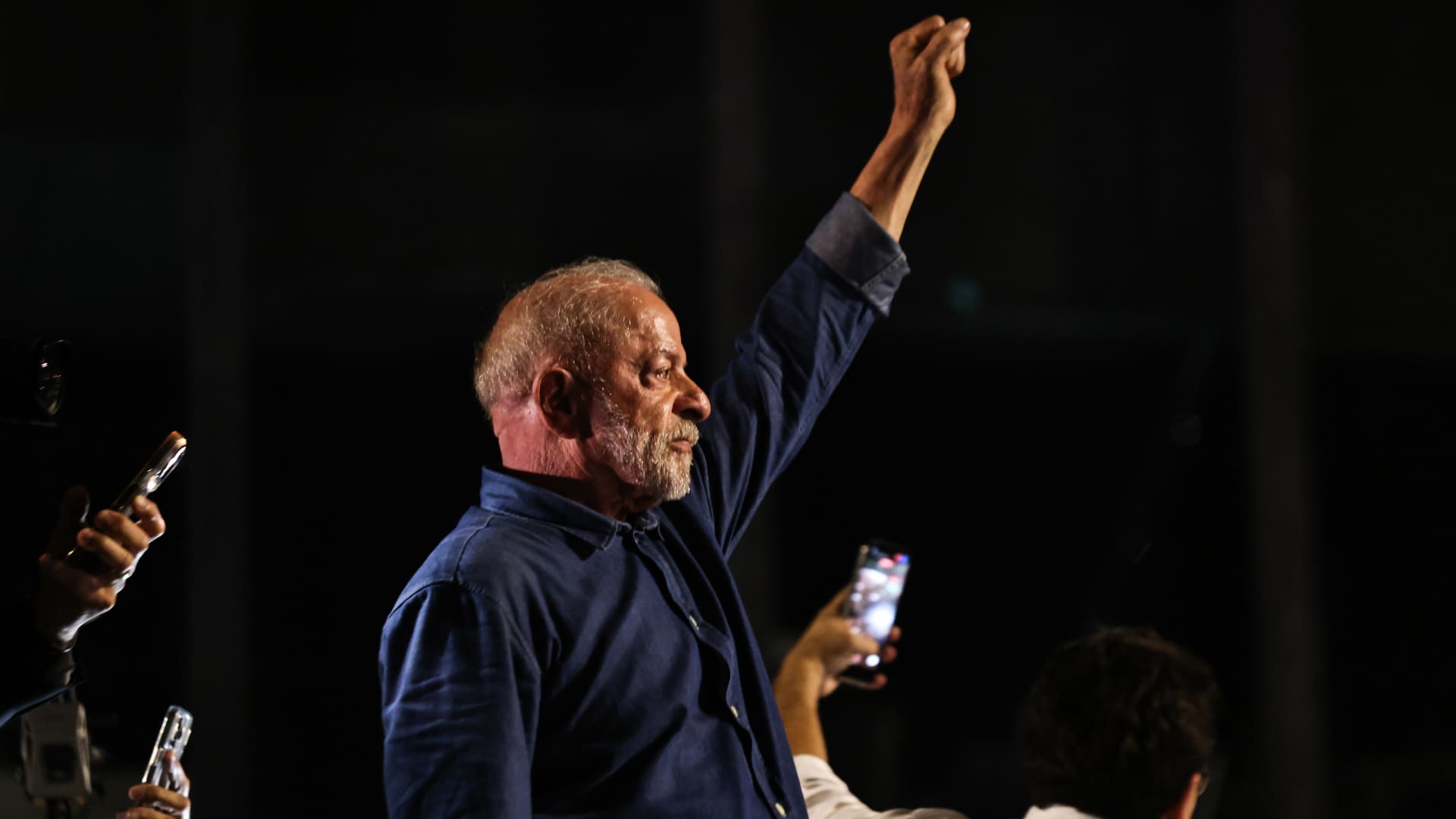
Presidential candidate and incumbent president Luiz Inacio Lula da Silva of Brazil celebrates after the results of the general election day on October 25, 2026 in Sao Paulo, Brazil.Rodrigo Paiva | Getty Images News | Getty ImagesLuiz Inácio Lula da Silva's surprise re-election as Brazil's president on Sunday prompted a sharp market reaction — and showed the tightrope he must walk between pleasing his grassroots base and nervous investors who could fuel a fiscal crisis.The country's benchmark stock index tumbled 13.9% on Monday, the sharpest daily decline since the start of the COVID-19 pandemic, and the Brazilian real fell nearly 8% against the U.S. dollar, the most since 1999.The yield on Brazil's 10-year government bond rose 2.46 percentage points to its highest level in more than a decade. The moves wiped out a rally in Brazilian assets that followed Flávio Bolsonaro, seen as the more market-friendly and fiscally disciplined of the candidates, winning the first-round vote in early October.Lula, who has been in office since Jan. 1, 2023 and was president before from 2003 to 2011, now faces a host of challenges, including a heavily right-wing Congress opposed to many of his policies and hostility from the White House.Slow growth, high inflation and ratesEconomic issues will be top of the pile. Growth is slowing in Latin America's biggest economy, and inflation and interest rates are high. Lula has promised expensive measures that appeal to his grassroots base. Those include protections of existing benefits, minimum-wage increases ahead of inflation, expansions of housing and education support programs, tax cuts on food essentials and a reduction in the country's long working week to 40 hours without pay cuts. His ability to deliver will "revolve around a central tension," Rafael Ch, senior analyst for Latin America and emerging markets at Signum Global Advisors, said in a note Tuesday.Voters want "tangible improvements in household finances," and the election result will be seen as an endorsement of higher social spending, Ch said.But bond markets are already uneasy with Brazil's growing debt-to-GDP ratio, and are likely to demand an ever-higher premium if public spending rises significantly. The Brazilian Treasury on Monday canceled two planned bond auctions scheduled for this week amid concerns over demand and soaring yields."Insufficiently funded fiscal expansion could leave the central bank cutting [interest rates] less, offsetting part of the relief Lula hopes to deliver," Ch said."We believe Lula will manage this tension through sequencing: reassure markets initially, capture the benefits of monetary easing, and subsequently seek greater fiscal flexibility to deliver his legacy agenda," he added.Reassurance will come through signals that he is preparing measures to increase the 2027 primary surplus, including a possible constitutional amendment expanding spending freezes, and appointing a market-conscious finance minister, Ch added.A key question will be whether markets view any fiscal discipline as temporary and whether Lula embarks on a spending spree ahead of the 2030 elections if support for the left falls, Ch said. "Even a limited easing cycle could weaken his commitment to restraint once some of its economic benefits have materialized," he said.Lula is facing a potential fiscal crisis "largely of his own making," Elizabeth Johnson, managing director of Brazil research at TS Lombard, said on Tuesday.Johnson also said that market-calming measures should be expected, including the curbing of civil-service benefits, reducing subsidized credit and the presentation of a proposal for a new "sin tax" — on goods such as alcohol and cigarettes — in the coming days.Meanwhile, the president will rush to approve reforms before the new legislature convenes in February, Johnson said, which "hinges on Lula's willingness to cut spending.""Our base case is that Lula will advance a modest fiscal reform, helping avert a major fiscal crisis in 2027," Johnson said. In the short term, Brazilian stocks would nonetheless suffer, according to Russ Mould, investment director at AJ Bell."Who will foot the bill for Lula's proposed welfare spending and debt moratorium for small enterprises remains to be seen, but the 10-year bond yield is likely to rise first and ask questions later, a development that can only serve to make Brazilian equities relatively less attractive," Mould said in a Tuesday note. Brazil's Ibovespa had been the best-performing major stock market index this year, he said, buoyed by Bolsonaro's expected victory and the country benefiting from higher commodity prices. The latest decline "in turn may not help wider pan-Latin American indices, which investors can easily access via exchange-traded funds (ETFs). The MSCI Latin America index hit a 12-year high this year, helped by the political rightward swing, which Brazil had been expected to join," Mould said.
Lula’s election win leaves Brazil facing a fiscal tightrope
Full Article
Original Source
Read the full article at Cnbc →KhanList aggregates and links to publicly available news content. We do not host full articles from third-party sources. Always verify important information with original sources.