
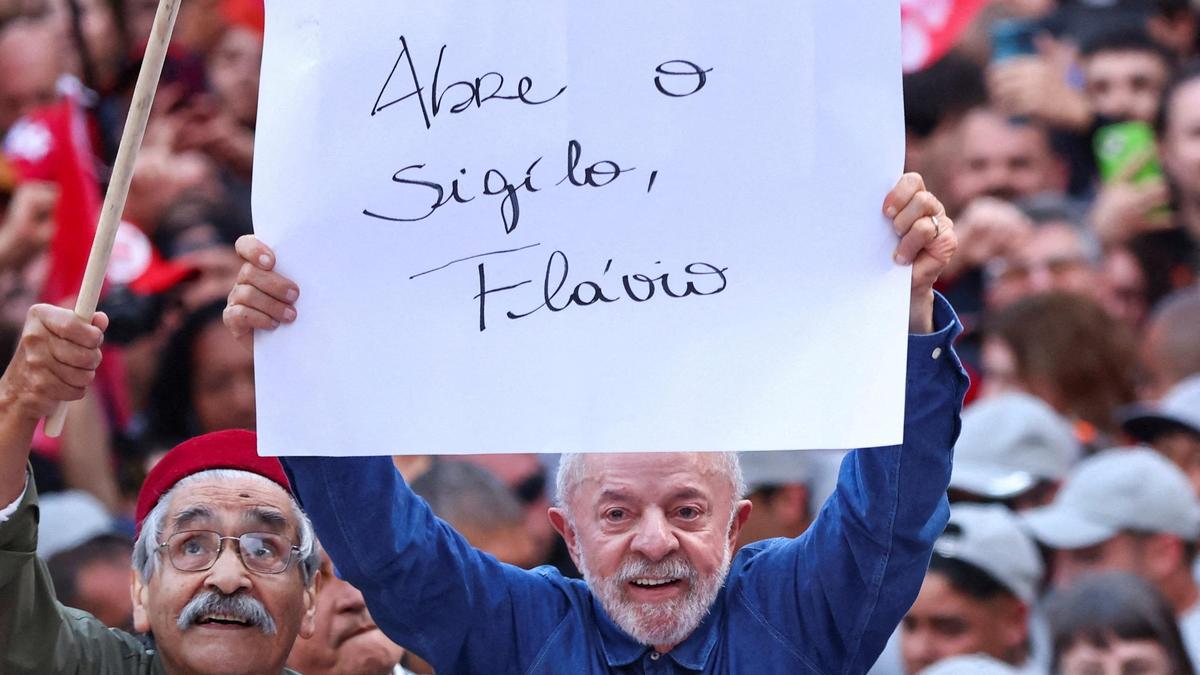
For the past week, the streets of Brazil — from the impoverished towns of the Northeast to the rich metropolises of the Southeast — have turned into a sea of red, with millions of supporters of President Lula da Silva walking in his support ahead of the October 25 presidential runoff.In São Paulo, South America’s financial capital, around a million people marched last Sunday (October 18, 2026) with Workers’ Party banners and placards, demanding protection for public education, healthcare, and transport. Similar rallies are taking place daily in other cities as Lula prepares to take on his far-right opponent, Flávio Bolsonaro.The demonstrators, mostly young students and workers, are rallying around issues that directly affect their lives. Rio-based commentator Miguel do Rosário sees the scale of the mobilisation as a desire for a different future. “The streets have sent a clear message: young Brazilians want to dream, and they are proposing an alliance with the future to the president,” says Mr. Rosário.Amid a tough contest, Mr. Lula is trying to turn his street power into concrete policy changes. On Thursday (October 15, 2026), the Brazilian Senate approved a bill that ended the six-day work schedule, reduced the maximum working week to 40 hours and guaranteed two days of paid rest each week. “Ending the six-day schedule means more time to rest, spend time with family, watch children grow up, take care of oneself and enjoy life. Those who work so hard to build Brazil also deserve time to live. This is a victory for workers,” Mr. Lula said after the Senate approved his pet project.While Mr. Lula is campaigning on expanding workers’ rights and social protections, Mr. Flávio is proposing a sweeping constitutional overhaul that could reshape Brazil’s institutions. He has said he would use the conservative Congress elected on October 4 to change the Constitution and “redemocratise” the country. But critics see it as a euphemism for doing away with existing checks and balances.Ana Laura Barbosa, a law professor in São Paulo, questioned his motive. “I do not see the need for constitutional changes of this kind at the present time. Changing the Constitution is something drastic, something that needs to be thought through, discussed and carefully considered,” said Prof. Barbosa, challenging Mr. Flávio’s claim that Brazil needed to be “redemocratised”.Meanwhile, Mr. Lula’s rallies have helped tighten a race that, after the first round, seemed to be tilting towards Mr. Flávio. The senator finished more than two percentage points ahead of the President, while earlier opinion polls had shown him leading by around four points. That advantage has now evaporated, with the latest polls suggesting that the two candidates are in a technical tie.Mr. Lula’s strategy of warning the voters about how a return to Bolsonaro-era politics would threaten their rights and benefits seems to be working. “The (Lula) campaign is trying to persuade voters that if Mr. Flávio wins, social rights and benefits will be curtailed,” said Leonardo Sakamoto, a social commentator. “Lula’s strategy is also aimed at the millions who abstained in the first round or cast blank or invalid ballots. The challenge for both campaigns is to reach these voters, whose choices could prove decisive.”With these voters in mind, the campaign for the runoff has become a contest between two sharply different visions for Brazil. They are also applying different strategies: while Mr. Lula is relying on street mobilisation, Mr. Flávio is focusing on the digital battlefield where he appears to enjoy an unfair advantage.A report by Brazil’s top newspaper Folha de S.Paulo, based on internal Meta messages, revealed on Friday (October 16, 2026) that “technical restrictions” on Instagram prevented Mr. Lula’s campaign from promoting posts for almost 24 hours on October 9–10. The report also exposed how Mr. Flávio’s profile appeared in automatic recommendations on Instagram and WhatsApp, despite electoral rules restricting such recommendations. Though Meta has attributed the problem to a technical glitch, Mr. Lula’s campaign has officially complained about the platform’s “clear bias”.If that was not enough to give Mr. Flávio an advantage in the digital sphere, another investigation by The Intercept Brasil reported on Friday (October 16, 2026) that Mr. Flávio’s campaign and his Liberal Party paid huge amounts of money to the Brazilian cybersecurity firm Elytron to promote an artificial intelligence-based system to analyse large volumes of data, identify voter groups and target them with tailored political messaging.The documents cited by The Intercept describe capabilities far beyond conventional campaign marketing, including fake social-media accounts, the targeted spread of rumours and disinformation and efforts to discredit political opponents. The report quoted Vincent Edward Reed, a former Elytron consultant who broke with the company over ethical concerns and reported it to the FBI and a U.S. congressional oversight committee.While Mr. Flávio’s campaign has denied hiring any service that violated electoral law, Mr. Lula’s campaign has accused Big Tech of promoting Mr. Flávio’s campaigne in the digital arena.Whatever the outcome on October 25, Mr. Lula is seeking to leave a lasting legacy through measures aimed at improving the daily lives of ordinary Brazilians. His recent policy decisions, including the end of the six-day work schedule, ban on online betting, expansion of the direct cash transfer scheme and reforms affecting micro-entrepreneurs, have already set the agenda for the next administration – and for Brazil in the long term.On Thursday (October 15, 2026), Mr. Lula announced another proposal: a constitutional amendment to introduce free public transport on weekends in every Brazilian city. “Free rides on weekends so you can go out and enjoy time with your family. The people will be happy, and members of Congress will be putting their earmarked funds to good use,” Mr. Lula said on Friday (October 15, 2026).As Mr. Lula’s campaign focuses on workers’ rights, household finances and access to public services and with the young people expected to turn up in big numbers on election day, Mr. Lula may still make history next Sunday (October 25, 2026) as more than 160 million people will choose between two starkly contrasting visions for their country.
Lula takes to streets with people’s demands as Flávio leans on Big Tech in Brazil’s presidential race
Full Article
Original Source
Read the full article at Thehindu →KhanList aggregates and links to publicly available news content. We do not host full articles from third-party sources. Always verify important information with original sources.