
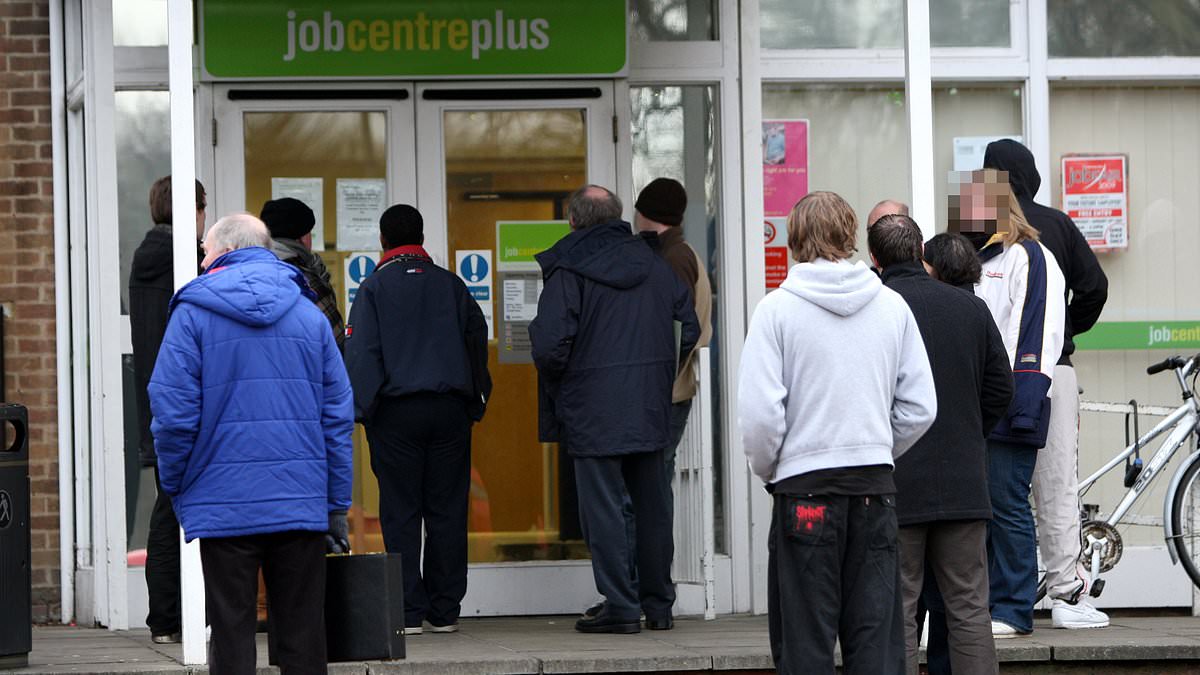
At the age of 34, I was hit with a devastating double whammy. First, I was diagnosed with Parkinson's, then – just six weeks later – I was made redundant from my job in sales.The gravity of my predicament really began to sink in when I found myself in the queue at my local JobCentre, where I was the only man wearing a suit and tie.I found it revealing – and faintly depressing – that when I did finally get to speak to a member of staff, instead of being advised on how to get a job, I was given a list of the benefits I could claim, including the now notorious Personal Independence Payment, or PIP.When I said I wanted to start a new business rather than make a claim, I was told I was in the wrong queue and would have to go upstairs.There, I laid out my plan to open a cleaning business and said that I wanted to employ some of the people I had seen downstairs, particularly parents returning to work after having children.Within a week, I was employing six mothers and had a contract to clean a hotel. Nine months later, my firm was cleaning three towers in London's Canary Wharf, and offices in the Shard and the Heron Tower.I paid my staff 50 per cent over the going rate and, in the course of the next few years, helped 337 mothers and 39 fathers back into paid work.I won the Entrepreneur of the Year Award at the UK Business Awards and paid a total of £2million pounds in business and income taxes – all while not claiming any benefits at all. At the age of 34, I was diagnosed with Parkinson's, then – just six weeks later – I was made redundant from my job in sales, tells entrepreneur Luke Murfitt Claimants appear to be asked not 'What can you do?' but 'What can't you do?', and are offered a shopping list of welfare payments.I even became a keynote speaker with the aim of inspiring others to do likewise. Which is why I feel so strongly about Britain's ballooning benefits bill.Given that I suffer from Parkinson's, you might be surprised to hear that I see what Andy Burnham does in response to two separate reports suggesting different sets of changes to the welfare system as a key test of his premiership.The first was published last week by the former Health Secretary Alan Milburn and the second, by Sir Stephen Timms, the Minister of State for Social Security and Disability, is due out today.While Timms's report calls for root-and-branch changes to the welfare system, it will retain PIP across all age groups and introduce a less burdensome 'fast track' process for people with the most severe conditions. To me, that sounds like a plan to make it easier for claimants to access more benefits.I am much more taken by Milburn's call for the abolition of PIPs for under-25s in a bid to get 440,000 young people into work.This very sensible proposal is sure to cause as much uproar as we saw when Keir Starmer's government was forced to shelve its – very modest – welfare reform plans by a backbench revolt.It was proof, if any were required, that Labour has abandoned its founding principles as a party for working people to become the party of welfare claimants.I speak as a PIP recipient myself. Parkinson's Disease is a progressive illness and, over time, it took its toll on me.Its symptoms are far more wide-ranging than the very visible tremors normally associated with my condition.I know, too, what it is like to have gnawing anxiety, to have sudden debilitating fatigue or to be unexpectedly unable to walk across a crowded room.It was only when my symptoms became too severe to run my business that I decided to apply for PIP payments.I am proud of the business I built up and proud that I helped so many other people back to work. I always wanted to make a contribution to society, rather than be a drain.My father was a headmaster of a special school for seriously handicapped children and I've known from an early age there are people who really need our help.Sadly, at the age of 46, I myself have now become one of those people. But I still think the best way to assist young people is to encourage them out of their comfort zone so they can develop new skills and new abilities while they still can.It could transform their lives, as it has mine.That's why I don't think PIP should be offered to young people at the start of their working lives because, instead of providing independence, increasing self-esteem and helping people to help themselves, it often does the precise opposite by encouraging welfare dependency and discouraging work.The proof is in the Government small print. The most recent figures, from September of this year, show that – since 2019 – the number of people entitled to PIP payments has doubled to a record high of 4.09 million.Seven years ago, the PIP scheme cost the state £16.3billion but that has spiralled to £27.3billion and is forecast to rise to £41.5billion by the end of the decade.I do believe some form of help should be available for those – like me – who are too disabled to work. But for too many, PIP has become more of a fishing net than a safety net.Claimants appear to be asked not 'What can you do?' but 'What can't you do?', and are offered a shopping list of welfare payments.Although you can claim PIP while working, all too often people who may be neurodiverse, say, or suffer from anxiety, find it easier to stay at home.And while the effect of this dysfunctional system can be seen on a macro level in the shape of a mushrooming welfare bill, individual claimants miss out on all the very real benefits of being in work, such as challenging yourself, learning new skills, socialising and feeling a sense of achievement.To be fair to Sir Stephen Timms, the system clearly does need urgent change.Any reform of the PIP system should offer practical help to set up a business, including coaching, accounting and any adaptations to make working from home possible, if necessary.Claimants or their carers should be able to claim a start-up allowance to create a business that can give them financial independence or even just a little extra income.There should be a real attempt to cut down on waste, by eliminating the regime of repeated assessments for people with a diagnosis of incurable, progressive diseases – which causes needless anxiety and costs – and by cutting back the nearly £10 billion of overpayments last year, the majority of which is written off.On a personal level, deciding not to claim PIP until I had absolutely no choice was a life-changing boost to my personal wellbeing.On a national level, building a system where young people are incentivised to become dependent on welfare only leads to more unhappy, unfulfilled people.That's why Andy Burnham's choice is so important. He will not only have to decide whether to do something about our unaffordable welfare state, but he must also have the vision and understanding to see that throwing money at a problem is not always the best way to help people.Sensible, targeted, practical assistance that encourages people back to work – and if they can't handle a paid job, then help them find voluntary work – is a much surer way to help people to turn their lives around or make the best of their abilities.Luke Murfitt is an entrepreneur who built a multi-million-pound business while living with Parkinson's disease.
LUKE MURFITT: I have Parkinson's, but didn't claim PIP until I had no choice. For too many people, though, it's now more of a fishing net than a safety net
Full Article
Original Source
Read the full article at Dailymail →KhanList aggregates and links to publicly available news content. We do not host full articles from third-party sources. Always verify important information with original sources.