
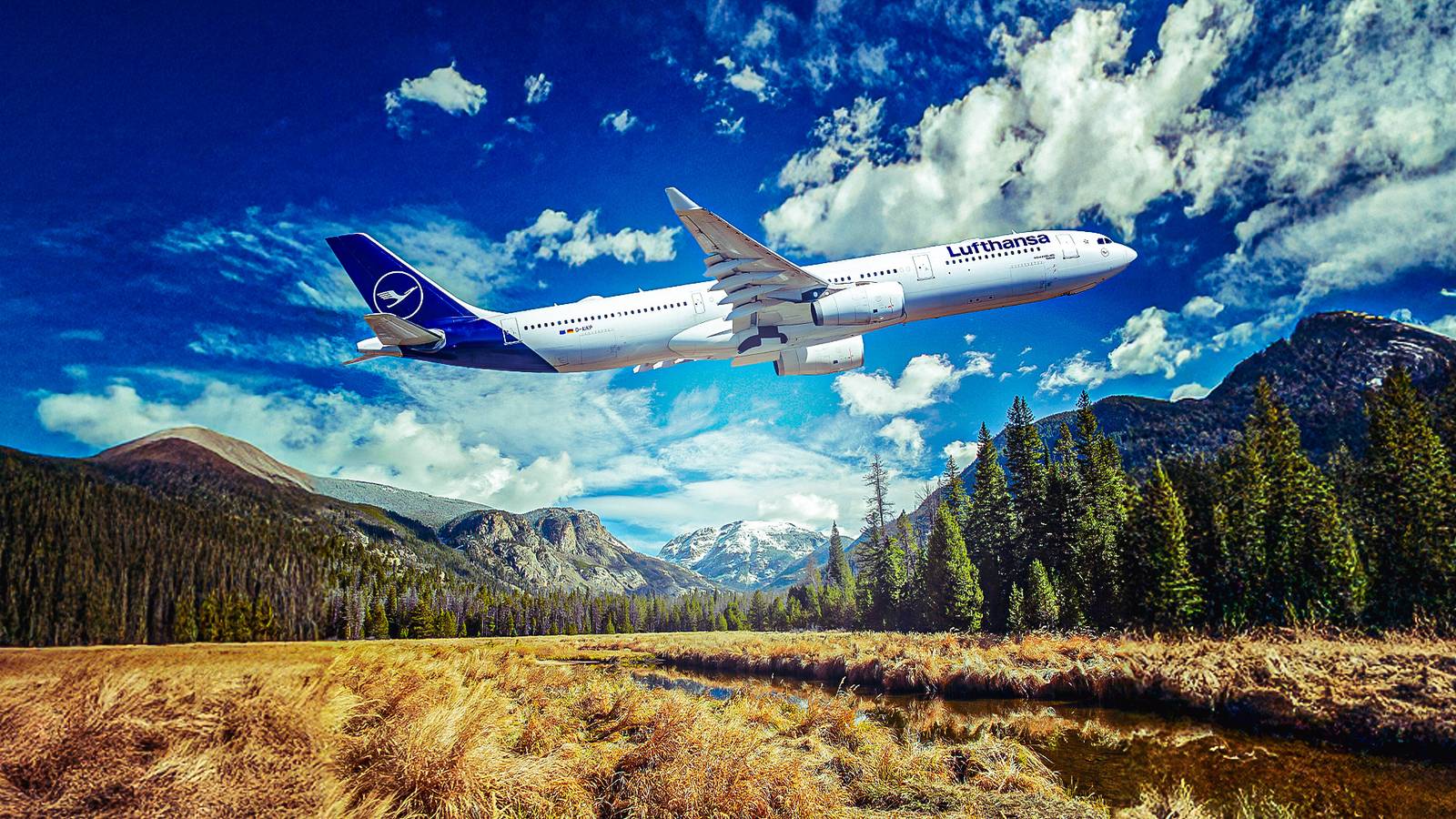
Published Sep 9, 2026, 8:23 AM EDT A graduate in German, Jake has a passion for history and regional aviation, and enjoys sampling new carriers and aircraft. He has visited OEM facilities as far and wide as Bristol, Toulouse, and Seattle, and recently enjoyed the milestone of flying his 150th sector as a passenger. Based in Norfolk, UK. In recent years, the Lufthansa Group has been making waves in the world of aviation sustainability with its AeroSHARK technology. Named after the 'shark skin' that it resembles, this drag-reducing surface film is a novel way of reducing an aircraft's fuel emissions and increasing its efficiency and sustainability credentials. Lufthansa has now revealed a new development on this front: testing on an A330. This marks the first time that AeroSHARK technology has been deployed on an Airbus widebody, with passenger (Austrian Airlines) and freighter (Lufthansa Cargo) Boeing 777s having previously been the main subjects of its use. Lufthansa itself only has four Airbus A330s left in its fleet according to ch-aviation, so, for the test aircraft, it instead opted to use one from Discover Airlines, its leisure arm. Closing In On Certification Credit: Lufthansa As seen above, the jet chosen was an Airbus A330-300 that bears the registration D-AIKP. According to Flightradar24, this aircraft is 14 years old, and, after arriving in Frankfurt (FRA) from Philadelphia (PHL) on its last pre-test flight on August 20, it was ferried across to Dresden (DRS) on August 23. Here, it underwent modification at Elbe Flugzeugwerke, where it was fitted with the drag-reducing film. Thereafter, the jet is being put through its paces with a series of test flights lasting several weeks. One of these took place on August 28, lasting almost six hours, with another 3.5-hour jaunt following the next day. This program will pave the way for AeroSHARK to be certified for wider use on A330-200 and A330-300 jets going forward, with Grazia Vittadini, Lufthansa Group's Chief Technology Officer, saying that: "AeroSHARK is an excellent example of how innovations from the Lufthansa Group can make concrete contributions to greater efficiency and lower emissions. The innovation alliance (...) demonstrates how strong partners can drive progress together." What Does This Mean For Passengers? Credit: Lufthansa Lufthansa Technik is working closely with the European Union Aviation Safety Agency during this test program, which is supported by Mastercard. Once EASA is satisfied that the relevant "technical documentation, ground and flight tests, [and] final in-service validation during flight operations" are all where they need to be, it will be able to issue a supplementary type certificate for AeroSHARK on the A330. In the long run, from a passenger perspective, those flying on AeroSHARK-equipped jets will likely not notice any difference externally or internally. However, the "fine grooves aligned in the direction of flow, known as riblets [50 micrometers high], reduce frictional drag," resulting in a 1% reduction in fuel consumption and carbon dioxide emissions. As such, it will be interesting to see if fares drop as a result. This is a particularly pertinent matter in the current climate, given that fuel price spikes relating to the attacks on Iran by Israel and the US have threatened to increase ticket prices of late and going forward. Either way, as "the Lufthansa Group’s AeroSHARK fleet saves around 19 metric tonnes of kerosene and about 60 metric tonnes of carbon dioxide" a day, passengers will at least have a cleaner conscience. A Lufthansa Airbus A319 Will Also Be Used To Test New AeroSHARK Patches Credit: Lufthansa As it happens, the Discover Airlines A330-300 is not the only Airbus jet in the wider Lufthansa Group that is being used to pioneer its fuel-saving AeroSHARK technology. Indeed, the Cologne-based German flag carrier and Star Alliance founding member also announced at the end of last month that a Lufthansa City Airlines A319-100 would be used to test the next generation of this novel 'shark skin' film. According to the Lufthansa Group, around 70 patches of the new material have been fitted to the jet, and their impacts will be tested on the route from Munich (MUC) to Hamburg (HAM) through to February. The patches "differ in terms of their material and layer composition," so the test program will establish which is best. If successful, it is thought that the resulting savings in fuel and CO2 could potentially double.
Lufthansa's Shark-Skin Surface Film Nears A330 Certification: Will It Save Flyers Money?
Full Article
Original Source
Read the full article at Simpleflying →KhanList aggregates and links to publicly available news content. We do not host full articles from third-party sources. Always verify important information with original sources.