
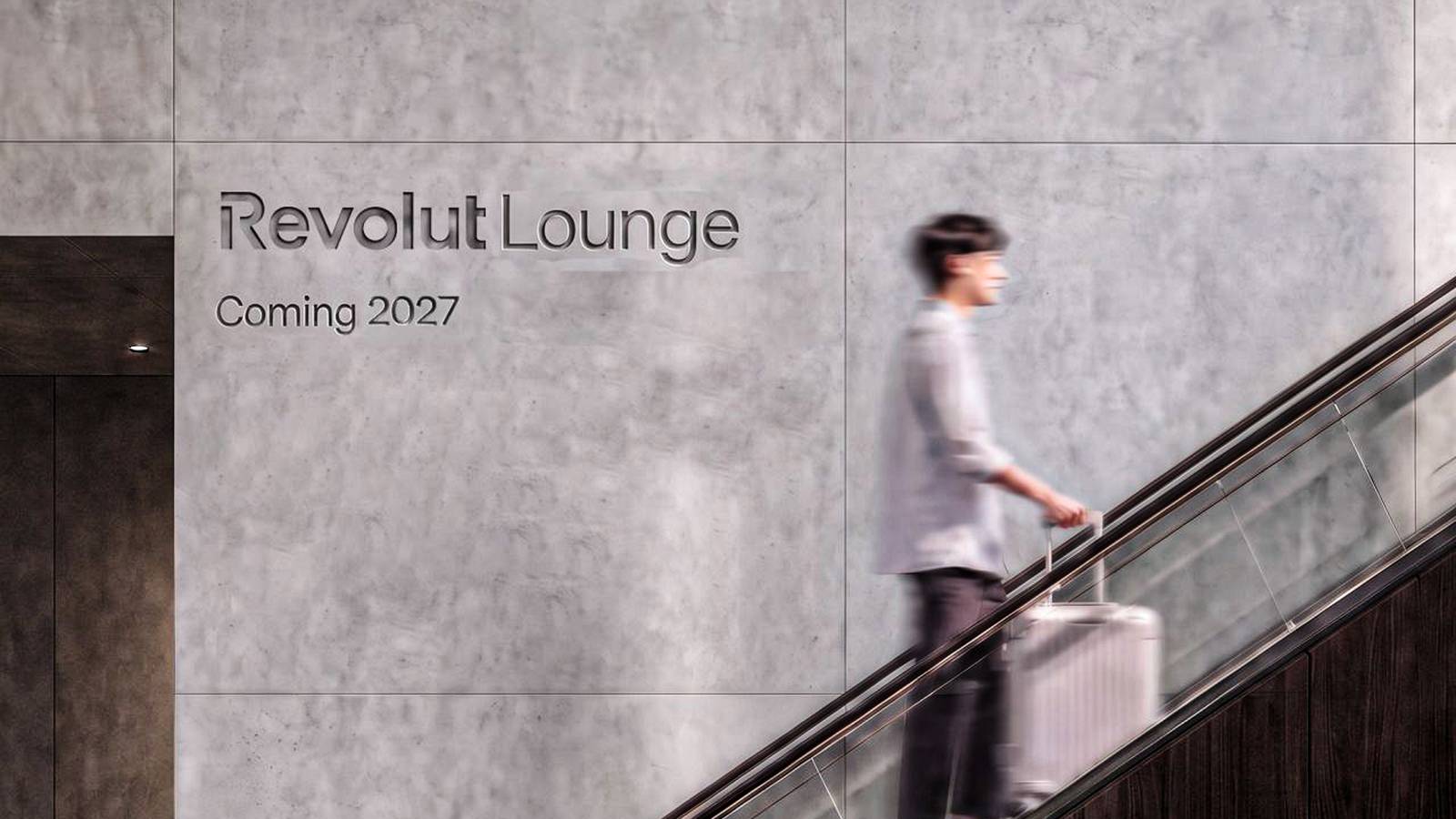
Published Aug 22, 2026, 4:00 AM EDT Based in Maastricht, the Netherlands, Nick joined Simple Flying in October 2025 and has a strong passion for travel and tourism, and in particular, the aviation industry, for as long as he can remember. Nick's focus is on aviation economics, airline strategy, and digital innovation. Before joining Simple Flying, he gained industry experience in ground handling and in a leading European airline group. Academically, Nick holds a Bachelor's degree in Aviation Management and is currently pursuing a Master's degree in Strategy & Innovation. On August 13, European fintech company Revolut announced its first Revolut Lounge at Copenhagen Airport (CPH), with an opening planned for 2027. The rapidly growing company now has more than 75 million customers worldwide and has applied for a US national bank charter as part of its strategic North American expansion. The new lounge in Copenhagen is intended as the first location in a broader network of airport lounges at major airports, following a model pioneered by financial services companies such as American Express through its Centurion Lounges. According to Revolut, the lounge in Copenhagen will become the largest common-use lounge in the Schengen area and will be developed in partnership with Plaza Premium Group, one of the world's largest airport lounge operators. While neither company has revealed many details about access policies, features, or amenities, the new product highlights a broader trend: airport lounges are increasingly becoming branded loyalty products for financial services companies rather than something controlled primarily by airlines. Revolut Was Already Becoming A Travel Loyalty Company Credit: Shutterstock Revolut's decision to open its own branded lounges is part of the company's wider push into the travel market. Its broader travel proposition increasingly resembles a loyalty ecosystem rather than simply a foreign-exchange card. The London-based fintech company already provides Ultra customers with unlimited access to more than 1,600 airport lounges worldwide, while Premium and Metal members can purchase lounge access at discounted rates. Moreover, members can transfer RevPoints to numerous airline loyalty programs, including Avios and Flying Blue. As of writing, no major US airline loyalty program is a direct RevPoints transfer partner. RevPoints can also be transferred to selected hotel loyalty programs or redeemed through Revolut for hotel stays and thousands of activities and experiences. Earlier this year, Revolut also expanded its hotel loyalty proposition through co-branded IHG One Rewards debit cards, allowing customers to earn IHG points on everyday spending through Revolut. Depending on the membership tier, Revolut also offers additional travel benefits through its app, including airport fast track, eSIM data, and travel insurance. The new Revolut Lounge product therefore looks less like diversification into hospitality and more like vertical integration of Revolut's existing travel ecosystem. Until now, Revolut has largely acted as an intermediary between customers and airlines, hotels, and third-party lounge operators. Its own branded lounges give the company control over a visible part of the passenger journey and an opportunity to create an experience that belongs entirely to the Revolut brand. The Real Logic Is Revolut's Subscription Business Credit: Shutterstock In 2025, Revolut generated $6.0 billion in revenue, while profit before tax reached $2.3 billion. Revenue from subscriptions increased 67% year-over-year to $936 million, growing considerably faster than revenue from card payments, wealth products, and currency exchange. Lounge access is already one of the most prominent benefits of these subscriptions, particularly within Revolut's top-tier Ultra plan. For Revolut, the new lounge expansion is therefore more likely to support its subscription business than become a major standalone profit engine. By offering customers a premium branded lounge experience, Revolut creates a highly visible reason to maintain or upgrade a recurring subscription. The move also fits neatly into the wider premiumization trend across the travel industry, where exclusivity and a sense of belonging are increasingly being used to build customer loyalty. The lounge also gives Revolut something a digital feature inside its app cannot: a physical experience that customers can directly associate with the brand. More importantly, controlling that experience allows Revolut to differentiate itself from competitors offering access to many of the same third-party lounge networks. In that sense, the strategy is not entirely new. Airlines have long treated branded lounges as an important part of their wider premium and loyalty proposition, even when the lounge itself is not expected to operate as a standalone profit center. American Express Already Proved The Model Credit: American Express Revolut's move into the airport lounge business is actually part of a wider trend in the industry, with a number of financial services companies expanding their lounge offerings in recent years. However, they largely follow the same model American Express has used for more than a decade. American Express Platinum customers currently receive access to more than 1,550 lounges across 140 countries. Amex supplements this third-party network with its own differentiated Centurion Lounge network, which has 32 locations as of August 2026 and continues to expand in the United States and around the world. In November 2021, Capital One moved toward the same strategy when it opened its first branded airport lounge at Dallas/Fort Worth International Airport (DFW). Its newly launched Venture X premium card simultaneously offered access to a much larger network of around 1,300 third-party airport lounges. Since then, the bank has continued to expand its branded airport lounge product across the United States in partnership with the same Plaza Premium Group that Revolut is now partnering with. Chase followed a year later with the opening of its first Chase Sapphire Lounge by The Club at Hong Kong International Airport (HKG) on October 25, 2022. While the Hong Kong lounge closed on January 5, 2026, Chase has since expanded its Sapphire Lounge network across the United States after opening its first domestic location at Boston Logan International Airport (BOS) in 2023. Sapphire Reserve cardholders also continue to receive access to more than 1,000 airport lounges through Priority Pass. Revolut's move into branded lounges is thus nothing new in itself, and its overall strategy appears to align closely with those of its established peers. The model essentially consists of two layers: a large third-party lounge network providing geographical coverage, supplemented by a much smaller network of branded flagship lounges that provide differentiation and strengthen the wider premium proposition. There is a good reason financial companies are willing to invest in these spaces. The Wall Street Journal recently highlighted how banks and airlines are increasingly using premium airport lounges to attract and retain valuable credit card customers, with lounge investments becoming closely tied to the economics of loyalty programs. Revolut appears to be applying much the same logic to its subscription business. Why Revolut Will Open Its First Lounge In Copenhagen Credit: Shutterstock While the decision to open Revolut's first flagship lounge in Copenhagen instead of, for example, London Heathrow Airport (LHR) might appear odd to some, there is enough logic behind it to support the decision. Last year, Copenhagen Airport welcomed 32.4 million passengers, representing 9% year-over-year growth and an all-time record. More than one in five of these passengers were transfer passengers, for whom lounge access can be particularly relevant. Transfer traffic increased by 27% in 2025, largely driven by SAS concentrating a greater share of its operations in Copenhagen. This importance could grow further as Air France-KLM moves toward taking a majority stake in Scandinavian Airlines (SAS) and develops Copenhagen alongside Paris and Amsterdam as another major hub within the group. Moreover, Revolut sees the Nordics as an important growth region. The company says it already has more than two million Nordic customers, expects more than three million by the end of 2026, and targets roughly 500,000 Danish customers before the lounge opens. Copenhagen therefore provides Revolut with a combination of growing passenger volumes, substantial connecting traffic, and a relatively wealthy market in which the company itself continues to expand. It also avoids immediately going head-to-head with the much larger financial-services lounge presence at airports such as New York JFK Airport (JFK) or London Heathrow. Copenhagen could therefore serve as a useful test market before Revolut considers bringing the concept to larger hubs. Airport Lounges Are No Longer Controlled By Airlines Credit: London City Airport The partnership with Plaza Premium Group also allows Revolut to enter the airport hospitality market without becoming a lounge operator itself. Plaza Premium pioneered the world's first independent airport lounge in 1998 and has since developed one of the largest lounge networks in the world. For Revolut, this means it can focus on the branding, customer proposition, design and digital integration of its lounges, while Plaza Premium provides the operational expertise required to run them. The arrangement could also reduce some of the financial and operational risk involved in building a lounge network from scratch, as Plaza Premium has been described as both an operating and investment partner for the Copenhagen location. However, exact financial details have not been disclosed. More broadly, the expansion highlights how the airport lounge market is increasingly moving beyond airlines themselves. Lounge access was once mainly associated with premium tickets and frequent flyer status, but banks and financial services companies now provide millions of customers with access through independent networks such as Priority Pass while simultaneously developing their own branded lounges. Looking ahead, the broader direction is increasingly clear: airlines are no longer the only companies competing for premium travelers inside the airport.
Loyalty Logic: The Finance Tech Company Building Its Own Airport Lounges With Plaza Premium Group
Full Article
Original Source
Read the full article at Simpleflying →KhanList aggregates and links to publicly available news content. We do not host full articles from third-party sources. Always verify important information with original sources.