
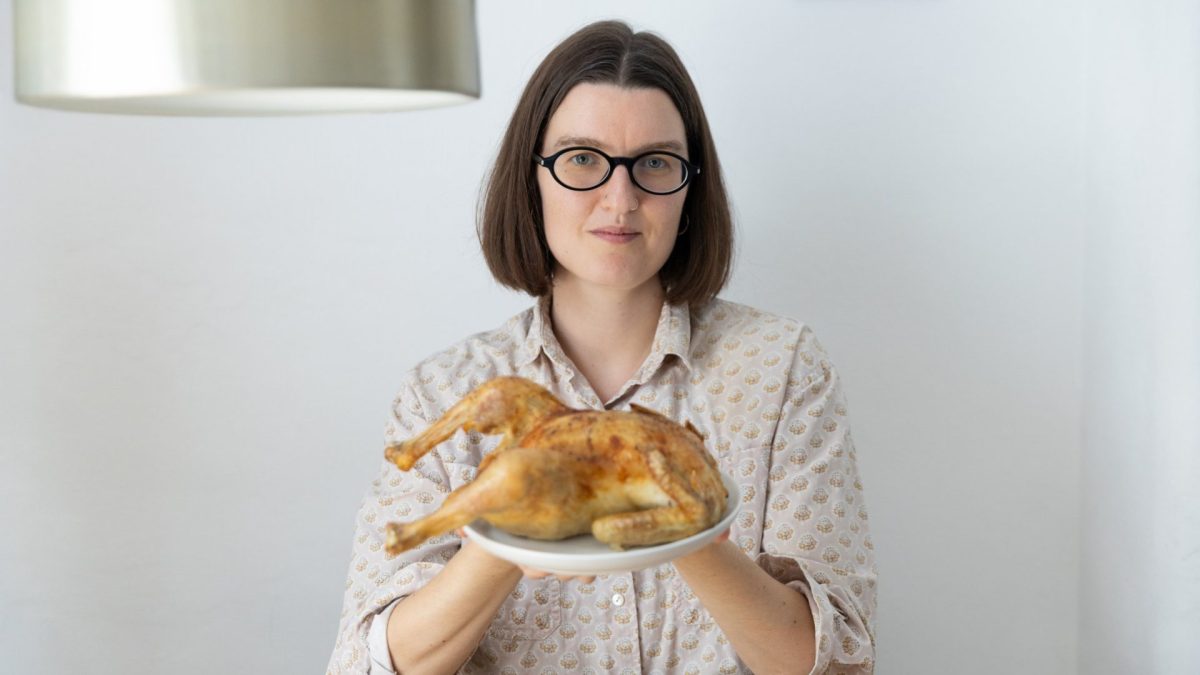
When was the last time you ate chicken? For the non-veggies, it was probably recently: we now consume about 30 million birds a week in the UK according to the British Poultry Council (BPC). Whether you’re after a healthy source of protein, something easy and frozen for the children, a cheap, greasy snack on the high street, or a traditional Sunday roast – chicken is the meat that fills all roles (and rolls). And its popularity is ever-growing. In 2025, UK consumption hit 2.55 million tonnes. This is the equivalent of one person eating four large chicken breasts (700g) a week. This decades-long increase (poultry production has gone up 501 per cent between 1961 and 2022), has been compounded by health warnings about red meat and the recent protein craze. Shorts “Depending on which figures you look at, it’s overtaken or is about to overtake pork as the most eaten animal protein in the world,” says Richard Griffiths, CEO of the BPC. Like many others, I buy chicken near weekly. But recently, watching the pieces shed water in the pan only to taste of nothing in the dish, I’ve found it less and less appetising. And I’m not alone. Online, consumers are complaining that their chicken is slimy and unappetising, stringy, or riddled with water. Others say it “just doesn’t taste right anymore”. It prompted me to ask what’s really in it – and how can I find the best bird. The main reason chicken has become a staple is that it’s become much easier to produce quickly. Thanks to 20th century advances, farmers no longer have to rely on pasture to farm animals and can farm them year round: this led to the process becoming increasingly intense – and a dramatic reduction in price. Per the Retail Prices Index, a whole chicken would cost 46p per kg in 1971 – the equivalent of £6.04 in today’s money. In January 2025, it was £3.78 per kg. This is unique among meat production: the price of beef rump steak per kg, for example, has stayed relatively stable at £1.31 in 1971 (£17.19 in today’s money) vs £18.89 in 2025. “Chicken is cheap because producers can cram lots of chickens into a shed and feed them a mono diet,” explains Dr Carrie Ruxton, registered dietitian and consultant nutritionist. “It costs more to produce cattle, sheep and pigs as they need specialised feeding, space to roam and the opportunity to exhibit natural behaviours over their longer lifespans.” The surge in affordability with chicken coincided with doctors warning people off red meat in the 1980s, believing excess saturated fat increased heart disease risk. More recently it has been linked with cancer. The protein craze has further cemented chicken’s healthy status. Poultry is also more accessible now. Rather than doing any butchery, a pack of several skinless breast fillets is as easy to find as a whole (giblet-free) bird. Then there are all the ready-to-eat options, from clean “protein” pots to reconstituted nuggets. But these advances in efficiency have other consequences. Myrtle Gregory, research and policy officer at the civic organisation Eating Better Alliance, explains that indoor reared chickens now have such a short life cycle they’re called “crops” in the system. “They’re designed to go from an infant to fully grown in under 30 days. No poultry is meant to reach maturity in that time.” The result is that the anatomy of commerical broilers (birds bred for meat) can be fraught with complications like heart failure, internal organ failure and such large breasts their legs can’t support them. Rapid growth can also result in phenomena like the revoltingly named “woody breast” where the muscle becomes tough and fibrous, disrupted water balance, and “spaghetti meat” where the muscle fibres fray apart. Griffiths says these are “recognised challenges in the breeding process,” though emphasises that there’s no deliberate manipulation of water content. “Pumping”, where water is injected into the meat, is illegal here. There are also nutritional consequences. The fat content of broilers has increased from 8.6g per 100g in 1970 to 22.8g in 2004, with a 2010 study from researchers at the London Metropolitan University finding chicken now provides three times more calories from fat than protein. Most significantly, the omega 3 content has dropped, explains Professor Michael Crawford, a pioneering British scientist in the field of small-chain fatty acids at Imperial College London. “The omega 3 in [historic] chicken came from the birds eating various plants and small animals that did the same, i.e. grovelling in the field or garden. Today they are fed in houses mainly on corn, soy or the like which has little omega 3 and is mainly omega 6.” The feed changed because grain was more affordable, widely available and sped up the growing process. But three-quarters of us are not getting enough of omega 3, an essential amino acid vital for energy, heart health and immune health. Some studies have shown that organic reared chickens may have higher rates of omega 3, though that evidence is limited. One of the many roast chickens sampled for this feature – this one from Waitrose (Photo: Teri Pengilley/The i Paper) There is also a question of feed additives. Rob Percival, head of food policy at the Soil Association, notes that the UK has significantly reduced their use of antibiotics in chicken production, “but they’re still using significant volumes of the antibiotic ionophores which mask the poor welfare outcomes and enables the mass medication in the systems that we still see in the UK”. Academics continue to research if their use in chicken is contributing to antibiotic resistance. Plus, the UK only produces two-thirds of the birds we eat weekly, with the rest supplied through imports. This is thanks to our appetite particularly for the white meat, which is causing a “carcass imbalance”, according to Gregory. “We import more breast meat and export some dark meat: about three-quarters of our imports comes from the EU and the remainder from further afield,” Griffiths says, including Thailand, Brazil and China. Griffiths agrees that there is a difference between the bird of 50 years ago vs now, saying “we are where we are with the fat content”. But he contends that the nutritional differences between organic and indoor reared birds are minor. Where he does concede there is a difference is in taste. These birds that are bred to grow as quickly as possible can barely move compared to free range, organic birds. The more the birds can use their bodies, the more intense and gamier the flavour. All these issues affect the bird and the consumer. Percival points to the disease risk inherent in industrial farming, saying “it’s quite likely that we’ll see another spillover event that originates from chicken farming”. Then there are the health risks: researchers at the University of Oxford found that higher poultry meat consumption was associated with a higher risk of gastro-oesophageal reflux disease, gall bladder disease and diabetes. And then there’s the climate impact: “76 per cent of global soy production goes towards feeding livestock,” Gregory says. “Deforestation and climate change are all hugely associated with feed production, and yet we see chicken continuously branded as low carbon.” The solution for consumers, experts say, is to eat less, but better. Ruxton says chicken is a healthy source of protein, but that it should be enjoyed as part of a varied and balanced diet. “Include fish, beef, pork, lamb, eggs, tofu, beans, lentils and soya over a month’s diet to optimise overall nutrients.” Percival agrees, saying that the Soil Association’s recommendation is to “trade up to the higher welfare birds, free range or organic, and balancing the costs by just eating a little less”. How to buy the best quality, and most ethically produced bird? Griffiths recommends looking for the Red Tractor assurance. Percival disputes that: “Red Tractor is basically the baseline of industrial farming but with a stamp on it. It’s very intensive.” Instead he recommends looking for RSPCA assured and higher, with a particular focus on the higher welfare systems that are written into law: free range and organic. Gregory at Eating Better also says Red Tractor is not a reliable benchmark – their own guidance recommends RSPCA assured and free range, or even better, organic chicken. I will definitely be reducing my chicken consumption and sticking to free range birds. — I tested five supermarket chickens – Sainsbury’s came out top I taste-tested five supermarket whole chickens, all prepared the same way. Nichola Ludlam-Raine, registered dietitian, independently analysed the labels, saying “the nutrition figures aren’t directly comparable: some labels give values for raw chicken and others for cooked chicken. I’d choose based on the welfare standard, size needed and taste, rather than expecting a major nutritional difference.“ Chicken sampled from M7S, Asda and Waitrose M&S Oakham Gold Chicken, £5.42/kg, £6.50 for 1.2kg Juicy and tender, with a nice almost nuttiness. The dark meat is rich. The flesh does fall apart a bit when carving and it lacks a firmness, but it’s still good eating. 4/5 Ludlam-Raine: This is higher-welfare indoor chicken, rather than free range. It’s slower reared and RSPCA Assured, and its typical 1.2kg size makes it a smaller option. “Oakham Gold” is the product name – the listing says the chicken comes from select UK farms, rather than identifying Oakham as where it was reared. Asda Exceptional Free Range Corn Fed Norfolk Whole Chicken, £7.15/kg, £12.51 This chicken is fine. The breast meat is a tiny bit chewy, almost flaky. Despite some dryness, I wouldn’t kick off if this was served to me as it certainly tastes like a roast chicken – just not a particularly good one. 2.5/5 Ludlam-Raine: The Norfolk sourcing is more specific than a general “British” label. It’s free range, slow growing and Red Tractor Free Range certified – the corn-rich diet is chiefly a flavour and appearance point. At around 1.75kg, it’s a larger bird. Waitrose No1 British Free Range Chicken, £9/kg, £14.61 This was the most chicken flavoured of the lot. The dark meat in particular was excellent. However the white meat wasn’t fantastic and in fact was a touch dry – probably because the bird had the smallest breast by far. 4/5 Ludlam-Raine: The label gives the clearest picture of how the birds are reared: in small flocks on family-owned British farms, with access to open pasture by day and barns at night. It’s free range and slowly reared, with a typical weight of 1.62kg. Chicken sampled from Tesco and Sainsbury’s Tesco Finest Corn Fed Whole Chicken, £7.50/kg, £12.38 This was dry, chewy and stringy and felt almost grainy. Even worse, it tasted metallic. It was technically passable but unpleasant. My dog didn’t mind it but she is not discerning. 1.5/5 Ludlam-Raine: This is British, free range and described as slower growing, with both RSPCA Assured and Red Tractor Free Range certification. The corn-rich feed may affect the colour and flavour, but has no particular nutritional advantage. Sainsbury’s Taste The Difference Chicken, £8.50/kg, £12.34 This was sincerely lovely: crisped skin, subtle flavour but decidedly chickeny. The bite was smooth and tender and both the white and dark meat were winners for all plates involved. 4.5/5 Ludlam-Raine: Another British free range, slowly reared bird. At approximately 1.25kg, it’s one of the smaller options, which may suit a smaller household, although the actual weight can vary.
Love roast chicken? You might not after reading this
Full Article
Original Source
Read the full article at Inews →KhanList aggregates and links to publicly available news content. We do not host full articles from third-party sources. Always verify important information with original sources.