
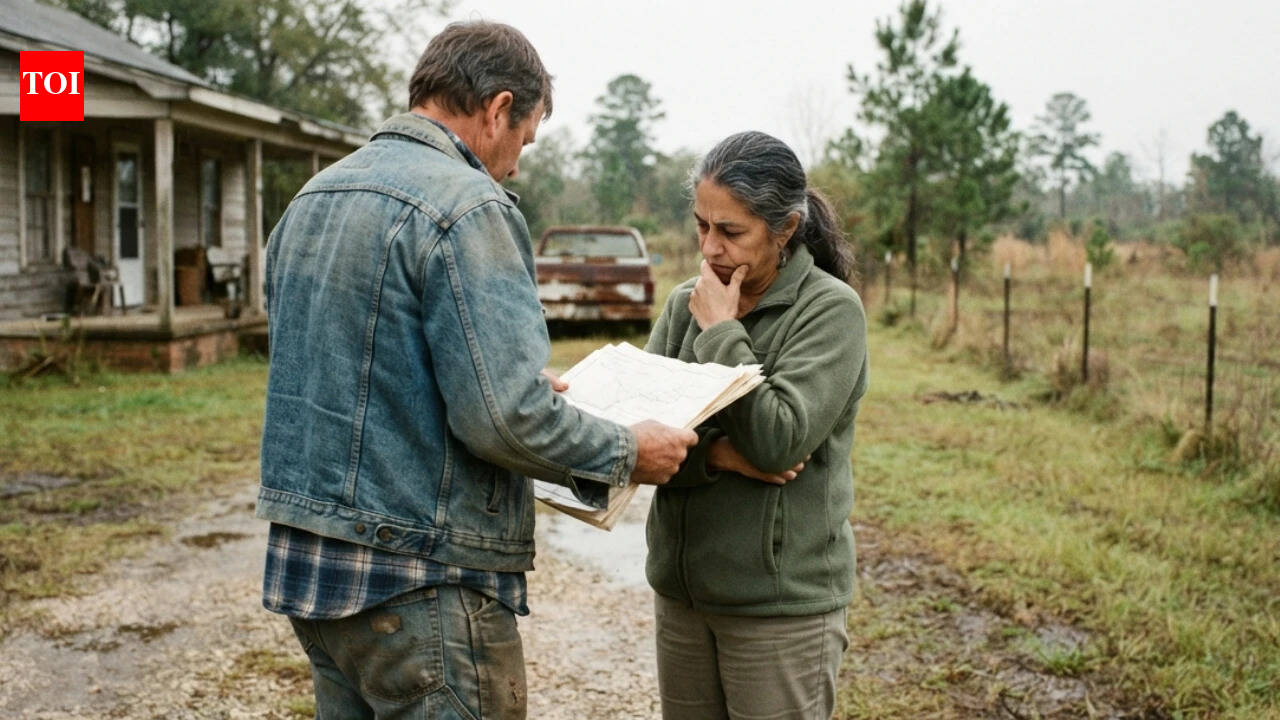
Couple transferred several plots of land to credit union to avoid foreclosure (AI image)A Louisiana couple who transferred several plots of land to a credit union to avoid foreclosure have been ordered to pay the lender $78,717.63 after an appeals court rejected their challenge to the debt. The dispute arose after the lender sold the land over several years but could not recover the full amount owed by the borrowers.Christina P. Gary and Michael D. Gary, along with their company, Prince Properties LLC, had defaulted on a loan from River Region Federal Credit Union. According to the rulilng available on Justia in June 2017, they agreed to hand over their land to the lender, which would sell the plots and use the money to reduce their outstanding debt.The arrangement was meant to help the couple avoid foreclosure while allowing the credit union to recover its money through property sales. However, the sales took longer than expected. Even after the lender sold the land, a substantial amount remained unpaid.The couple later disputed the lender's claim, arguing that it had waited beyond the legally permitted period to demand repayment. They also questioned the way the land had been sold and the expenses deducted from the proceeds.The Louisiana Fifth Circuit Court of Appeal rejected their main argument in a ruling dated November 25. It held that the payments credited to the loan through the property sales counted as acknowledgement of the outstanding debt. The court therefore upheld the revised award of $78,717.63, along with legal interest.Why the couple handed over their landThe dispute began after the property was divided into a family subdivision. Restrictions on the subdivision made it difficult for Gary to sell the plots, leaving her unable to keep up with the loan payments.The outstanding amount had reached $260,717.53 when the couple approached the credit union with a proposal to transfer the property. The lender agreed to accept the plots after consulting its legal team and obtaining approval from its board.Under the June 1, 2017 agreement, River Region Federal Credit Union would try to sell the land at a fair market price. It would then deduct necessary costs and apply the remaining money towards the loan.The agreement also made it clear that the couple would still have to pay any amount left after the sales. The lender agreed not to add further interest to the existing debt under the arrangement.A correction signed in December 2017 changed the property description to cover five plots. The credit union then had to obtain permission from St James Parish before selling the land to the general public.Property sales took several yearsThe lender faced difficulties before it could begin selling the plots. It had to construct a bus turnaround and provide the parish with a right of way to secure the necessary approval.Even after completing these requirements, the land was not ready for sale. Parts of the property were overgrown and flooded, delaying the process further.According to Gigi Coneglio, the credit union's chief executive officer, the lender eventually hired a real estate agent and began selling the subdivided plots in 2021.The credit union sold nine plots in 2021 and 2022 for a combined $163,500. However, during the trial, Coneglio acknowledged that another plot had been sold earlier, in January 2020, for $24,000. That transaction had not been included in the sales figure she initially presented.The lender also deducted $9,410 in real estate commissions and $89.23 in taxes. It had separately spent $29,832.07 on property maintenance, surveys, appraisals and the construction work required for parish approval.After accounting for the sales and expenses, the credit union said the couple still owed $136,549.Court reduced the amount claimed by the lenderThe couple disputed the lender's calculations and accused it of taking too long to sell the property. They also argued that the plots had not been sold at the agreed fair market value and that some of the expenses were unnecessary.The trial court did not accept all the deductions claimed by the credit union. It excluded the additional $29,832.07 in expenses and included the $24,000 received from the earlier property sale while calculating the outstanding amount.In May 2025, it ordered the couple and their company to pay $82,717.63, along with legal interest. The amount was later reduced by $4,000 after discussions between both sides.A revised judgment signed on October 31, 2025, fixed the amount payable at $78,717.63. The couple then challenged the decision before the appeals court.Their main argument was that the lender had taken too long to file its recovery claim. They pointed to the June 2017 promissory note, which set January 1, 2018, as the final payment date.Under Louisiana law, a lender generally has five years to take legal action to recover money due under a promissory note. The couple argued that this period had expired before the credit union demanded repayment in September 2023.Why the appeals court upheld the debtThe credit union argued that the five-year period had restarted whenever money from a property sale was credited towards the couple's loan.The appeals court agreed with the lender. It said that an outstanding debt can be acknowledged not only through a written statement but also through actions such as partial payments.The judges considered the original agreement, under which the couple had asked the credit union to take ownership of the plots and sell them. The proceeds were to be used towards the loan, with the borrowers remaining responsible for any unpaid balance.The court also referred to the couple's earlier complaint that the lender had delayed the sales and failed to obtain fair market prices. Their objections showed that they had accepted the arrangement under which the credit union was selling the property on their behalf.The judges said the couple could not rely on that arrangement to challenge the lender's handling of the property while denying that the money credited through the sales counted towards their debt.The court consequently ruled that the credit union's recovery claim had not expired.The couple had also raised objections about the sale prices and whether the original agreement cleared their entire debt. However, they did not properly argue these points in their appeal, so the court did not examine them.
Louisiana couple transfer land to avoid foreclosure, but court upholds $78,717 debt claim
Full Article
Original Source
Read the full article at Timesofindia →KhanList aggregates and links to publicly available news content. We do not host full articles from third-party sources. Always verify important information with original sources.