
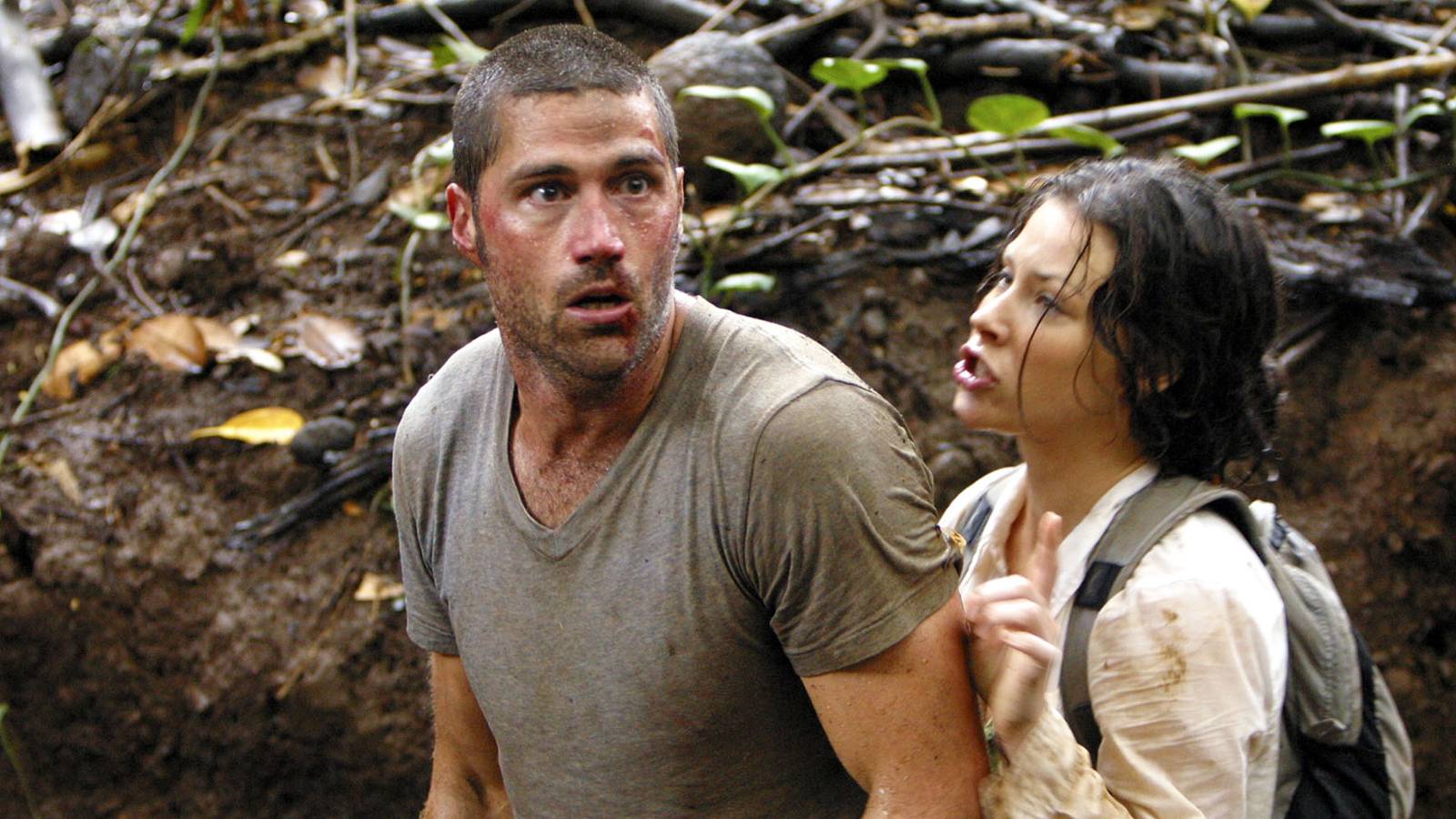
Image via Mario Perez, ABC; Everett Collection Published Sep 7, 2026, 11:11 AM EDT Mauricio is a Mexican guy who gets attached to cancelled TV shows, likes to read Marvel comics about underdog teams, and has been told one-too-many times he looks like Penn Badgley, specifically in his stalker-y roles. He discovered his passion for pop culture with Power Rangers and the Star Wars Special Edition re-releases. Professionally, he's got a degree in International Finance and has been in the real estate business for almost 10 years now (yikes!). Magically, he's 83% Ravenclaw and 17% Slytherin. Musically, he thinks Jack Antonoff is a multiversal being with the key to create bop after bop. He specializes in over-analyzing his favorite shows like Glee, Lost, Community, Ugly Betty, and Grey's Anatomy; as well as his favorite actors' performances, like Olivia Colman, Olivia Colman, and Olivia Colman. Just kidding, other faves include Anna Kendrick, Rachel Bloom, Lee Pace, Maggie Smith, Elizabeth Olsen, and Olivia Colman. Sign in to your Collider account Lost premiered more than 20 years ago, and some of its greatest episodes remain benchmarks for serialized television. But having the luxury of 20-plus-episode seasons also meant the show could afford a few infamous misfires. None is more notorious than Season 3’s Jack-centric episode “Stranger in a Strange Land,” an hour that became emblematic of just how badly the series needed an endgame. Centered on Jack’s tattoos and a mysterious woman from his past, the episode initially appears poised to reveal something meaningful about Matthew Fox’s character beyond his familiar daddy issues. Instead, it becomes an awkward detour that offers few satisfying answers and brings the season’s larger momentum to a halt. Even by Lost’s famously uneven standards, “Stranger in a Strange Land” remains one of the show’s most frustrating hours. The Beginning of 'Lost' Season 3 Was a Rocky Road The third season of Lost had the challenge of surpassing, or at least matching, the impact of its first two seasons. Season 1 was stellar, and, while Season 2 had its imperfections, the expanding mysteries felt organic and well-woven into the overall storyline. Season 3, in turn, started strong with the introduction of the Others’ village, but it soon fell off the rails. The attempt to include more survivors of Flight 815 into the narrative with Nikki (Kiele Sanchez) and Paulo (Rodrigo Santoro) was widely panned. Collider Exclusive · Sci-Fi Survival Quiz Which Sci-Fi World Would You Survive? The Matrix · Mad Max · Blade Runner · Dune · Star Wars Five universes. Five completely different ways the future went wrong — or sideways, or up in flames. Only one of them is the world your instincts were built for. Eight questions will figure out which dystopia, galaxy, or desert wasteland you'd actually make it out of alive. 💊The Matrix 🔥Mad Max 🌧️Blade Runner 🏜️Dune 🚀Star Wars TEST YOUR SURVIVAL → 01 You sense something is deeply wrong with the world around you. What do you do? The first instinct is often the truest one. APull on every thread until I understand the system — then figure out how to break it. BStop asking questions and start stockpiling — food, fuel, weapons. Questions don't keep you alive. CKeep my head down, observe carefully, and trust no one until I know who's pulling the strings. DStudy the patterns. Every system has a rhythm — learn it, and you learn how to survive it. EFind the people fighting back and join them. You can't fix a broken galaxy alone. NEXT QUESTION → 02 In a world of scarcity, what resource do you guard most fiercely? What we protect reveals what we believe survival actually requires. AKnowledge. If you understand the system, you don't need resources — you can generate them. BFuel. Everything else — movement, power, escape — runs on it. CTrust. In a world of fakes and informants, a truly reliable ally is rarer than any commodity. DWater. And after water, information — the two things empires are truly built on. EShips and credits. The galaxy is big — you survive it by being able to move through it freely. NEXT QUESTION → 03 What kind of threat keeps you up at night? Fear is useful data — if you're honest about what you're actually afraid of. AThat reality itself is a lie — that everything I experience has been constructed to keep me compliant. BA raid. No warning, no mercy — just the roar of engines and then nothing left. CBeing identified. Once someone with power decides you're a problem, you're already out of time. DBeing outmanoeuvred — losing a political game I didn't even know I was playing. EThe Empire tightening its grip until there's nowhere left to run. NEXT QUESTION → 04 How do you deal with authority you don't trust? Every dystopia has a power structure. Your approach to it determines everything. ASubvert it from the inside — learn its rules well enough to weaponise them against it. BIgnore it and stay out of its reach. The further from any power structure, the better. CAppear to comply while doing exactly what I need to do. Visibility is the enemy. DManoeuvre within it carefully. You can't beat a system you refuse to understand. EResist openly when I have to. Some things are worth the risk of being seen. NEXT QUESTION → 05 Which environment could you actually endure long-term? Survival isn't just tactical — it's physical, psychological, and very much about where you are. AUnderground bunkers and server rooms — cramped, artificial, but with access to everything that matters. BOpen wasteland — brutal sun, no shelter, constant movement. At least the threat is honest. CA dense, rain-soaked city where you can disappear into the crowd and nobody asks questions. DMerciless desert — extreme heat, no water, and something enormous living beneath the sand. EThe fringe — backwater planets and busy spaceports where the Empire's attention rarely reaches. NEXT QUESTION → 06 Who do you want in your corner when things fall apart? The company you keep is the clearest signal of who you actually are. AA tight crew of believers who've seen behind the curtain and have nothing left to lose. BOne or two people I'd trust with my life. Any more than that and someone talks. CNobody, ideally. Alliances are liabilities. I work alone unless I have no choice. DA community bound by shared hardship and mutual survival — people who need each other to last. EA ragtag team with wildly different skills and total commitment when it counts. NEXT QUESTION → 07 Where do you draw the line — if you draw one at all? Every survivor eventually faces a moment that tests what they're actually made of. AI won't harm the innocent — even the ones who'd report me without hesitation. BI do what I have to to protect the people I've chosen. Everything else is negotiable. CThe line shifts depending on who's asking and what's at stake. DI draw a long-term line — nothing that compromises my people's future, even if it'd help now. ESome lines, once crossed, can't be uncrossed. I know which ones they are. NEXT QUESTION → 08 What would actually make survival worth it? Staying alive is one thing. Having a reason to is another. AWaking others up — dismantling the illusion so no one else has to live inside it. BFinding somewhere — or someone — worth protecting. A reason to keep moving. CAnswers. Understanding what I am, what any of this means, before time runs out. DLegacy — shaping the future in a way that outlasts me by generations. EFreedom — for myself, for others, for every world still living under someone else's boot. REVEAL MY WORLD → Your Fate Has Been Calculated You'd Survive In…Your answers point to the world your instincts were built for. This is the universe your temperament, your survival instincts, and your particular brand of stubbornness were made for. The MatrixYou took the red pill a long time ago — probably before anyone offered it to you. You're a systems thinker who can't help but notice the seams in things. You're drawn to understanding how the system works before figuring out how to break it. You'd find the Resistance, or it would find you — your instinct for spotting constructed realities is the machines' worst nightmare. You function best when you have access to information and the freedom to act on it. The Matrix built an airtight prison. You'd be the one probing the walls for the door. Mad MaxThe wasteland doesn't reward the clever or the well-connected — it rewards those who are hard to kill and harder to break. That's you. You don't need comfort, community, or a cause larger than the next horizon. You need a vehicle, a clear threat, and enough fuel to outrun it — and you're good at all three. You are unsentimental enough to survive that world, and decent enough — just barely — to be something more than another raider. In the wasteland, that distinction is everything. Blade RunnerYou'd survive here because you know how to exist in moral grey areas without losing yourself completely. You read people accurately, keep your circle small, and ask the questions others prefer not to answer. In a city where humanity is a legal designation rather than a feeling, you hold onto something that keeps you functional. You're not a hero. But you're not lost, either. In Blade Runner's world, that distinction is everything. DuneArrakis is the most hostile environment in the known universe — and you are precisely the kind of person it rewards. Patience, discipline, and political awareness are your core strengths — and on Arrakis, they're survival tools. You understand that the long game matters more than any single victory. Others come to Dune and are consumed by it. You'd learn its logic and earn its respect. In time, you wouldn't just survive Arrakis — you'd begin to reshape it. Star WarsThe galaxy far, far away is vast, loud, and in a constant state of violent political upheaval — and you wouldn't have it any other way. You find meaning in being part of something larger than yourself — a cause, a crew, a rebellion. You'd gravitate toward the Rebellion, or the fringes, or whatever pocket of the galaxy still believes the Empire's grip can be broken. You fight — not because you have to, but because standing aside isn't something you're capable of. In Star Wars, that willingness is what makes all the difference. ↻ RETAKE THE QUIZ The unraveling of Henry Gale/Ben Linus (Michael Emerson) and the introduction of Juliet (Elizabeth Mitchell) felt jarring, leaving a bitter taste that left the audience hating them. Throw in the awkward love triangle between Jack, Kate (Evangeline Lilly), and Sawyer (Josh Holloway), and Lost seemed to have, ironically, lost its way. Season 3 of Lost was ultimately split into two parts, with the show taking a pause after Episode 6 before returning from a three-month hiatus. The Second Half of 'Lost' Season 3 Started Strong, Only to Hit a Slump The three-month hiatus that Lost went through in its third season paid off – well, mostly. Two episodes in, light was shed on Juliet’s backstory and Desmond’s (Henry Ian Cusick) predestination powers. Finally, the show seemed to have returned to form. But next up was the infamous Jack-centric chapter. With a preview that promised that three mysteries would be solved, anticipation was built, and we’d be there to see how the plot moved forward. We were supposed to get to know more about the survivors taken by the Others, why stewardess Cindy (Kimberley Joseph) had gladly joined them, and the backstory of Jack’s tattoos. But when Episode 9 was released, only vague answers were given. Plus, Jack’s flashback was a total misfire that underdelivered and proved detrimental to Fox’s character. The Backstory of Jack's Tattoos Was More of a Midlife Crisis Than a Mystery Image via ABC “Stranger in a Strange Land” sees Jack at his cringiest moment. He meets Achara (Bai Ling), a mysterious Thai woman, at a beach by helping her fly a kite. The moment is clichéd, and the episode still manages to go downhill from there. One hopes it all ends after they sleep together, because of their lack of chemistry. But Jack becomes fixated on Achara and follows her to learn what she does for a living. Jack goes way off-character when he discovers she works as a tattoo artist and forces her to do one on him. It’s an uncomfortable scene to watch, and it doesn’t pay off narratively. Why would Jack be so insistent about it? Achara warned him that she shouldn’t tattoo him, for there would be consequences. Said consequence comes the very next day, when Jack is beaten up by Achara’s brother and other men. Getting beaten by a mob is indeed cruel and painful, but why was Achara so cryptic about it? Maybe Jack would’ve chosen his local tattoo parlor instead, had he known he’d be left for dead after a gang attack. While the producers wanted to find a way to incorporate the tattoos Fox already had on him into the story, perhaps it was best to leave them unexplained. It remains unknown if Jack ever translated what Achara put on his skin, but on the island, Other Isabel (Diana Scarwid) translated it for the audience, reading it as “he walks amongst us, but he’s not one of us.” Jack responds by saying that might be what it says, but it's not what it means. In retrospect, this could be reinterpreted as a subtle foreshadowing that Jack would never make it off the island. But, at the time, the whole ordeal felt like a half-baked idea that didn't have a meaningful impact on the show. ABC Approved the Producers Setting an End Date for 'Lost' Following This Jack-Centric Episode Image via ABC Whereas Season 3 of Lost eventually found its way, “Stranger in a Strange Land” remains proof that overstretching the narrative of a successful show will backfire. After this episode aired, ABC approved the production team’s request to set an end date for the show. And though the final three-season plan wasn’t without its flaws, it did allow Lindelof and Cuse to tell meaningful stories through flash-forwards in Season 4, time travel in Season 5, and flash-sideways in Season 6. Season 3 proved that the constraints of only having flashbacks would undermine the show’s storytelling possibilities. If there’s a word to describe the Lost experience as a whole, it would be imperfect. But it’s in the show and the characters' flaws that we found a way to connect. At the time, “Stranger in a Strange Land” tested my week-to-week patience with Lost. I’m glad I stuck with the series until the end, but it’s easy to understand why an episode this frustrating could have convinced some viewers to give up. Release Date 2004 - 2010-00-00 Network ABC Showrunner Damon Lindelof, Carlton Cuse Directors Jack Bender, Paul A. Edwards, Tucker Gates, Eric Laneuville, Bobby Roth, Greg Yaitanes, Daniel Attias, J.J. Abrams, Karen Gaviola, Kevin Hooks, Rod Holcomb, Stephen Semel, Adam Davidson, Alan Taylor, David Grossman, Deran Sarafian, Fred Toye, Mario Van Peebles, Marita Grabiak, Mark Goldman, Matt Earl Beesley, Michael Zinberg, Paris Barclay, Robert Mandel Writers Jim Galasso, Christina M. Kim, Graham Roland, Kyle Pennington, Brent Fletcher, Dawn Lambertsen Kelly, Janet Tamaro, Jeffrey Lieber, Paul Dini, Jordan Rosenberg Creator(s) J.J. Abrams, Damon Lindelof, Jeffrey Lieber
‘Lost’s Worst Episode of All Time Changed the Colossal Sci-Fi Hit Forever
Full Article
Original Source
Read the full article at Collider →KhanList aggregates and links to publicly available news content. We do not host full articles from third-party sources. Always verify important information with original sources.