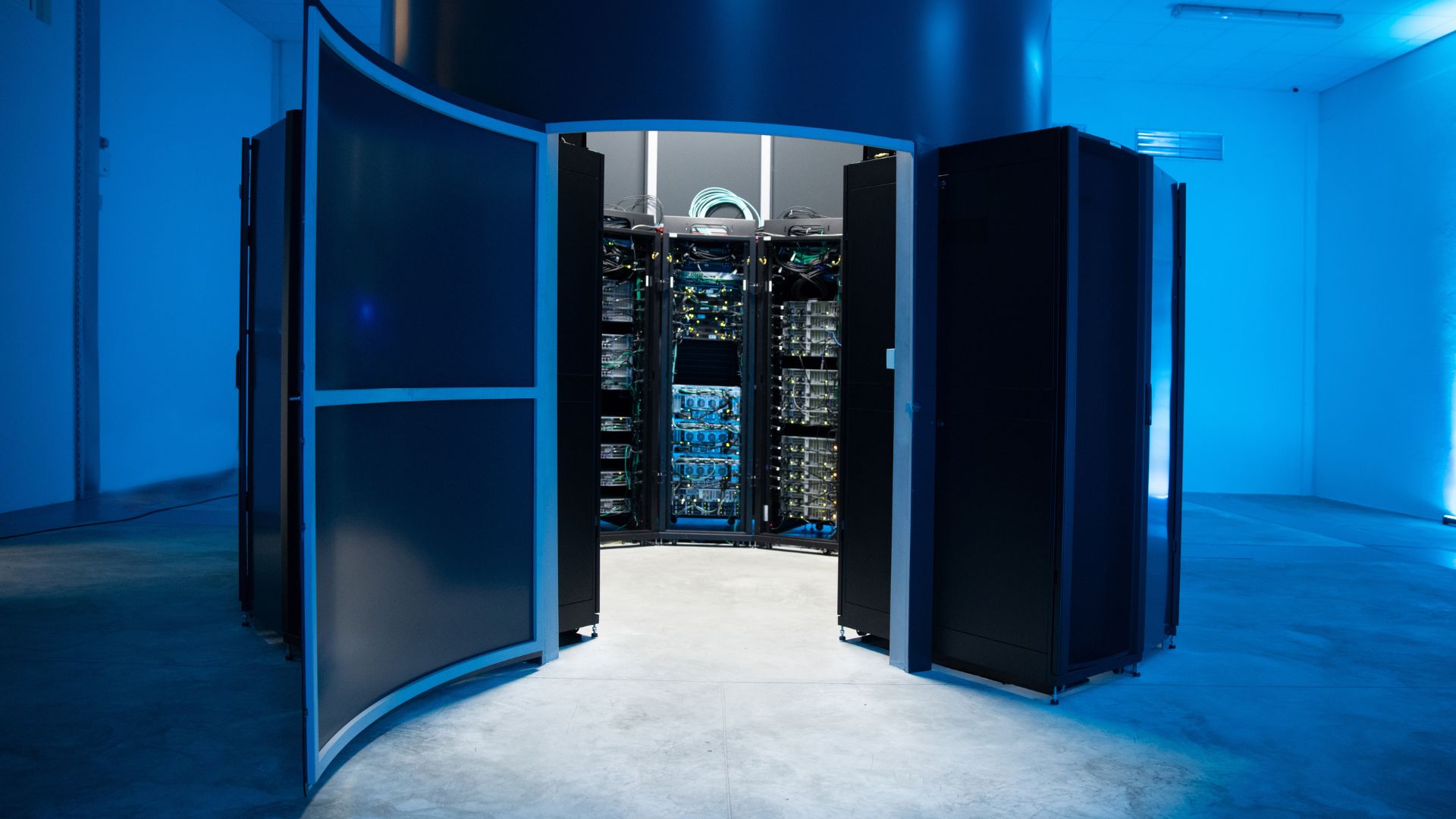
Los Alamos National Laboratory has taken another step toward its next generation of supercomputing after receiving the first NVIDIA Vera CPU server for an early test deployment, giving researchers their first opportunity to evaluate hardware that will eventually power the Mission and Vision systems. The delivery marks the beginning of a broader testing phase before the two flagship supercomputers enter service later this decade. Engineers at Los Alamos will use the test platform to validate software, optimize scientific codes, and measure performance on real laboratory workloads before full-scale deployment. Early hardware arrives Mission and Vision will be built by HPE around NVIDIA’s Vera Rubin platform, combining Vera CPUs with Rubin GPUs. The systems target demanding high-performance computing (HPC) workloads alongside emerging agentic AI applications that can automate portions of scientific research and engineering analysis. Los Alamos expects the new architecture to deliver major gains over its existing systems. According to Ben Santos, director of the laboratory’s HPC Platforms program, Mission and Vision should provide more than three times the CPU performance of the Crossroads supercomputer. Each processor will also offer more than four times the memory available per core while consuming less power. Santos said the Rubin GPUs are designed to deliver more than 12 times the AI performance of the Hopper GPUs used in Venado. He said those improvements should help researchers solve national security and scientific problems more efficiently. Designed through codesign Unlike off-the-shelf supercomputers, Mission and Vision emerged from years of joint engineering between Los Alamos, NVIDIA, and HPE. Scientists worked closely with hardware designers to shape processor features around the laboratory’s computing requirements instead of adapting software after the hardware was finished. Dan Ernst, senior director of supercomputing products at NVIDIA, said scientific computing now depends on combining simulation, AI and agentic reasoning. He added that the Vera Rubin platform provides the memory bandwidth, energy efficiency, and AI acceleration needed for those workloads. HPE also emphasized the long-running collaboration with the Department of Energy laboratory. Trish Damkroger, senior vice president and general manager of HPC & AI Infrastructure Solutions at HPE, said the companies have spent decades designing systems around specific mission requirements and expect Mission and Vision to extend that work. Los Alamos architect Galen Shipman said engineers concentrated on improving memory bandwidth for each CPU core while strengthening support for irregular computing workloads. Those efforts produced significant performance and efficiency gains for several of the laboratory’s most demanding applications. AI drives next phase The laboratory has played an important role in advancing Arm-based supercomputing. It became one of the first major organizations to deploy NVIDIA’s Grace Hopper architecture through the Venado supercomputer, installed in 2025. Vera CPUs expand that roadmap by supporting AI-driven modeling, simulation, and autonomous research workflows. Laboratory officials believe agentic AI can reduce analysis times from months to minutes for some scientific problems, allowing researchers to focus on new questions instead of repetitive computational tasks. Mission and Vision will run on HPE’s Cray Supercomputing GX5000 platform and connect through NVIDIA Quantum-X800 InfiniBand networking. A third system, Veritas, will also arrive to support Laboratory Directed Research and Development projects. Los Alamos expects the first purpose-built Mission architecture, known as Starlight, to arrive later in 2026 using the NVIDIA Vera Rubin NVL72 full-rack design. Full deployments of Mission and Vision are scheduled for 2027 and 2028, marking another major upgrade for one of the United States’ leading supercomputing centers. Recommended ArticlesGet the latest in engineering, tech, space & science - delivered daily to your inbox.Aamir is a seasoned tech journalist with experience at Exhibit Magazine, Republic World, and PR Newswire. With a deep love for all things tech and science, he has spent years decoding the latest innovations and exploring how they shape industries, lifestyles, and the future of humanity.
Los Alamos tests NVIDIA Vera CPUs for supercomputers targeting 12x faster performance
Full Article
Original Source
Read the full article at Interestingengineering →KhanList aggregates and links to publicly available news content. We do not host full articles from third-party sources. Always verify important information with original sources.