
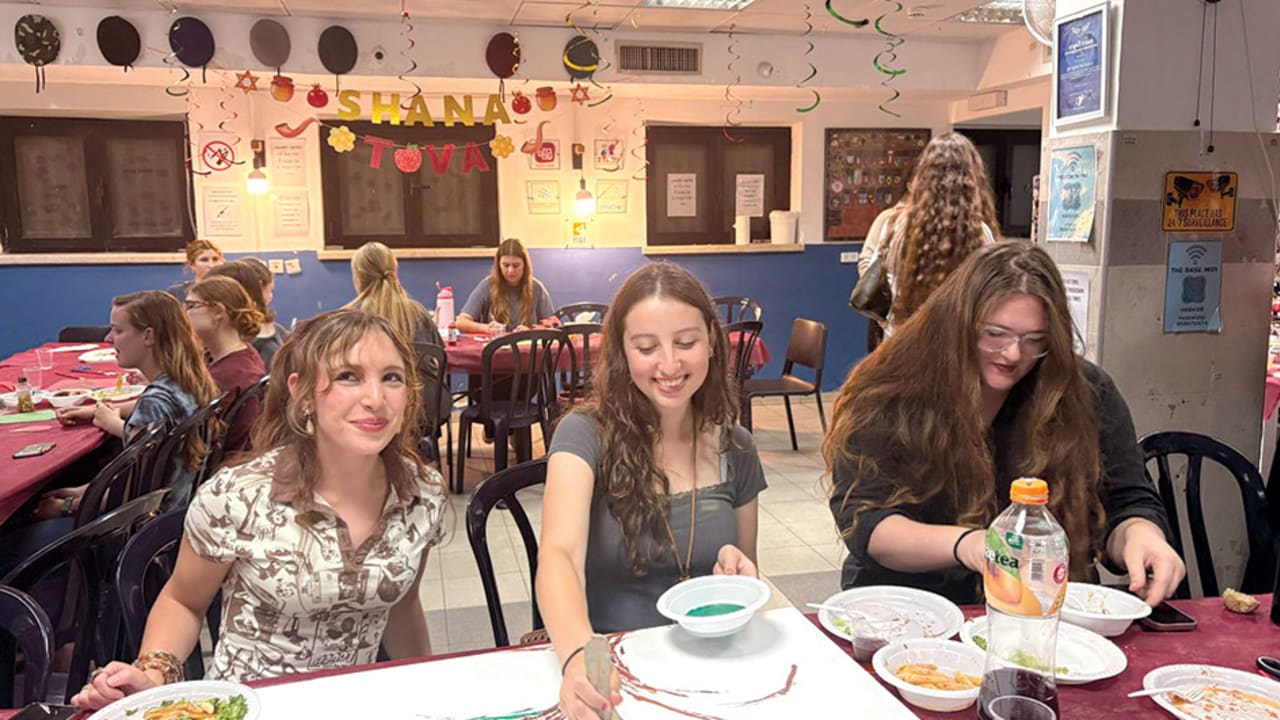
OCTOBER 25, 2026 14:32"That’s where I find family. That’s where I find community. That’s where I feel at home.”This was a female lone soldier’s response to the question of whether she knew of the Michael Levin Base. The soldier, who had made aliyah from Atlanta a year earlier, met the base’s co-founder Richard Corman by chance in synagogue. Corman had approached her, as he often does when he sees soldiers, simply to thank her for her service.Corman recounted the conversation earlier this month during his speech at the annual MLB gala, the title of which was “Three Years Since Oct. 7: Where Are We Today?” When Corman told the soldier that he had helped establish the base, she became emotional and thanked him. His response reversed the gratitude: “It’s an honor to meet you.”About the baseThe Michael Levin Base is a nonprofit supporting lone soldiers and lone b’nei sherut before, during, and after their service.Founded in 2020, it was named in memory of lone soldier Michael Levin, who made aliyah from the Philadelphia area and volunteered to serve in the Paratroopers Brigade. Levin experienced firsthand the challenges of being a lone soldier and spoke about creating stronger support for others serving far from home. He was killed aged 22 in the Second Lebanon War in 2006.The Michael Levin Base is a nonprofit supporting lone soldiers and lone b’nei sherut before, during, and after their service. (credit: The Michael Levin Base)The base provides meals, practical assistance, mental-health and emotional support, laundry facilities, community programming, guidance and post-service resources for young adults serving Israel without immediate family support nearby.That mission has taken on added weight since Oct. 7. At the gala, the organization’s leadership said demand for its services had grown exponentially, with more young people seeking advice, Shabbat and holiday meals, supplies, laundry facilities, and, increasingly, trauma counseling.What began with $100,000 in seed funding and the hope that soldiers would simply show up now serves approximately 3,600 young men and women. The base runs more than 70 programs and events each month and has expanded its support across English-, Hebrew-, Russian-, French-, and Spanish-speaking communities.As such, the vision of Levin has now become a critical, lifesaving reality for thousands of soldiers and National Service volunteers.As President Isaac Herzog put it in a prerecorded address opening the gala, “Michael Levin knew what it means to be a young person living alone in Israel while serving with every ounce of his being in the IDF.... There is something so beautiful about the fact that his memory has become a calling for so many to give his vision meaning in the present.”Herzog said Levin had wanted others facing the same challenge to have “the support, the resources, the warmth, and the security” that come from community and belonging.The Michael Levin Base seeks to provide that support system, serving as a home away from home and providing a loving family for those serving without nearby support systems in Israel.New, larger Jerusalem centerIn June, growing demand led the organization to open a Tel Aviv branch, bringing its services closer to soldiers living in central Israel.In September, it also opened Habayit, a partnership serving religious lone b’not sherut and female lone soldiers. Forty young women attended its first Shabbat meal. The Jerusalem base will be moving to a permanent, expanded center on Jaffa Road in January 2027.The larger center is expected to more than double the number of lone soldiers and b’not sherut the organization can host for Shabbat meals and other events.The gala also brought into focus what the term “lone soldier” can obscure. Choosing to serve is not simply a decision to put on a uniform. It can mean leaving behind parents, friends, language, and an entire support system before confronting the pressures of military service itself.Showing up for those in needPanamanian Ambassador Ezra Cohen described that transition in personal terms. Panama currently has seven lone soldiers serving in Israel, he said, and at one point had 16.For Cohen, the need for a support network became particularly tangible during Sukkot.He recounted receiving a call during the recent holiday from “a very worried father from Panama, whose son is a brave soldier who was on the front lines and then got depression.“The father said: ‘Ezra, please see what you can do.’ So I immediately contacted Michael Levin, and within hours they spoke to him, his superiors, and they are taking care of him.”For Cohen, this anecdote demonstrated the way in which the base shows up for those in need; how it makes sure a soldier thousands of miles from his family does not have to navigate a crisis alone.“After Oct. 7, we as a Jewish society, Israel as a country, is much stronger. But our soldiers need their support, need their comfort zone, need to be in a family. So when we host many of our lone soldiers at our home on Shabbat and we talk about their experience, they express we are not alone. And this is the core of the Michael Levin Base Foundation.”Lt.-Col. Jonathan Conricus, former IDF international spokesperson, echoed that message while placing lone soldiers within the wider story of the war.Conricus recalled joining IDF forces during the early ground operation at Shifa Hospital in Gaza (at the start of the war). There, he met a reservist who had previously been a lone soldier and who had returned to Israel from the US on one of the first flights after Oct. 7 to rejoin his unit.At a point when Israel had yet to gain control over much of Gaza, and the trajectory of the war remained undetermined, Conricus said meeting that soldier and his comrades gave him confidence that Israel would endure. He called that spirit Israel’s “X factor.”Because of this, he said the work of the base in helping “our brave soldiers, specifically our lone soldiers, have a home away from home” is so “crucial.”Thousands strongNearly seven years after the organization began, Corman returned to the encounter with the young soldier from Atlanta. Her answer had simplified the base’s expanding programs, new branches, and thousands of participants to the three most important things: family, community, and home.For Corman, this is the whole point. “We started from scratch, hoping that people would come,” he told the audience. Today, the base serves approximately 3,600 young men and women.“I pray and hope that the Michael Levin Base continues to be strong and grows to respond to the modern-day heroes of Israel.”Follow us on Google
Lone soldiers, b'not sherut find a true home at the Michael Levin Base
Full Article
Original Source
Read the full article at Jpost →KhanList aggregates and links to publicly available news content. We do not host full articles from third-party sources. Always verify important information with original sources.