
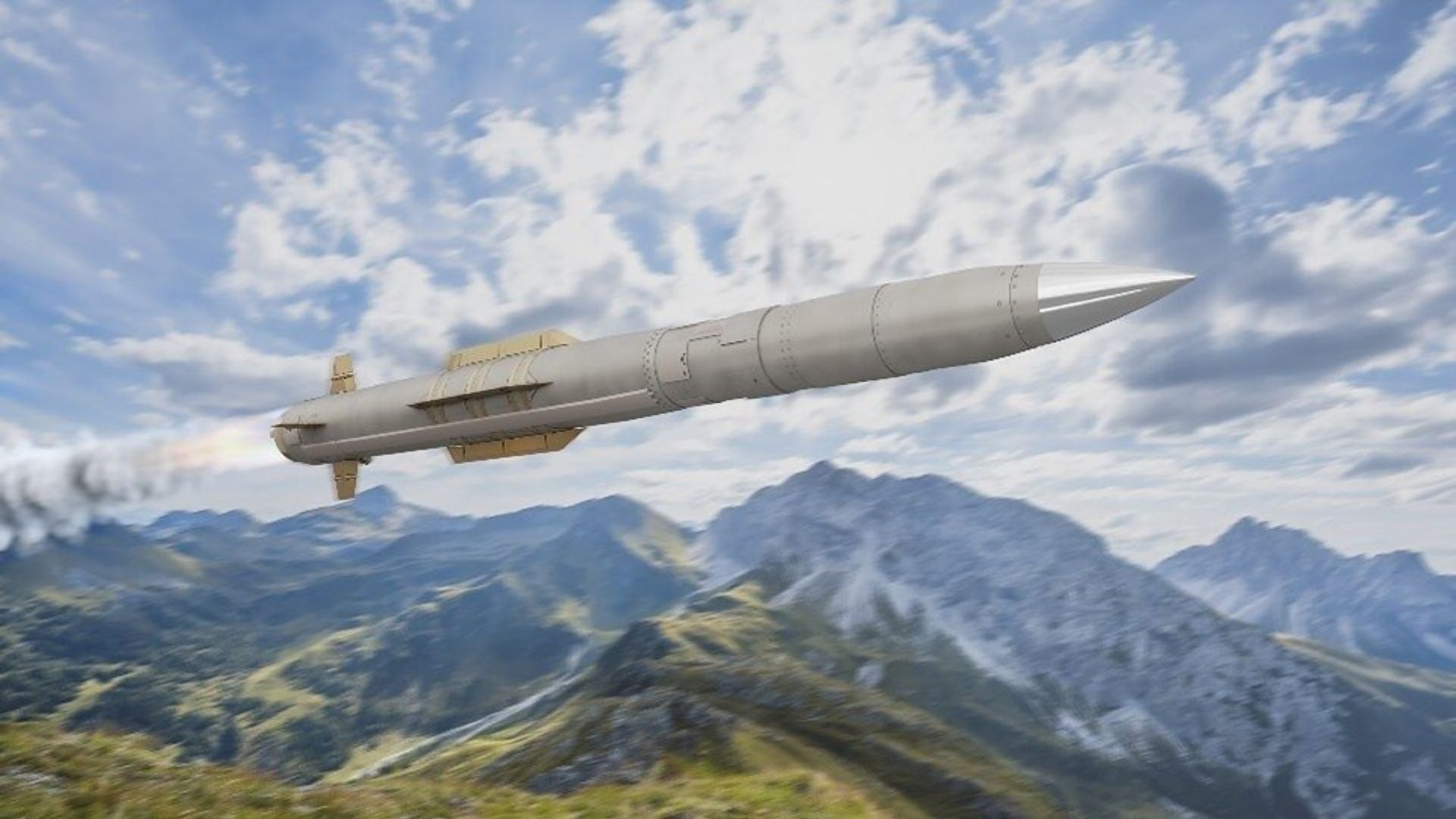
Modern air defense has become an asymmetric financial drain, with militaries frequently launching expensive interceptors to destroy cheap, mass-produced drones. To fix this losing equation, Lockheed Martin unveiled the PAC-3 Adapted Capability Effector (PAC-3 ACE™) at the Farnborough Airshow in the United Kingdom. PAC-3 ACE is a new, low-cost air defense interceptor to defeat a wide range of air and missile threats. It costs less than half the per-unit price of a PAC-3 MSE, lowering the cost-per-kill and increasing global magazine depth. Co-developed with U.S. and European suppliers, the shared interceptor ensures seamless interoperability while reinforcing the transatlantic defense industrial base. It is being developed to intercept a broad spectrum of targets, including air-breathing threats, cruise missiles, and short-range ballistic missiles. “American and allied warfighters need a solution that is battle-tested and budget-smart, and PAC-3 ACE delivers exactly that by building on the unrivaled performance of the PAC-3 MSE,” said Tim Cahill, president, Lockheed Martin Missiles and Fire Control. “As we look to partner with our allies, we can further enhance resiliency and ensure our forces can swiftly counter emerging threats today and tomorrow,” Cahill added. Rapid deployment Global conflicts in Ukraine and the Middle East have severely depleted stockpiles, forcing military planners to shift their focus from high-end, exquisitely engineered missiles to sheer volume. Against constant barrages of cheap, swarm-style suicide drones and cruise missiles, the depth of a military’s magazine has become just as critical as its technological sophistication. In response, Lockheed Martin’s shift toward lower-cost interceptors serves as a direct defensive maneuver against a rising class of rivals offering cheaper, nimbler alternatives. Built specifically for a budget-conscious battlefield, the new missile cuts the cost of a flagship PAC-3 MSE — roughly $4 million per unit — by more than half, introducing a critical layer of financial sustainability to Western air defense. Using existing, battle-tested software, the PAC-3 ACE plugs directly into the trusted Patriot fire-control system and the U.S. Army’s Integrated Battle Command System (IBCS). Notably, this reliance on a familiar, proven framework allows Lockheed Martin to overcome the decades of developmental red tape and bureaucratic delays that typically bog down new weapon programs. It could accelerate its timeline to the battlefield. Allied collaboration The industrial strategy for the PAC-3 ACE marks a notable geopolitical pivot, as Lockheed plans to co-develop and manufacture the missile alongside American and European partners. The collaborative approach directly addresses the growing demand from European governments for domestic manufacturing capabilities over simple overseas purchasing. As per Reuters, the initial production is slated to begin within the next 36 months. “PAC-3 ACE will give allied forces a rapidly fielded, complementary air defense effector option that can be deployed in record time,” Lockheed Martin stated in the press release. The PAC-3 ACE targets a broad spectrum of airborne threats, from air-breathing targets to short-range ballistic missiles. If successful, it could rewrite the economics of a sky under siege. Until then, the defense world will be watching to see if this legacy giant can successfully manufacture at the speed of modern conflictRecommended ArticlesGet the latest in engineering, tech, space & science - delivered daily to your inbox.Mrigakshi is a science journalist who enjoys writing about space exploration, biology, and technological innovations. Her work has been featured in well-known publications including Nature India, Supercluster, The Weather Channel and Astronomy magazine. If you have pitches in mind, please do not hesitate to email her.
Lockheed’s new interceptor to defeat cruise missiles and ballistic threats
Full Article
Original Source
Read the full article at Interestingengineering →KhanList aggregates and links to publicly available news content. We do not host full articles from third-party sources. Always verify important information with original sources.