
When Orla Leahy, who is in her 70s, collects her husband from his appointments at the Beacon Hospital in Dublin she puts their dog’s collar, which has a location tracker, on to her wing mirror. “It’s a terrible place to park, so rather than have him waiting in the rain, he can see where I am [on his phone]. It’s a bit stalkerish but it’s a good use of the technology.”A teenager I know was recently snared having a surreptitious party thanks to the family home’s doorbell camera. Sitting with his parents at the time, we watched all the youngsters coming to their door on his father’s phone before the event was shut down. I couldn’t help feeling it was a bit of a shame.Someone else describes a friend whose girlfriend kept track of his every movement via location sharing – constantly ringing to ask questions about why he was where he was and who he was with. We live in a world of surveillance. Our phones track us. Our apps track us. Security cameras on houses and businesses track us. Our data is circulated and shared and sold and hacked and leaked. Increasingly, assisting this process for the corporations who profit from it, we also voluntarily track each other.READ MORESome people consensually track older relatives living alone. Very many parents track their teenage children’s movements. A surprising number of parents also track their adult children and, sometimes, their spouses via family connection apps such as Life 360 or the Apple Family Sharing facility. Meanwhile, most young people can constantly see the locations of their peers via the location-tracking software on messaging apps such as Snapchat.There has been a huge change in social norms, says child and adolescent psychotherapist Colman Noctor. “Technology changes culture ... What was deviant is now acceptable and what once was acceptable is now deviant. I always use the example of calling to someone’s house unannounced. It used to be something everyone did and now you’d never do it. You have to text first and give warnings. We can’t underestimate how quickly these things seep into the societal narrative ... I didn’t see problems with it until an 18-year-old girl was in therapy with me, and she said her boyfriend tracks her. [I said] ‘That’s not good.’ But she didn’t see it. ‘My parents have tracked me since I was 15-years-old. Doesn’t everyone just track everyone?’… Tracking an intimate partner, which would have seemed dreadfully inappropriate five years ago, has seeped into culture as something almost acceptable.”The Irish Timesput a call out to readers asking how people were using tracking technology and got an array of responses, which we followed up with more in-depth interviews over the phone. A number of people said they shared location-tracking details with older relatives who lived alone and they and their relatives derived a lot of comfort from it. Eoin Licken, an Irish engineer living in France, works with a Belgian company called Zembro that provides location-tracking services designed for people with dementia. “We have some nursing-home customers where you might want to monitor somebody and just know that they’re okay,” he says. “You can draw what we call a ‘safety zone’ on the map, and if [they] go outside that safety zone, it then starts sending its location every minute. “My [93-year-old] mother lives on her own in Dublin, so I would typically have a safety zone around her house, the park, the shops ... She walks that daily. But if she went outside that, I click on it ... She doesn’t have dementia, so she doesn’t need that. She’s only doing that because she knows I want to test this.”His mother is a fan of her location-tracking emergency pendant, however. “She knew somebody who was putting the washing on the line and fell on a cold day and died. She’s very comforted by the fact she knows she can press a button and, in this case, actually talk to one of her children.”She resisted being tracked in a more detailed fashion inside her home. “When I put that to my mum, she said: ‘Nobody’s tracking me in my house.’” It is increasingly common to keep family tracking functioning for college-aged children. Photograph: Bryan O'Brien/The Irish Times Many people track their teenage children. Ten years ago, Stephen (who didn’t want his full name published) disturbed his teenage son while his son was trying to take his own life. The family, school and the families of his friends rolled in to provide support. Later, Stephen adopted family tracking. “I was working overseas, still am a lot of the time. We were conscious he still needs to live a life. [There was] a little bit of comfort knowing that if he was half an hour late home that he’s in his mate’s house.”Since then all of his family are on the Apple family-tracking app except for his oldest son, who lives abroad; and his wife, because she has a work phone with a different network provider. Nowadays his son is healthy and well, but they still use location tracking. “My wife and family would be having dinner [when I’m out of the country] and she’d go ‘I wonder what dad’s doing?’ and my daughter would look at her phone and say: ‘Oh he’s in his apartment.’” He says with a laugh. “Sometimes the kids would be ignoring my wife’s calls and I have the capacity to set the alarm off in their phone. When they go, ‘What?’, I say: ‘Just answer your mother, will you?’”There were other stories like Stephen’s from parents worrying about vulnerable children. Niamh, a mother of teenage girls, says she has location tracking on the phone of the 14-year-old, who often goes missing, but not the phone of the 15-year-old, who is always where she says she will be. “With my husband,” she quips. “I’d be more inclined to say: ‘Please don’t tell me where you are.’”Noctor understands why a parent would feel a need to monitor a vulnerable child or why an adult child might monitor an elderly parent. But he worries that more widespread use of this technology will change our sense of privacy. “From a psychological point of view, we all need our private thoughts,” he says. “We need our own space. We need our own existence, our true self. But the more we display that, perform that, or broadcast that, the less is the likelihood we will ever gain the advantages of it. Our privacy and even our true self is being basically concealed because we’re performing as these avatars of ourselves.” It is increasingly common to keep family tracking functioning for college-aged children. Pearl is a 19-year-old college student from Donegal in her second year of university in Dublin. Her parents have tracked her phone since she was a young teenager and continue to do so. “As a teenager I despised the idea of my parents knowing where I was [but] I just grew to like the idea ... When I’m walking back from college to my apartment, because I live in town, and it’s not the best of areas. I just know, well, my parents have my location. It really is like two guardian angels ... If I was without my phone, I probably would be a bit like, ‘okay, I’m definitely by myself here. If anything goes wrong, it’s just me.’” ‘I can’t really imagine being 30 years old and having my parents have my location’Does she ever worry about her parents judging her activities? “If I was out too late, I wouldn’t think, ‘oh God, I better get home because my mum or dad’s going to see my location’ ... It’s more Dad [might say] I should probably go to the library early tomorrow morning and it’s 11 o’clock and I’m still in my apartment. I’ll wonder if he’s [looking] at my location and thinking to himself, ‘she didn’t get up and do that.’”Most of Pearl’s friends are also on family-tracking systems and they share their location with each other. She sometimes wonders about this, asking. “Should I know what my friends are doing?” She says it can occasionally make her anxious, as she finds herself thinking “‘oh my friends are here and no one told me about that’ ... But I’ve almost become desensitised to it. I enjoy the thought of people knowing where I am ... Some people are quite into stalking Snap Maps [the map mode on Snapchat]. You can see where all your friends who have turned on their location on Snapchat are. I don’t have my location on on Snapchat. I only have it on for eight or 10 of my closest friends.”[ Poetry for a surveillance societyOpens in new window ]As she gets older, does she think she might opt out of tracking? “I can’t really imagine being 30 years old and having my parents have my location,” she says. But then she thinks about it: “I’m fine with them having it now, even though I’m an adult and I’m away from home. So why not at 30? ”Noctor thinks tracking young people too closely could affect their development. A space for private mistakes “is absolutely developmentally essential”, he says. “Not getting back on time and missing the bus encourages you to learn about responsibility ... Lots of these things can’t be taught, they have to be lived.”Twenty-one-year-old Charlie Beaudelot from Offaly studies human nutrition and dietetics at Trinity College and TU Dublin and has a more cautious take on location trackers. “When I’m on my way home, I’ll share a location with one of my friends or share a location with one of my family members. And then there’s a few people who I let track my location all the time, but that’s mainly because they are people that are very close to me.”Beaudelot has been “burned” by more extensive location tracking in the past. When they first came to college, sharing locations was the norm in their new friend group. But people often ended up getting angry with each other due to feeling left out if they saw other people hanging out together. “There is that feeling of underlying stress of being watched all the time, which is one of the reasons why I don’t share my location with many people now. The norm now is actually just sharing your location constantly ... I have definitely been questioned on it a few times by less close friends ... [and sometimes] felt pressured to share my location”.Charlie Beaudelot says tracking has 'really affected' some friends' social lives Part of the reason they think they might be uncomfortable with more widespread tracking is that Beaudelot’s parents never tracked them in their teens. “I know some friends who have their location constantly tracked by their parents even now in college,” they say. “They come from stricter households ... Tracking has really affected not only their relationship with their parents, but their social lives as well because they feel they are being watched.”[ The Irish Times view on CCTV in Dublin: Light camera actionOpens in new window ]They have also seen the ways location tracking can be weaponised in problematic romantic relationships. “I’ve seen it with friends who have got into more controlling relationships where people feel that they need to be able to watch their partner doing everything,” they say. “There’s a difference between privacy and secrecy. I volunteer with Too Into You, part of Women’s Aid, [a programme for young people experiencing abuse in intimate relationships] so I keep an eye out for red flags in behaviour. I know some people who have been in situations where their locations are tracked and they’ve been accused, when turning off their location, of cheating ... I think sharing location is too normalised.”Dola Twomey from the Stalking in Ireland Project, which is part of the Sexual Violence Centre in Cork, agrees that location tracking can be very problematic in the context of toxic relationships. “Every case [of stalking] will have a technological aspect to it. We carry the tech in our pockets all the time, and what that tech can actually do is just phenomenal compared to even 10 years ago,” Twomey says.Often people are tracked without their knowledge, but she is also keen to stress that if someone feels coerced into accepting being tracked, that doesn’t constitute real consent. A controlling partner demanding someone’s location at all times, she says, is like “putting a leash on someone ... It’s typically hard for somebody stuck in that scenario to see it clearly, because making sure somebody doesn’t see things clearly is part and parcel of the abuse”.[ Teenage boys in Ireland: ‘Now that everyone has a phone, the bullying never stops’Opens in new window ]Jason Broe, a 22-year-old business and management student at TU Dublin, has also seen it become an issue in relationships. “I’ve seen people get texts, ‘Where are you? Why are you with this person?’,” he says. And if someone who normally has location tracking on turns it off for a period, everyone assumes they’re “up to something”, he says.Student Jason Broe says he has been questioned many times about not letting people track his location. Photograph: Bryan O’Brien/The Irish Times As we speak, he looks at the Snap Map on Snapchat on his phone. “Looking at it now, I can easily see where 70 per cent or 80 per cent of the people I know currently are. It’s still a bit mad to me ... There is an option to keep it off, it’s called ‘ghost mode’.”Even the name “ghost mode” indicates it’s the weird option, he notes. Broe worries about young people advertising their location to bullies and others who mean them harm. He also thinks location tracking adds to anxiety. “When you see on the map that there’s four of your friends in the same cafe it can hurt a little bit,” he says. “It could be because of something simple, that they were just in the same area and it worked out for them to meet up ... Some people are constantly looking at this [map].”[ Mark O'Connell: A mother stalking her 19-year-old online is demented – but not in the way you thinkOpens in new window ]Sometimes when travelling abroad, Broe will choose to be tracked for convenience and safety. But most of the time he chooses “ghost mode”. “I’ve been asked many times, why don’t you have your location on? They add me on Snapchat, and I follow them back, and they’re like, ‘oh, I can’t see where you are’. But that would feel like a weird thing to me. I like to keep it private.” He adds with a laugh: “Not that I’m up to anything.”Michael Murphy, a 23-year-old final-year computing and software development student at TU Dublin, has also largely opted out of tracking software. “It would weird me out having everyone see my location live at all times.”But many people in his generation are comfortable with it, he says. He thinks this might be because people grew up with their families tracking them. “A lot of people have their location [on Snapchat] on at all times. This one’s in Dún Laoghaire and this one is in Wicklow ... Oh, this one’s in Rathmines having a ramen. They just have a lower threshold for what they care about people seeing, or their privacy.”For others, such as Murphy, their caution around the issue is part of a wider political awareness. He has some tech-savvy friends who go to extraordinary lengths to protect their data and location. “I do not like the thought that I’d be driving down the road, and there’s about 17 photos being taken of me in real time that are now stored somewhere,” he says. “It’s an odd feeling.”He can’t understand why people would choose to be tracked at all times. “When I know I’m being tracked, it feels like there’s an eye in the sky watching where I’m going. Big Brother is watching.” He adds, laughing: “Big Brother being my friends.”
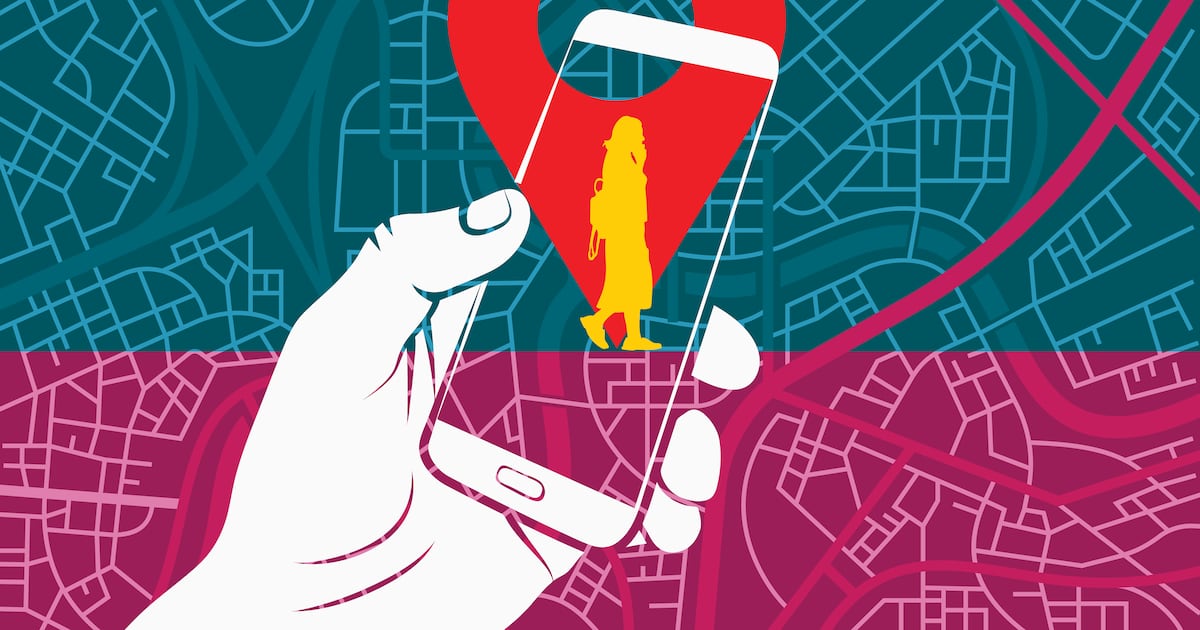
Location tracking: ‘I can easily see where 80% of the people I know currently are’
Full Article
Original Source
Read the full article at Irishtimes →KhanList aggregates and links to publicly available news content. We do not host full articles from third-party sources. Always verify important information with original sources.