
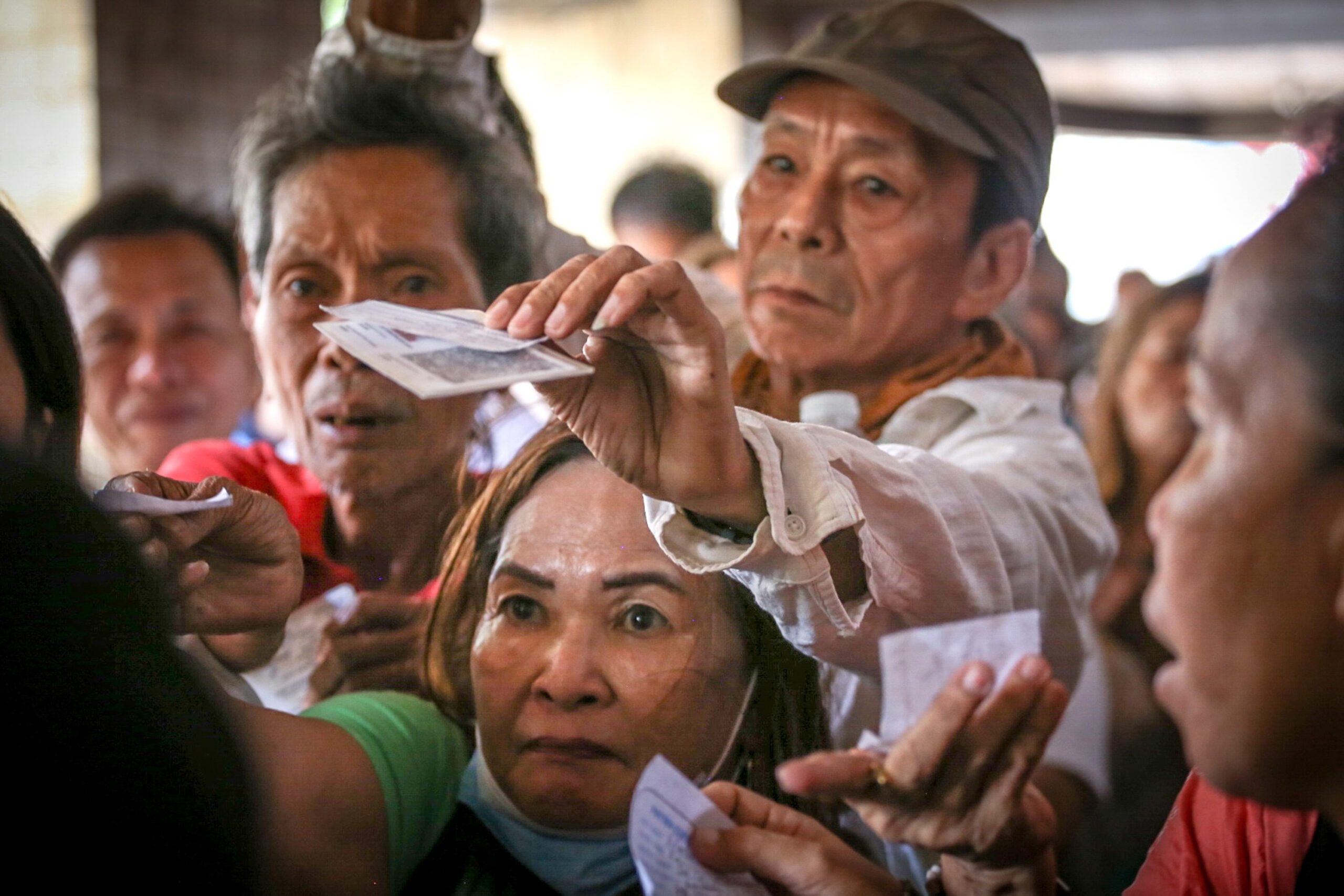
REGISTRATION. Cebu residents flock to the Commission on Elections office in Cebu City on November 10, 2026, as voter registration resumes for the 2028 national and local elections. Jacqueline Hernandez/Rappler The registration will run until July 30, 2027, Tuesdays to Fridays, 8 am to 5 pm The voter registration for the 2028 elections in the Philippines reopened on November 10, 2026, and will close on July 30, 2027, with registration available from Tuesday to Friday and select Saturdays and holidays. Eligible voters must be Filipino citizens, at least 18 years old by election day, and residents of the Philippines and their locality for specified durations, while certain individuals, such as those convicted of serious crimes, are disqualified from registering. Various registration options are available, including local Comelec offices, satellite sites, and special programs, and applicants must provide identification documents or affidavits if they lack ID. This is AI-generated. Read the article for full context. Report any errors. The presidential, national, and local elections of 2028 are 18 months away, and prospective candidates will be filing their certificates in 11 months yet, but the poll season has technically started in the Philippines. On Tuesday, November 10, the Commission on Elections (Comelec) resumed the registration of voters for the 2028 exercise. So I guess I will also have to resume this early my Local Vote series, which I usually write only during campaign periods. And for this edition, I have put together answers to your most common questions on voter registration. The answers are from various and relevant documents and information from the Comelec. I will be updating this Q&A if and when there are new information you should know. In the meantime, you can also download Rappler’s MUNI app — for free — and join the Voter Hotline channel. There, we post updates about voter issues, while Comelec personnel and representatives of election watchdogs also address voter concerns. Until when is the voter registration for the 2028 elections? The voter registration, which reopened on November 10, 2026, will close by end of day on July 30, 2027. That’s a good eight months and 20 days, so I hope we can avoid any last-minute rush and, with it, the usually unfair criticism against the Comelec and its processes. What is the schedule during the voter registration period? Registration days are from Tuesday to Friday, 8 am to 5 pm. There will be Saturdays and holidays when the Comelec or its local offices can and will schedule registrations. Remember: not all Saturdays and holidays. To know on which Saturdays and holidays registrations will be conducted, follow the Comelec’s official social media account or check with the election office in your city or municipality. Rappler’s Voter Hotline channel will also post advisories as they come in. Where can I register as a voter? Local Comelec offices. They will accommodate you during office hours. Comelec-approved satellite registration sites. These are usually malls or schools in key cities across the country. I will upload lists here once available. Special Register Anytime/Anywhere Program (SRAP) sites. These are select areas where Comelec makes one-time deployments. For example: On November 10, the opening day of the voter registration period, a SRAP team was at the Mabini Hall in Luneta in Manila; it will be stationed there until Thursday, November. 12. It is open to the general public from 8 am to 6 pm. On November 19, SRAP will be at WalterMart Makati. It will also be open to the general public from 8 am to 5 pm. On November 24, a Comelec team will be at the Far Eastern University’s (FEU) Manila campus. The registration will be for FEU students only, from 8 am to 5 pm. You can check future SRAP locations and dates here. EARLY. Cebu City residents take advantage of the first voter registration day for the 2028 elections. Jacqueline Hernandez/Rappler Who can register as a voter? Filipino citizen At least 18 years old by election day (May 8, 2028) For at least one year before election day, a resident of the Philippines For at least six months before election day, a resident of the locality where he/she intends to vote Who cannot register as a voter? Sentenced to prison for at least one year, unless pardoned or granted amnesty A person automatically reacquires his/her right to vote five years after serving his/her sentence. Reacquisition can happen earlier if his/her full civil and political rights are restored through plenary pardon or amnesty. Convicted of rebellion, sedition, violation of the firearms laws, or any crime against national security A person automatically reacquires his/her right to vote five years after serving his/her sentence. Reacquisition can happen earlier if his/her full civil and political rights are restored in accordance with law. Declared by a competent authority to be insane or incompetent, unless a proper authority declares the person is no longer suffering from such condition. What are the different kinds of voter registrants? First-time voters Voters who want to reactivate their records (after failing to vote for two consecutive elections) Voters who want to transfer their registration within the locality (for example: from one barangay to another, or from one municipality to another) Voters who want to correct certain entries in their records, or want to reflect changes in their names (for example: now carrying a spouse’s surname or marriage has been annulled) Voters who want to transfer their records from a foreign service post to a local registration site Persons with disabilities, senior citizens, members of Indigenous Peoples or Indigenous Cultural Communities, and other vulnerable sectors who need to update their records Voters who will be abroad on election day. (These registrants can submit application forms online here, but they have to go to the Philippine embassy or consulate for the biometrics capturing. Once registered, they can only vote for national positions.) REGISTER ANYWHERE. First-time voters line up at the Comelec’s special registration site in Luneta Park in Manila on November 10, 2026 to register for the 2028 national and local elections. The registration period will run until July 30, 2027. Rappler photo How do I check the status or record of my voter registration? As of September 4, 2026, these are the deactivated voters. The Comelec has uploaded lists for every city and municipality. In every list, it is indicated whether the person failed to vote in two consecutive regular elections (totally deactivated and must register again) or has transferred and therefore has an active record in another city or municipality (so decide if you want to transfer to your old locality). If your name is not on the list of deactivated voters, it means your registration is intact. So if you need to transfer or make changes to your record, go to your local Comelec office or to satellite registration sites. What are the requirements for voter registration? Accomplished application form Any of the following identification documents: National ID from PhilSys Postal ID card PWD ID Card Senior citizen’s ID card Student’s ID card or library card, signed by the school authority Driver’s license or student permit from the Land Transportation Office National Bureau of Investigation clearance Philippine passport Social Security System (SSS) or Government Service Insurance System (GSIS) or other Unified Multi-Purpose ID card Integrated Bar of the Philippines ID card License issued by the Professional Regulatory Commission Certificate of Confirmation issued by the National Commission on Indigenous Peoples Barangay Identification or certification with photo Any other government-issued valid IDs If the applicant doesn’t have any of these IDs, in the absence of any of the above-mentioned identification documents, he/she can submit a sworn affidavit by any fourth-degree relative. How do I get a voter ID? You don’t. The Comelec stopped issuing voter ID cards starting December 2017. This was after the House of Representative approved the bill seeking to establish a national identification system, under which a single ID would be issued to every citizen for all their government transactions. (Republic Act 1105 or the Philippine Identification System Act was signed into law on August 6, 2018. We all know what happened to the national ID applications and issuance — many Filipinos are still waiting for their cards after years — but that’s a column for another day.) Here’s a detail many people overlook: Submitting an application for registration doesn’t automatically make you a registered voter. Applications will be vetted and approved by an election registration board in every city and municipality. So far, these boards meet only once every 3 months, so they deliberate on the list per quarter — an incentive for you to register early. – Rappler.com How does this make you feel? Loading
[Local Vote] Voter registration for 2028: Answers to your common questions
Full Article
Original Source
Read the full article at Rappler →KhanList aggregates and links to publicly available news content. We do not host full articles from third-party sources. Always verify important information with original sources.