
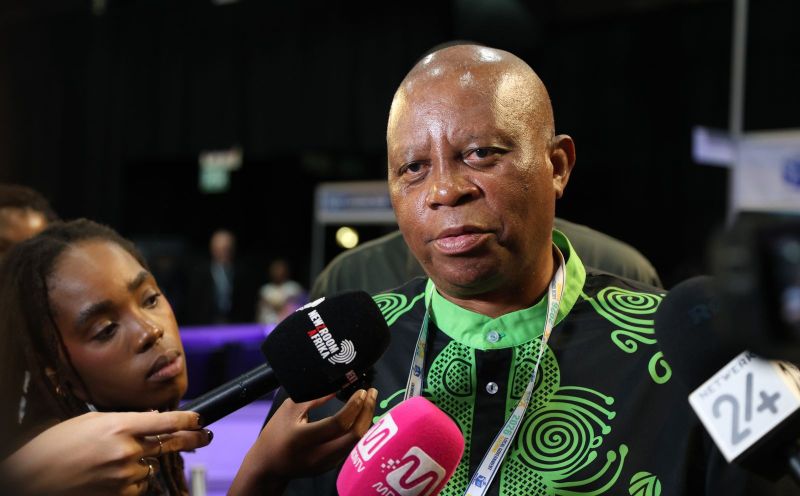
Through negotiations, the ANC and ActionSA have managed to win the mayoral chains, with the help of the Economic Freedom Fighters (EFF), the uMkhonto Wesizwe (MK) party and several smaller political formations, in Johannesburg, Ekurhuleni and Tshwane. ActionSA took the mayoralties in Johannesburg and Tshwane, while the ANC took the mayoral position in Ekurhuleni.The outcome follows weeks of negotiations after the 4 November elections over the distribution of political positions, with disagreements over mayoral candidates and the allocation of senior posts complicating efforts to finalise the arrangements.Mashaba returns to JoburgIn Johannesburg, ActionSA leader Herman Mashaba was elected executive mayor on Friday, 27 November, returning to the position for a second stint, this time as the leader of ActionSA after he led the city from 2016 to 2019 as a DA member.Mashaba secured 170 votes against the DA’s Helen Zille, who received 97 votes.In the 270-seat hung council, where 136 seats are needed for a majority, the DA holds 91 seats, the ANC 64, ActionSA 42, the EFF 17 and the MK party 15.Mashaba resigned from the DA in 2019 following disagreements with its leadership and subsequently launched ActionSA in August 2020.His return to the mayoral office comes amid continued tensions with the DA, with Mashaba having publicly opposed Helen Zille’s bid to become mayor.ActionSA leader Herman Mashaba celebrates his election as the Executive Mayor of Johannesburg on Friday, 27 November 2026. (Photo: Reitumetse Pilane) The contest also follows a period of legal and political exchanges between the parties. The Gauteng Division of the High Court recently granted EFF leader Julius Malema an interdict against Zille after she made allegations about Malema’s influence over Mashaba and municipal appointments during his previous mayoral term.The ANC’s Vhonani Adolf Marema was elected Speaker of council, receiving 171 votes against the DA’s Alex Christians, who received 99.Marema was re-elected as a ward councillor representing Ward 116, which covers areas around Alexandra.He has previously served as chair of chairs in the City of Johannesburg legislature, regional council whip, deputy chief whip of the ANC caucus and ANC regional deputy chairperson in Greater Johannesburg.Vhonani Adolf Marema, the newly elected Speaker of the Johannesburg City Council, at the City’s second council meeting at the Connie Bapela Council Chamber in Braamfontein on Friday, 27 November 2026. (Photo: Reitumetse Pilane) The broader Johannesburg coalition framework was understood to involve 18 political parties, excluding the DA, Freedom Front Plus and African Christian Democratic Party. The grouping included the ANC, ActionSA, EFF, MK party, Inkatha Freedom Party, Patriotic Alliance, Rise Mzansi and several smaller formations.The arrangement provides for the ANC and ActionSA to retain significant influence over the administration, while other coalition partners are accommodated through positions in the mayoral committee and municipal structures.The ANC’s Thapelo Radebe was elected deputy mayor, beating the DA’s Belinda Echeozonjoku.ANC takes EkurhuleniIn Ekurhuleni, the ANC’s Mziyanda Mketsu was elected executive mayor on Friday, securing 141 votes against the DA’s Khathutshelo Rasilingwane, who received 80.The election followed days of uncertainty over the coalition negotiations, with competing interests within the ANC reportedly complicating efforts to finalise an agreement.In the 224-seat hung council, where 113 seats are needed for a majority, the DA holds 66 seats, the ANC 59, ActionSA 40, the MK party 15 and the EFF 14.Mziyanda Mketsu was elected as the new mayor of Ekurhuleni. (Photo: Facebook / City of Ekurhuleni) Mketsu has served as a councillor representing Ward 53 in Thokoza since 2021. He previously chaired the City of Ekurhuleni’s Municipal Public Accounts Committee.The ANC’s negotiations in the metro were complicated by internal disagreements over who should lead the municipality. Daily Maverick previously reported that Mketsu had been touted as a possible compromise candidate between competing ANC factions, while another faction supported the return of former mayor Nkosindiphile Xhakaza.The ANC’s regional structures were also reported to have taken a more active role in the negotiations, amid differences with provincial leadership over the direction of the talks.The EFF’s former mayoral candidate, Nthabiseng Tshivhenga, was elected speaker of council, receiving 142 votes against the DA’s Brandon Pretorius, who secured 79. Two councillors were absent, and one abstained.Tshivhenga previously served as Ekurhuleni council speaker before resigning in late 2025 following her redeployment to the Gauteng Provincial Legislature. She was sworn in as an MPL in December 2025 and served until March 2026.The ANC’s Philiswa Madlebe was elected chief whip, receiving 142 votes against DA councillor and former mayor Tania Campbell, who received 79.The negotiations in Ekurhuleni had been among the most contested in Gauteng, with ActionSA leader Herman Mashaba saying his party had been ready to formalise an agreement with the ANC for more than a week, while accusing the governing party of delaying the process.ActionSA’s Ekurhuleni mayoral candidate Xolani Khumalo during the City's first council sitting at the OR Tambo Government Precinct in Germiston on Wednesday, 25 November 2026. (Photo: Reitumetse Pilane) ActionSA had indicated that it wanted its mayoral candidate, Xolani Khumalo, to serve as deputy mayor and head of the metro’s police portfolio. The city doesn’t currently have a deputy mayor position, but he’s expected to fill it after it’s created.Tshwane: Moya returns as mayorIn Tshwane, ActionSA retained control of the mayoralty, with Dr Nasiphi Moya re-elected executive mayor on Thursday after securing 115 votes against the DA’s Cilliers Brink, who received 87. The ANC’s Naeem Patel was elected speaker with 119 votes, defeating the DA’s Pogiso Mthimunye, who received 71, and the Freedom Front Plus’s Willie Spies, who received 19.The EFF’s Omphile Maotwe was elected deputy mayor unopposed, while the ANC’s April Mabona was elected Chief Whip, also unopposed.The coalition, anchored by the ANC, ActionSA, EFF and MK party, holds 109 of the 214 seats in the council, just above the 108 needed for a majority.ActionSA’s Dr Nasiphi Moya celebrates her re-election as Executive Mayor of Tshwane at the City's inaugural council meeting at Tshwane House on Thursday, 26 November 2026. (Photo: Reitumetse Pilane) Several smaller parties are also part of the broader governing arrangement. The allocation of mayoral committee portfolios was still being finalised following the election of the council’s office-bearers.Daily Maverick understands that some ANC and MK party leaders had been opposed to Moya retaining the position, amid concerns about ActionSA’s growing electoral support and her public profile as mayor.On Thursday evening, Mashaba announced that the MK party appeared to be withdrawing its support for the broader coalition arrangement.He attributed the apparent disagreement to opposition to Moya’s election and demands from the party for some of the administration’s more positions. MK party’s Dali Mpofu at the City of Johannesburg’s second council meeting to elect office bearers at the Connie Bapela Council Chamber in Braamfontein on Friday, 27 November 2026. (Photo: Reitumetse Pilane) However, speaking to Daily Maverick on Friday afternoon, the MK party’s Dali Mpofu denied that there were tensions, maintaining that agreements had been finalised some time ago.ANC says it will lead governments in 144 councilsThe conclusion of the Gauteng arrangements comes as the ANC outlined the extent of its coalition negotiations nationally, with ANC Secretary-General Fikile Mbalula saying the party expects to lead governments in 144 of the country’s 213 municipal councils.Speaking during a media briefing at Luthuli House on Friday, following deliberations by the party’s special National Executive Committee (NEC), Mbalula said the Electoral Commission of SA had declared results in 213 municipal councils, excluding district councils, comprising 8,824 councillors.Of these, 74 councils were won outright by a single party, with the ANC securing an outright majority in 53.The ANC emerged as the largest party in 133 councils – the 53 where it won an outright majority and a further 80 hung councils.Based on the coalition arrangements presented to the NEC, the party expects to lead governments in 144 councils.Mbalula said the ANC retained its strongest representation in Limpopo, where it holds 55.8% of council seats, followed by the Eastern Cape at 51.2%. Its share of council seats stands at 46.5% in North West, 44.7% in Mpumalanga, 43.6% in the Northern Cape and 40.2% in the Free State.ANC Secretary-General Fikile Mbalula at the Results Operations Centre in Midrand, Johannesburg, on 7 November 2026. (Photo: Felix Dlangamandla) The party’s position is considerably weaker in Gauteng, where it holds 25.4% of council seats, KwaZulu-Natal at 21.6% and the Western Cape at 16%.Mbalula said the ANC would hold or share the mayoralty in six of the nine provincial capitals: Polokwane, Bhisho through Buffalo City, Kimberley through Sol Plaatje, Bloemfontein through Mangaung, Mbombela and Mahikeng.ANC’s inclusive strategyThe ANC’s coalition negotiations were guided by a mandate established by an extended special meeting of the party’s NEC, which included its alliance partners, the Congress of South African Trade Unions (Cosatu) and the South African National Civic Organisation (Sanco).The party subsequently established a National Negotiations Team, led by Mbalula, to engage political formations and coordinate negotiations across the country. Provincial negotiating teams provided local political and electoral assessments to inform decisions at national level, while the ANC’s alliance partners and leagues participated in the process.At its special meeting on 23 November, the NEC considered the negotiating team’s report on engagements with provincial structures. Mbalula said the additional time had allowed the team to work through the practical obligations required to sustain coalition governments, including funded municipal budgets and mechanisms for resolving disagreements before they disrupted council operations.The ANC sent written cooperation term sheets to six political parties: the EFF, MK party, IFP, South African Communist Party (SACP), ActionSA and the DA. Mbalula stressed that the proposals were tailored to individual municipalities rather than being general political declarations.Beyond those parties, the ANC reached agreements, understandings and municipal arrangements with a range of smaller formations, including the Patriotic Alliance, United Democratic Movement, Good party, African Christian Democratic Party, Freedom Front Plus, African People’s Convention and several local parties and independent councillors.Mbalula said the ANC had not refused a meeting with any political party that approached it, adding that in Limpopo alone the party had concluded arrangements in 10 councils with nine different political formations.The EFF formed part of the bloc negotiated by the ANC in 107 councils, while the SACP was involved in 73. The MK party featured in arrangements in 34 councils and the Patriotic Alliance in 25, while the IFP and ActionSA were also included in various municipalities.Mbalula said the SACP was part of the governing arrangements or oversight structures in more than 96% of the municipalities led by the ANC.“The African National Congress has therefore included and not excluded. Every major party in this country is somewhere in the system of arrangements we have settled,” he said.Why the DA was the ANC’s party of last resortMbalula also explained the ANC’s decision to treat the DA as a party of last resort in its coalition negotiations, saying the position was based on a mandate adopted by the party’s National General Council in December 2025.He said the ANC and DA were the country’s two main contending political parties and that cooperation between them at local government level would only be considered if other options had been exhausted.“The main contending parties in this country are the ANC and the DA, and in this particular instance, if we were to work together, it must be because there are no other options on the table,” he said.DA leader Geordin Hill-Lewis address the media at the Results Operations Centre in Midrand, Johannesburg, on 6 November 2026. (Photo: Felix Dlangamandla) Mbalula argued that the DA had itself historically resisted working with the ANC in coalition governments, dating back to the period when coalition arrangements became more prominent after the 2016 local government elections.He said the ANC’s position was informed by political considerations and the party’s assessment of its relationship with the DA, rather than simply the allocation of mayoral positions.The decision to treat the DA as a last resort has been central to the negotiations in Gauteng, where the ANC instead pursued arrangements with ActionSA, the EFF, the MK party and smaller formations, leaving the DA outside the governing bloc in the province’s three metros.First 100 daysWith the coalition negotiations nearing completion, Mbalula said the ANC expected the first 100 days of the new municipal term to mark a shift from political negotiations to service delivery.He said councils in which the ANC governs or shares governing responsibility would be expected to publish service commitments for the period and provide quarterly reports on delivery, expenditure and delays.The party also expects its councillors to remain accessible to residents, attend council meetings and budget and oversight sittings, and report back to communities on the issues they raise.Mbalula said the first 100 days should include ward meetings, assessments of municipal conditions, costed recovery plans and visible interventions addressing water and sanitation problems, potholes, streetlights, illegal dumping and the maintenance of public spaces.He said the ANC would expect councillors and coalition partners to account to residents for progress made during the period. DM
LOCAL ELECTIONS 2026: Mashaba’s manoeuvres win the day as ANC-ActionSA claim Gauteng, leaving DA in the cold
Full Article
Original Source
Read the full article at Dailymaverick →KhanList aggregates and links to publicly available news content. We do not host full articles from third-party sources. Always verify important information with original sources.