
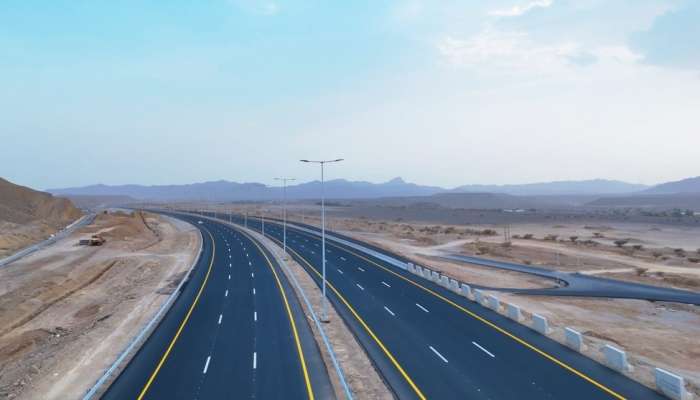
Muscat: The total value of local content in road projects implemented by the Ministry of Transport, Communications and Information Technology exceeded OMR200 million by the end of the first half of 2026.The average local content ratio surpassed 60 percent of total project expenditure during the same period, reflecting the economic value realised from investments directed toward developing road projects in the Sultanate of Oman by increasing the participation of Omani competencies and companies, supporting national products, and expanding the award of works to small and medium enterprises. Eng. Mohammed Salim Al Isaee, Local Content Expert at the Ministry of Transport, Communications and Information Technology, explained that the Ministry has placed the enhancement of local content in the projects it implements across various fields among its core priorities, through a set of requirements and measures applied when contracting for the implementation of its projects, such as ensuring the provision of job opportunities for Omanis and the purchase of products and services from the local market. This also encompasses operation, supply, manufacturing, the award of works, knowledge transfer, the development of national institutions, and the building of technical and administrative capacities, thereby enhancing the national economy’s benefit from project expenditure.He noted that the road projects currently being implemented across the governorates of the Sultanate of Oman represent one of the fields in which local content opportunities are directly manifested, given their multiple components and their connection to a range of economic, industrial, and service activities.He indicated that approximately 1,500 Omanis are employed in road projects under implementation in direct jobs linked to these projects. He affirmed that the participation of national competencies is not limited to providing job opportunities, but extends to developing their skills and assigning them substantive responsibilities in the fields of supervision, implementation, and project management, thereby enhancing their expertise and their ability to assume more specialised roles in the future.He added that approximately 70 percent of the materials used in road projects are manufactured in the Sultanate of Oman, with a value reaching OMR 80 million by the end of the first half of 2026.Strengthening supply chainsHe noted that increasing reliance on national products, provided they meet the technical requirements and approved specifications, contributes to supporting local industry, providing sustainable demand for Omani products, and strengthening supply chains linked to the construction and infrastructure sector.He stated that more than 95 percent of goods used in road projects are purchased from the local market, whether directly or through local suppliers and small and medium enterprises. He explained that directing purchases to the local market expands the base of beneficiaries from project expenditure and supports institutions operating in the fields of supply, services, and ancillary works.He noted that the value of subcontracts awarded to small and medium enterprises within the contracts of ongoing road projects exceeded OMR50 million by the end of the first half of 2026, at a rate exceeding 10 percent. He affirmed that awarding these works enables national institutions to develop their technical, administrative, and financial capabilities, build a track record and executive experience, and invest in equipment and technologies, thereby enhancing their competitiveness and capacity to enter larger projects in the future.He affirmed that the measurement of local content in road projects is based on a set of indicators related to employment, supply, the use of national products, local procurement, and the award of works to Omani institutions. He noted that the importance of these indicators lies in measuring the economic impact of projects in a manner that goes beyond the volume of direct expenditure.He indicated that Sultan Faisal bin Turki Road project in Musandam Governorate provides a model of the role played by transport projects in supporting development and empowering national competencies, explaining that the investment value of the project exceeds OMR151 million.He noted that the project is being implemented in a mountainous environment with engineering and executive challenges, and provides a practical field for developing national expertise in dealing with projects of a complex technical nature, thereby contributing to the accumulation of local knowledge and experience in the roads sector.He explained that the project has contributed to reducing travel time from approximately two and a half hours to about 55 minutes, thereby enhancing ease of movement and access to services, supporting the movement of individuals and goods, and contributing to stimulating economic and tourism activity in the governorate.He added that achieving a 100 percent Omanisation rate in the positions of the consultant supervising the Diba–Lima package reflects the Ministry’s approach toward empowering national competencies and assigning them professional and technical responsibilities. He affirmed that Omanisation in transport projects aims, in addition to providing job opportunities, to build national expertise capable of developing and assuming greater responsibilities in project management and implementation.
Local content in road projects tops OMR200mn
Full Article
Original Source
Read the full article at Timesofoman →KhanList aggregates and links to publicly available news content. We do not host full articles from third-party sources. Always verify important information with original sources.