
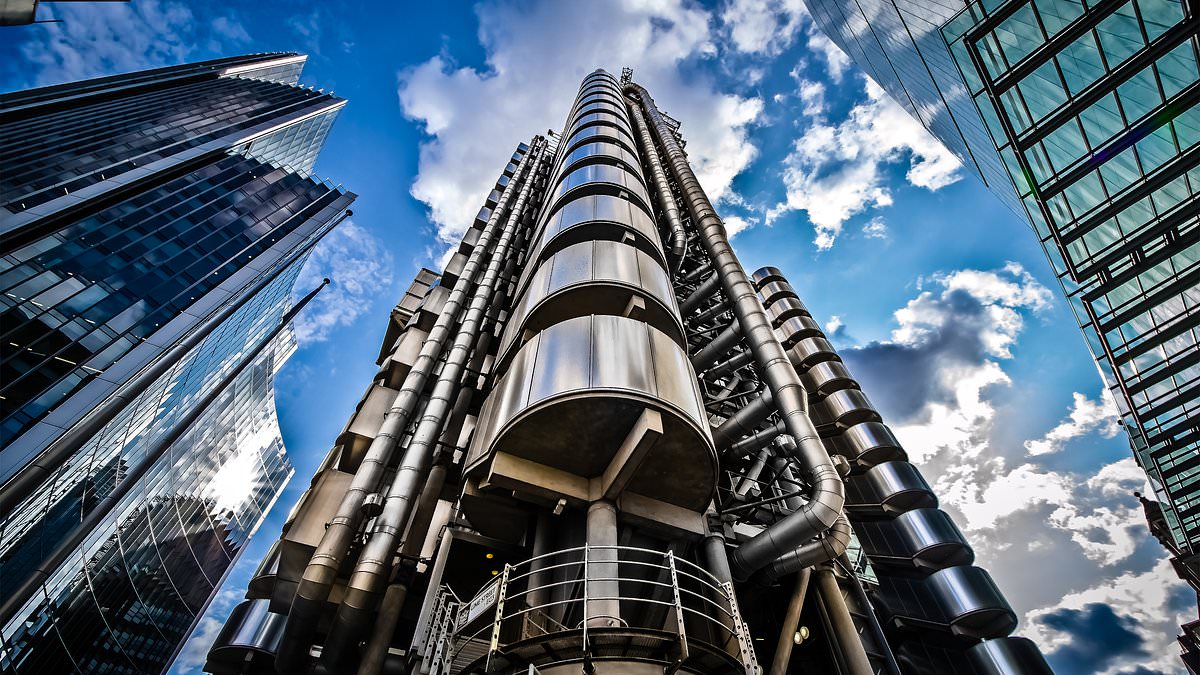
See more This is Money on Google - save us as a Preferred Source Updated: 17:00 EDT, 3 September 2026 Lloyd’s of London has taken a £1.4billion hit from Donald Trump’s Iran war and sounded the alarm over a new era of ‘disorderly’ global events.The insurance market was also buffeted by turmoil on bond markets – another knock-on effect of the conflict – leading to a slump in its investment returns.Lloyd’s said profits for the first half of this year fell 17 per cent to £3.5billion.Chief executive Patrick Tiernan said events had ‘provided further evidence we are now operating in a world that is structurally disorderly rather than just passing through a period of heightened volatility’.Underwriters at Lloyd’s provide cover for risks across the globe, from shipping and terrorism to fine art and racehorses. It has faced a rise in claims as a result of the Iran war, with attacks on shipping through the Strait of Hormuz and on Gulf states. Claims: Insurer Lloyd's of London said profits for the first half of this year fell 17% to £3.5bn as the market is buffeted by Donald Trump's Iran war and turmoil on bond marketsLloyd’s suffered £1.4billion of losses ‘arising from the Middle East conflict’.Tiernan told the Financial Times the losses mostly stemmed from damage to infrastructure on land.Lloyd’s had ‘continued to provide cover and expert advice to its clients throughout the conflict,’ he said.He added: ‘Underwriters worked through the initial weekend, some sleeping in their offices, as they continued to assess and quote maritime and other relevant risks. The quotes kept coming, even when shipowners chose not to take them up because the risks to crews and vessels were simply too great.’Meanwhile, investment returns fell by £3.2billion to £1.8billion as a result of movements in the value of bond holdings.That was after ‘volatility across financial markets’ that was stoked by ‘concerns around inflation, fiscal policy and geopolitical developments’.Tiernan said: ‘The infrastructure foundations on which our industry has based many of its assumptions over the past 80 years are becoming less stable.’He pointed to increased threats posed by fire, floods and drought caused by climate change as well as terrorism and war, plus cyber-attacks, sanctions and tariffs, and the collapse of the ‘rules-based’ order on which global trade is based.‘There is every possibility the international order could fragment further, with less global consensus and more unilateral state action,’ Tiernan said.‘That could result in heightened geopolitical instability, faster-moving conflicts and reduced warning time as diplomacy becomes less effective.‘The industry has experience of many of these individual threats. We have much less experience of managing so many of them simultaneously.’DIY INVESTING PLATFORMSAJ BellAJ BellEasy investing and ready-made portfoliosHargreaves LansdownHargreaves LansdownFree fund dealing and investment ideasinteractive investorinteractive investorFlat-fee investing from £4.99 per monthFreetradeFreetradeInvesting Isa now free on basic planTrading 212Trading 212Free share dealing and no account feeAffiliate links: If you take out a product This is Money may earn a commission. These deals are chosen by our editorial team, as we think they are worth highlighting. This does not affect our editorial independence.Compare the best investing account for you
Lloyd's of London takes £1.4bn hit from Iran war as it sounds the alarm over new era of 'disorderly' global events
Full Article
Original Source
Read the full article at Dailymail →KhanList aggregates and links to publicly available news content. We do not host full articles from third-party sources. Always verify important information with original sources.