
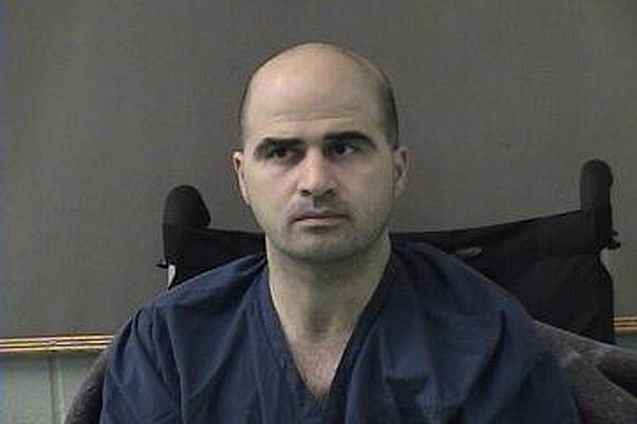
Law and Order Americans no longer have the stomach for public displays of violence. (Bell County Sheriff's Office via Getty Images) Secretary of Defense Pete Hegseth announced last week that the infamous Fort Hood terrorist will die by firing squad. Not only will Nidal Hasan be shot to death, but his execution will be broadcast live for the whole world to watch. The news wasn’t greeted with much enthusiasm. Some hardcore MAGA types loved the idea, arguing it would deter future terrorists and provide the public with proper justice. But they’re a distinct minority. The idea naturally outraged the left, who argued the whole idea is abominable. Many Republicans were also not thrilled with the decision. Louisiana’s Sen. John Kennedy, a strong ally of the administration, said it would make our society “coarser.” House Speaker Mike Johnson said the execution could be used as a “recruiting tool for future terrorists.” Even Vice President J.D. Vance isn’t a fan of the livestreamed execution, and President Donald Trump himself denied any involvement in the decision. It’s unlikely the live execution will be a crowd-pleaser if even Trump and Vance are weirded out by it. Hegseth assumes the American public is the same as it was in the 19th century. Back then, hangings served as community entertainment. But we live in a different age now, and the people don’t want to have the government broadcast such acts of violence to households across the country. The purpose of such a move is ostensibly to sate the public’s appetite for justice. But all it will do is repel them. This is not an argument against the death penalty. The sentence is necessary for certain crimes. People like Hasan, who shot and killed 13 people and wounded dozens more, should not be allowed to live out their days on the taxpayer’s dime. There are crimes so horrible that they demand the ultimate penalty. It matters little if studies “prove” that the sentence doesn’t deter future horrific crimes. Certain offenses should be met with death. The problem with the death penalty is how it’s implemented. The recent Christa Pike case exemplifies one way America gets this wrong. Pike brutally murdered a romantic rival in 1995. A year later, the state of Tennessee sentenced her to death. After 30 years on death row, Pike was finally set to meet her maker via lethal injection. It went terribly wrong, in spite of multiple attempts, and the murderer is now still alive and even receiving public sympathy. This should’ve never happened. Pike should’ve been dispatched long ago by a more effective means than lethal injection. The death penalty is made ineffective by the endless rounds of appeals and delays on behalf of the defendant. Executions should be carried out quickly and in a way that will ensure the criminal dies. A firing squad is better than lethal injection, which is an attempt to make the execution seem like a routine medical procedure and thereby take the nastiness out of the whole thing. But that’s a fool’s errand. Whatever happens, you ultimately kill a person (or at least, that’s the objective). Lethal injection is meant to be more “humane,” but it’s no such thing if it can have results like Pike’s botched execution. It’s only humane for people who want to think of the act as putting a killer to “sleep” like a dog. This event should convince states to ditch lethal injection in favor of a more traditional execution approach. It’s far better to drop the humanitarian pretenses of such an execution and go with a firing squad, which is more humane and effective than trying to kill someone by a medical procedure. Hegseth has the right idea to execute Hasan by firing squad. Another Christa Pike situation is virtually impossible with this method. But broadcasting the execution of Hasan will likely have a political effect opposite the one Hegseth is hoping for. Americans don’t have the stomach for such publicized displays of violence, particularly at the hands of the government. Violent deaths are occasionally shown on the news, and they rarely win the public over to the killer’s side. Clips of police officers using lethal force against suspects inspired Black Lives Matter protests. There would’ve been no riots over George Floyd without the video of Derek Chauvin having his knee on a black man’s back. That particular clip persuaded nearly two-thirds of the country to support BLM and tens of thousands of Americans to march in the streets. You had Republicans like Governor Greg Abbott of Texas saying it was the “most horrific tragedy” they’ve ever seen. Many Americans agreed. Similarly, the videotaped ICE shootings this January made Americans turn against immigration enforcement. It didn’t matter if the officers were justified in shooting Renee Good and Alex Pretti, or if the enforcement operations during which the shootings happened were justified; Americans felt queasy, and some turned against ICE. Americans rarely experience such acts of violence. We barely even see public fights break out, much less witness someone getting seriously hurt. Public executions too are foreign to our daily lives. The United States is not like a Middle Eastern country; we even get upset and start defending cold-hearted killers like Pike when they’re slated for execution. Nidal Hasan, it’s worth noting, was shot in the back during his arrest and has been in a wheelchair ever since. Wheeling out a handicapped man to die before a firing squad will not thrill the masses. It doesn’t matter how many pictures of 19th-century crowds gathered before hangings you find to “prove” the people will love it. Americans of 2026 are not the same people they were in the 1870s. On top of that, Hasan, who committed his crimes in 2009, has largely been forgotten by the public. There aren’t millions of people baying for his blood. Even the families of his victims aren’t happy with the idea of a livestreamed execution. Theoretically, Americans may have supported a public execution of Osama bin Laden, especially if we had captured him immediately after 9/11. But that’s about the only recent case where you could have expected strong public support for such an act. Subscribe Today Get daily emails in your inbox Supporters of the Hasan execution claim it could deter future terrorists. But Islamists are infamous for seeking death, particularly in a highly public fashion. Shooting a handicapped Hasan before a live audience isn’t going to terrify would-be suicide bombers. It’s a great way to make Hasan a hero to jihadis all over the world and further condemn America in their eyes. The livestreamed execution will not deter a single terrorist, nor satisfy some imaginary public demand for justice. All it will do is undermine support for the death penalty and the administration itself. To be sure, it won’t mark the end of the Trump White House, and people will probably forget about it after the outrage. But that doesn’t make it a worthwhile idea to pursue. It’s a cartoonish idea perfectly designed to tick off the public and make Pete Hegseth appear completely out of touch with mainstream America.
Livestreaming an Execution Is a Bad Idea
Full Article
Original Source
Read the full article at Theamericanconservative →KhanList aggregates and links to publicly available news content. We do not host full articles from third-party sources. Always verify important information with original sources.