
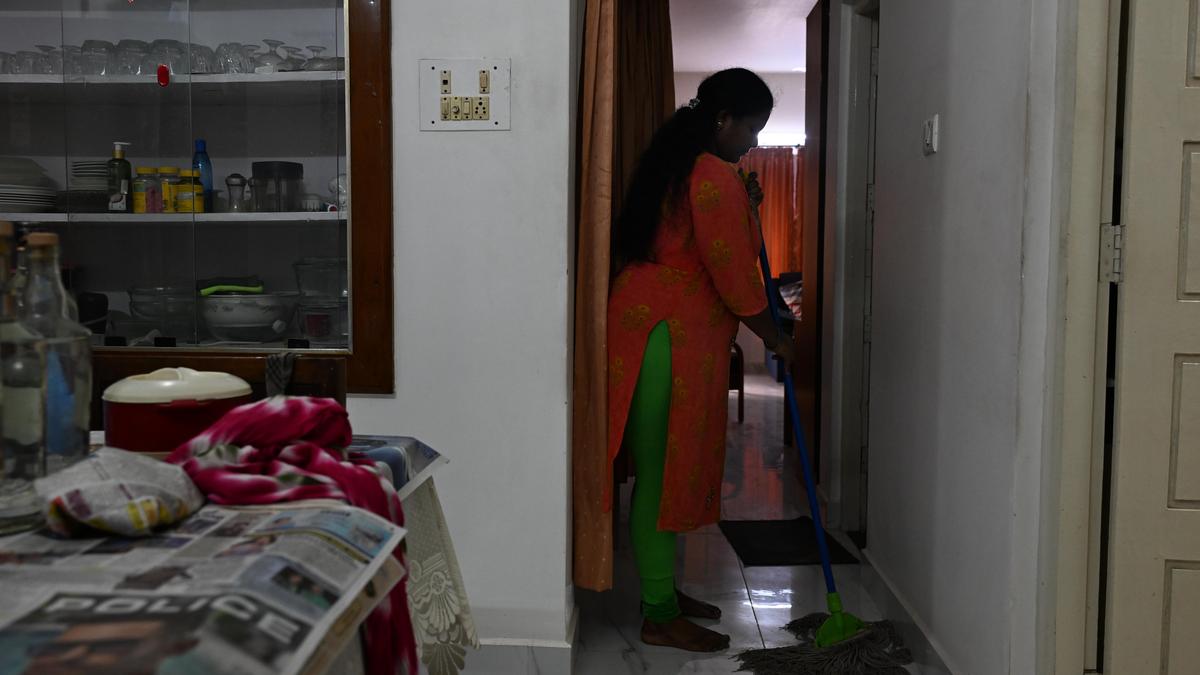
A domestic worker seen working at a house in Bengaluru. File photo. | Photo Credit: ALLEN EGENUSE J A study of migrant domestic workers in Bengaluru has found that many of them struggle to save from their earnings, receive no monthly leave, and are denied access to even toilets in their employers’ homes. Prepared based on interviews with migrant domestic workers in the city, the report also points to greater discrimination faced by Muslim workers. Titled ‘The Backbone of Homes: Migrant Domestic Workers – Autonomy, Survival’, the report was prepared by Rosey Mukherjee, lawyer and researcher, along with the Domestic Workers Rights Union (DWRU). Thirty-nine live-out workers and 10 live-in workers were interviewed as part of the study. Little savingsHalf of the surveyed live-out migrant domestic workers spend three quarters or more of their monthly earnings. With basics such as rent, water and electricity alone consuming 38% of their income, workers are left with very little savings.“Workers are paid according to the number of hours, not according to the kind of task, though the Karnataka minimum wage rules mention pay per task,” notes the report. It was also found that 27 of 39 workers live in a single room shared by three or more people, and the average room size is around 10x10 sq. ft.Nearly half of the live-out workers reported getting only festival leave and no monthly leave. Around 44% of workers reported pay deduction for sick leave. Discrimination and abuse The study found that 64% of Muslim workers (seven of 11) had faced denial of work, as against 15% of non-Muslim workers (four of 26). While 23 out of 39 workers reported that they were not allowed to use toilets inside the employer’s house, three workers belonging to SC and ST categories reported having experienced physical abuse at work. The single largest migrant group among the live-out domestic workers was found to be from West Bengal (16%). Around 150 domestic workers demanded a robust grievance redressal mechanism on International Domestic Workers' Day on June 16, 2026. | Photo Credit: The Hindu Longer working hoursThe report finds that the active daily work hours are long for live-in workers, with half of the surveyed workers clocking 12-15 hours daily. While all 10 workers said they were provided with a separate room with a bathroom and receive three meals a day, they only get one to two paid days off per month. While two reported verbal abuse at work, three said they had faced physical abuse or harassment, and three had been asked about their religion or caste by their employers.Eight out of the 10 surveyed live-in workers belonged to Scheduled Tribes. The single largest group was from Assam. Agencies with no registrationThe monthly salary for the live-in workers ranged between ₹18,000 and ₹25,000. Most were recruited through private placement agencies.According to the study, a placement agency interviewed for the report said it had registered domestic workers from Odisha, Chhattisgarh, West Bengal, Assam and Jharkhand, many of them from Adivasi communities.The DWRU estimates that there are around 25 placement agencies in Bengaluru, out of which only around five were found to be registered. Published - November 28, 2026 05:16 pm IST
Little savings, poor working conditions: Report documents plight of migrant domestic workers in Bengaluru
Full Article
Original Source
Read the full article at Thehindu →KhanList aggregates and links to publicly available news content. We do not host full articles from third-party sources. Always verify important information with original sources.