
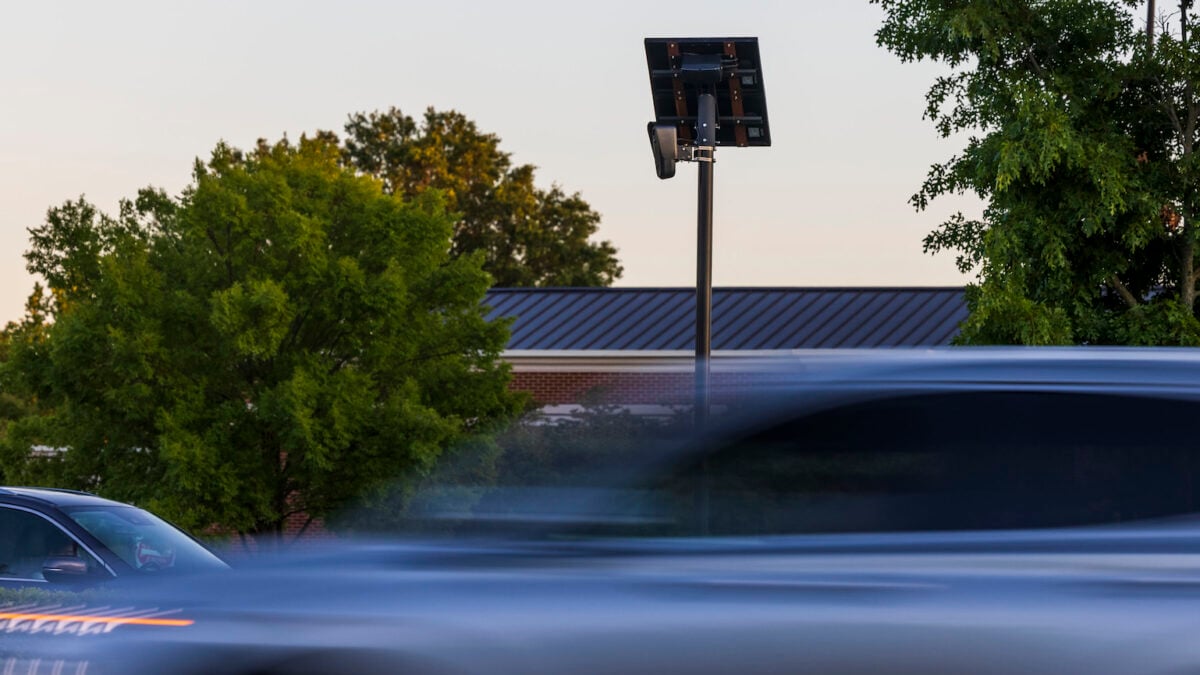
A small victory in Florida for Flock camera critics may herald major statewide changes, and law enforcement may be taking an almost symbolic gesture as a cue to change its ways. Let’s say you’re a fierce critic of Flock cameras—a safe bet if you’re a reader of this site—and I tell you Florida’s Department of Transportation was demanding statewide action to take down license plate-reading cameras, would that be cause for celebration? I’m asking because that’s how the matter is being described on social media: 🚨 JUST IN: Gov. Ron DeSantis' FDOT is hereby TAKING DOWN Flock cameras statewide over privacy concerns in state rights-of-way All existing permits for automated license plate readers, even installed by local law enforcement, in state highway rights-of-way — are REVOKED FDOT is… pic.twitter.com/H631aHoJhy — Eric Daugherty (@EricLDaugh) August 31, 2026 But for now, what’s been issued is just a one-page memo—so kinda like an executive order—signed not by Florida’s Governor Ron DeSantis, but by FDOT Assistant Secretary (Assistant Secretary!) Will Watts. Florida news outlets like the Orlando Sentinel describe cameras now being ordered removed “on state roads,” which I don’t doubt is accurate, but the memo’s specific wording sounds more limited: cameras “within the right of way of a road on the State Highway System.” It doesn’t mention cameras placed by local police, let alone cameras on private property. But other than that, the content of the memo comes across as surprisingly potent. In order to “preserve Floridians’ sovereignty and quality of life,” agencies under the FDOT have 30 days to take down Flock and other license-plate reading cameras, or the FDOT says it will take the liberty of removing them. And lest any agency try to say “but I have a permit!” the memo says active permits for camera placement are to be understood as having been temporary, and are “hereby revoked.” So take that. It’s certainly more denunciatory than what’s come from Governor DeSantis so far: “I think this, the, these, these cameras, the license plate readers, I think it’s out of control,” he told a crowd during a stirring piece of oratory at Florida International University last week. He also noted at the time that the Florida State Legislature would need to approve actions to get rid of LPRs. But according to a report from the local TV news outlet WKMG-TV, the memo could have surprisingly far-reaching consequences. T.K. Waters, the Sheriff of Jacksonville, is speaking as if he plans to honor the spirit of the memo even though he doesn’t want or need to. He says LPRs are “an enormously valuable investigative tool,” but that “given the decision made at the state level and the concerns expressed by members of our community, I have determined that discontinuing the use of this technology is the appropriate course of action at this time.” Last week, a police officer in Kentucky was arrested for allegedly using Flock cameras to surveil an ex-girlfriend. That was just the latest in a rash of creepy news stories in which law enforcement officers allegedly abused these hi-tech surveillance system. Florida Representative Greg Steube, a Republican, sounded freaked out on Fox News last week, saying, “There’s cameras everywhere, people know that, but if law enforcement has the ability to monitor the comings and goings of citizens, I think that’s wrong. I mean, we’re not the CCP, we’re not 1984 and an Orwellian society, and Americans have rights.” The memo cites “concerning reports of misuse, data privacy concerns, and surveillance schemes” as reasons for “immediate action.” Still, technically this is just one memo in Florida, and the passage of a major piece of legislation is likely still a long way off. Gizmodo reached out to Flock for comment. We will update if we hear back.
Little Florida Memo Could Have Big Impacts on Flock Cameras
Full Article
Original Source
Read the full article at Gizmodo →KhanList aggregates and links to publicly available news content. We do not host full articles from third-party sources. Always verify important information with original sources.