
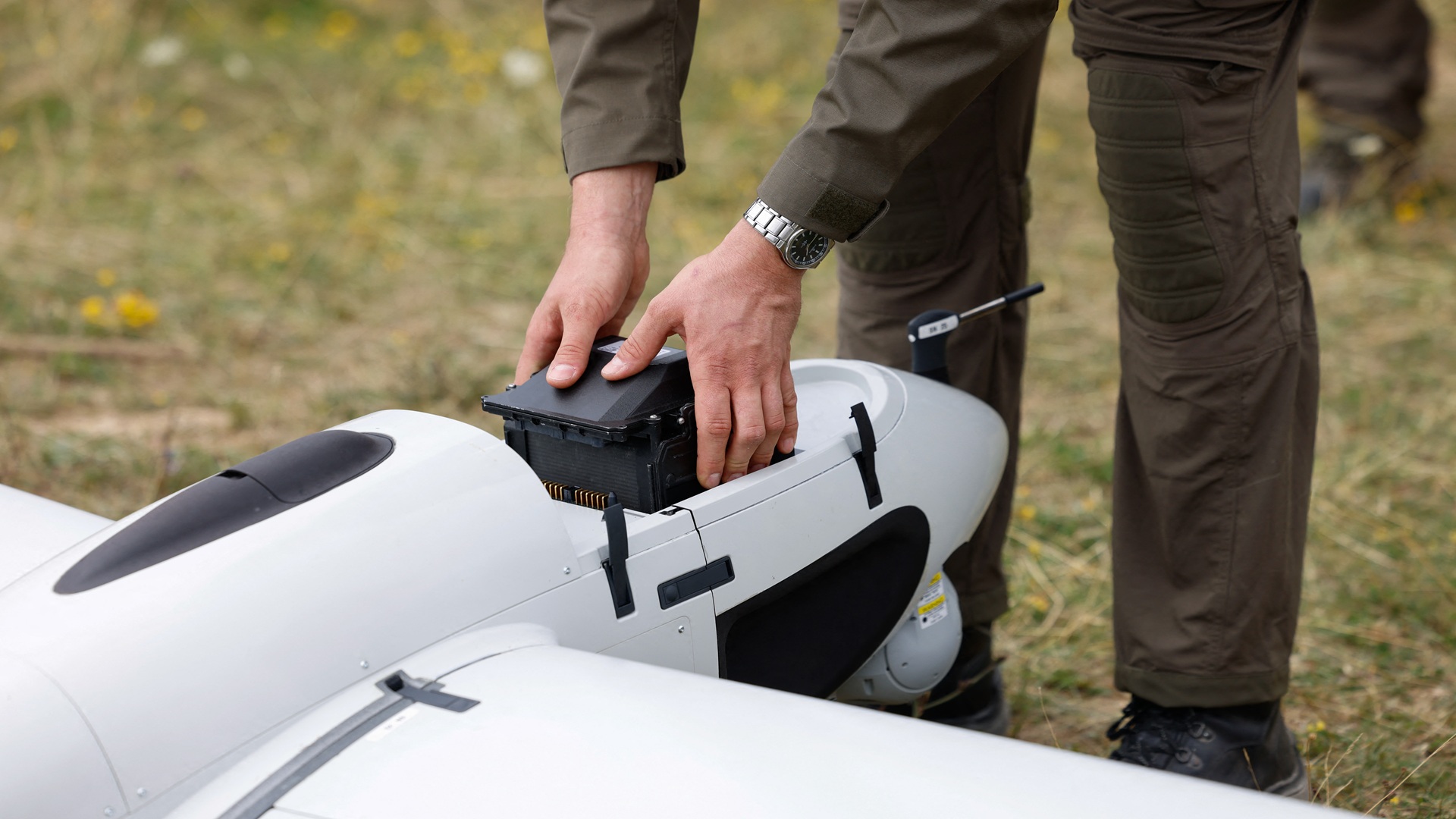
Australian battery developer Li-S Energy has delivered its lithium-sulfur battery cells to the US Army for independent testing, marking the first time the company’s technology has reached a US government agency. The cells will be evaluated by the US Army Combat Capabilities Development Command C5ISR Center at Aberdeen Proving Ground. The testing could give the technology a route into military programs that increasingly rely on drones, autonomous vehicles and other power-hungry unmanned systems. Lithium-sulfur batteries are being developed as a lighter alternative to conventional lithium-ion cells. Li-S Energy says its cells are approaching twice the energy density of conventional lithium-ion, potentially allowing unmanned platforms to carry more energy without adding equivalent battery weight. For military drones and autonomous systems, that extra energy density could translate into longer flight times, greater range or additional payload capacity. The company is also targeting applications where high peak power and rapid changes in power demand are important. Batteries target military drones The DEVCOM C5ISR Center is responsible for research and development across areas including communications, intelligence, surveillance, reconnaissance and power systems for US Army platforms. Its evaluation of the cells could therefore provide a pathway into programs covering unmanned aircraft, ground robots, autonomous platforms and soldier-worn equipment. The cells combine lithium-sulfur chemistry with materials including boron nitride nanotubes and the company’s Li-Nanomesh technology. Li-S Energy says the approach is intended to improve performance while retaining the weight advantage of lithium-sulfur chemistry. “The LIS cells we have delivered to DEVCOM are purpose-built for exactly these applications – delivering the enhanced peak power and operational responsiveness that modern defence platforms require, while retaining the inherent weight and energy density advantages of our lithium-sulfur chemistry.” The company is already testing its batteries across several unmanned platforms. Praetorian Aeronautics is evaluating them for its Dagger counter-UAV interceptor, with production targeted at up to 10,000 units annually. MSubs is testing the cells for large uncrewed underwater vehicles, including pressure testing at depths of up to 1,000 meters. Kea Aerospace is targeting the technology for propulsion battery packs for its high-altitude, long-endurance solar UAV. Clearing barriers to deployment Getting the cells to the US also required regulatory approvals for air transport. Li-S Energy secured approvals from Australia’s Civil Aviation Safety Authority, the US Pipeline and Hazardous Materials Safety Administration and the Federal Aviation Administration. The approvals are significant because the company’s high-energy lithium-sulfur cells require additional dangerous-goods treatment for international transport. Li-S Energy is also progressing UN38.3 testing, which it says will allow larger volumes to be shipped under standard dangerous-goods classifications. The company recently joined the AUKUS framework, which it says enables cell exports to the US and UK without individual export permits. That could help shorten the supply path as it pursues allied defense customers. Li-S Energy Managing Director Lee Finniear said the Army delivery is an important step toward commercial deployment. “Shipping our cells to US Army DEVCOM C5ISR Center for independent evaluation is a major step forward in the Company’s commercialisation pathway.” The company is also working with a major international defense prime on cells for unmanned systems, soldier-worn equipment and surveillance technologies. The US Army evaluation will now test whether lithium-sulfur batteries can deliver the combination of energy density and power performance needed for next-generation military platforms. Get the latest in engineering, tech, space & science - delivered daily to your inbox.With over a decade-long career in journalism, Neetika Walter has worked with The Economic Times, ANI, and Hindustan Times, covering politics, business, technology, and the clean energy sector. Passionate about contemporary culture, books, poetry, and storytelling, she brings depth and insight to her writing. When she isn’t chasing stories, she’s likely lost in a book or enjoying the company of her dogs.
Lithium-sulfur battery tech with 2x energy density enters US Army testing for drones
Full Article
Original Source
Read the full article at Interestingengineering →KhanList aggregates and links to publicly available news content. We do not host full articles from third-party sources. Always verify important information with original sources.