
Japan’s Asahi Kasei has developed a battery technology that uses lithium carbonate as an extra lithium source to reduce energy losses in lithium-ion batteries with silicon-based anodes. The Japanese company says its pre-doping method can make lithium carbonate break down at the normal operating voltage of a lithium-ion battery. This allows the inexpensive material to supply additional lithium during the battery’s first charge instead of being left unused. The approach targets a key problem with silicon-rich batteries. Silicon can store more lithium than graphite, making it attractive for higher-energy batteries, but it also consumes a significant amount of lithium during the first charge. Some of that lithium is permanently lost, reducing the battery’s usable capacity. Asahi Kasei’s technology is designed to compensate for that loss without requiring major changes to existing battery production lines. In internal testing, a battery using an anode made from 90% graphite and 10% silicon monoxide showed a 10% increase in energy density. Cheaper lithium source The company focused on lithium carbonate because it is relatively inexpensive and already widely used in battery manufacturing. The challenge is that lithium carbonate normally decomposes at a voltage well above the range in which standard lithium-ion batteries operate. Asahi Kasei says special additives in the electrolyte can lower the effective decomposition conditions. With the additives in place, lithium carbonate can be placed in the cathode as a sacrificial lithium source. During the battery’s initial charge, the material decomposes and releases lithium into the cell. That extra lithium can offset the amount consumed by the silicon-based anode, leaving more usable lithium for subsequent charge and discharge cycles. The approach could become increasingly relevant as battery makers look beyond conventional graphite anodes. Silicon is being explored for electric vehicle batteries and other applications where higher energy density can translate into greater range or longer operating time. The company also says the technology can improve cycle life while keeping the cost per watt-hour low. It is expected to work with different combinations of cathode and anode materials, potentially giving battery manufacturers more flexibility as cell chemistries evolve. More energy, fewer tradeoffs Another advantage is that the method is intended to fit into existing manufacturing processes without significant modifications. That could make it easier for battery manufacturers to test the technology without building entirely new production systems. Asahi Kasei plans to work with battery customers through proof-of-concept evaluations and eventually license the technology. The company says it will offer different collaboration models depending on where customers are in development. The technology is part of Asahi Kasei’s broader effort to commercialize its patents, technical expertise and other intellectual property through licensing agreements. For battery makers, the appeal is straightforward: recover lithium that would otherwise be lost during the first charge while using a relatively cheap material. If the reported energy-density improvement can be reproduced at larger scale, the approach could offer a way to increase battery performance without a complete redesign of the cell.Get the latest in engineering, tech, space & science - delivered daily to your inbox.With over a decade-long career in journalism, Neetika Walter has worked with The Economic Times, ANI, and Hindustan Times, covering politics, business, technology, and the clean energy sector. Passionate about contemporary culture, books, poetry, and storytelling, she brings depth and insight to her writing. When she isn’t chasing stories, she’s likely lost in a book or enjoying the company of her dogs.
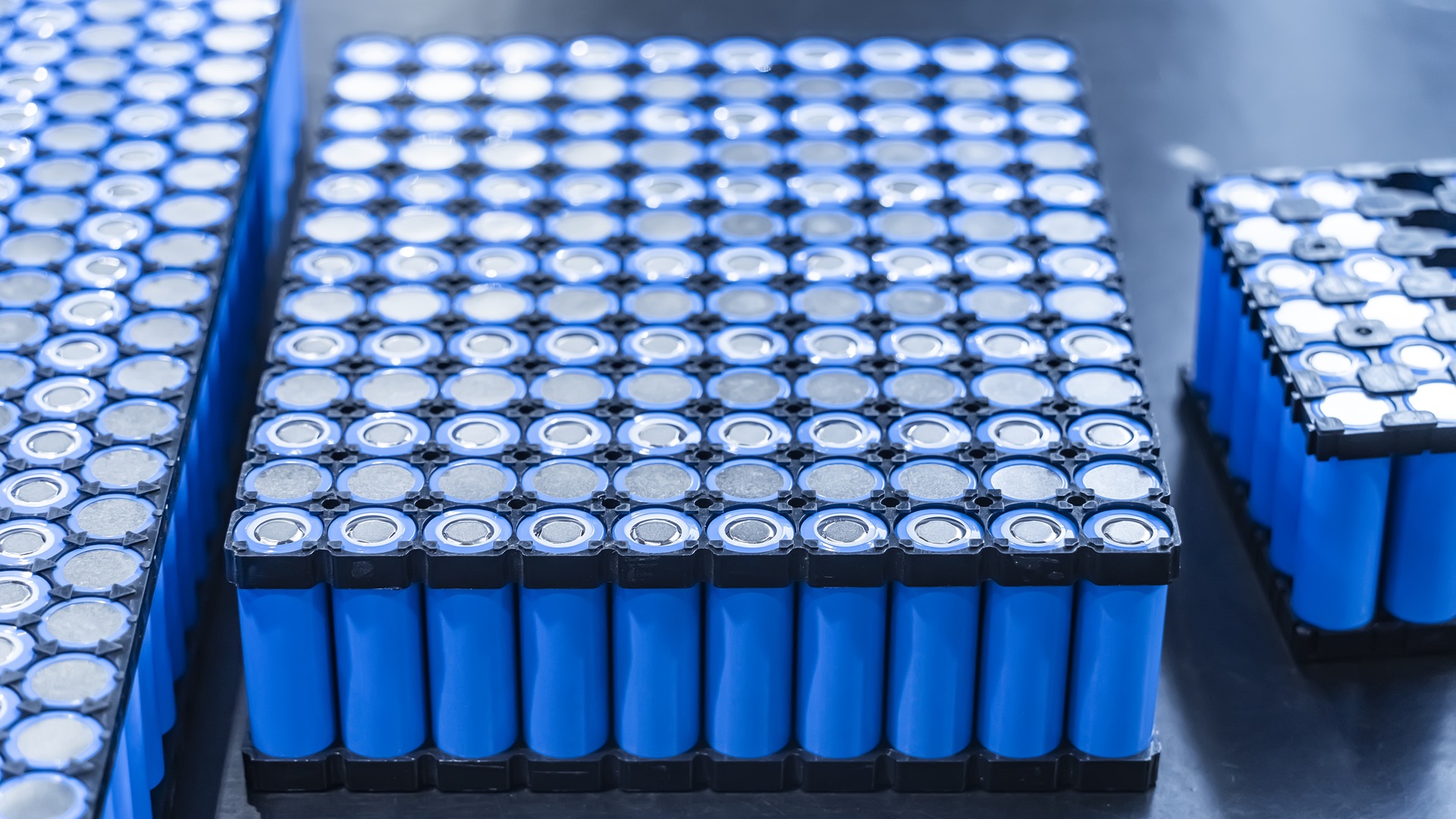
Lithium carbonate method boosts energy density 10% in silicon-based batteries
Full Article
Original Source
Read the full article at Interestingengineering →KhanList aggregates and links to publicly available news content. We do not host full articles from third-party sources. Always verify important information with original sources.