
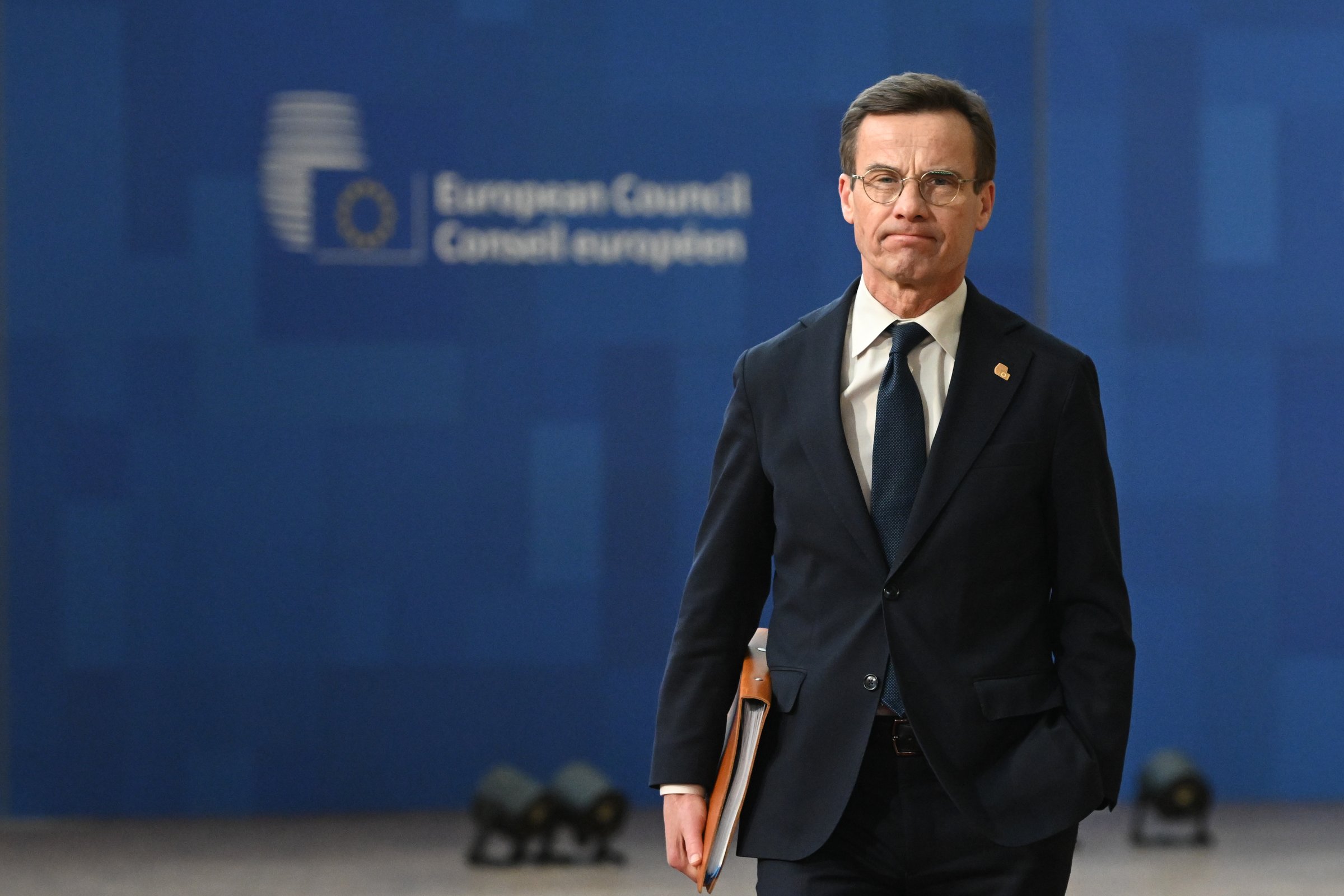
Production: By Europod, in co-production with Sphera Network. EUobserver is proud to have an editorial partnership with Europod to co-publish the podcast series “Briefed” hosted by Léa Marchal. The podcast is available on all major platforms. Find the full transcript below: Sweden is holding general elections this Sunday. The far right is already supporting the current government. Could it soon become part of it?And what could the result mean for Sweden’s political direction? And when it comes to politics, the image we have of Sweden is fairly accurate: a stable, liberal country with a strong economy. But when it comes to openness towards foreigners, and more broadly, social values, the country is going through some major changes. That’s largely because of the growing influence of the far right — a trend we’re seeing in many other European countries. So where exactly does the far right stand in Sweden? Well, it’s actually very close to power. The current prime minister is Ulf Kristersson, from the centre-right ‘Moderate Party’. It belongs to the European People’s Party, or EPP. Kristersson leads a coalition with three other parties: the Liberals, the Christian Democrats, and, most importantly, the Sweden Democrats. And despite their rather misleading name, the Sweden Democrats are a far-right party. In the European Parliament, they sit with the European Conservatives and Reformists. The Sweden Democrats are not formally part of the Swedish government. Instead, they signed an agreement to support it, without holding any ministerial positions. But that could change after Sunday’s election. Ulf Kristersson has clearly said that he could give the Sweden Democrats a full role in his next government if he gets the chance to form one. How critical is this? Well, despite not being part of the government, the Sweden Democrats are already having a large influence over politics in the country. Since 2022, Sweden has significantly tightened its migration policy. The country has increased the number of deportations, while the number of refugees accepted has fallen dramatically. And the influence of the Sweden Democrats can also be seen in other areas, particularly environmental policy. Sweden used to be seen as a European leader on the green transition. But that trend has been reversed since 2022. There’s also been a major turnaround on nuclear power. Sweden has decided to revive its nuclear power sector. And this was clearly included in the coalition agreement. One telling example is the country’s energy target. Sweden had aimed for 100% renewable energy by 2040. That target has now been changed to 100 percent fossil-free energy — which means nuclear power is included. Maybe a small caveat here: all the decisions that disregard the climate transition don’t necessarily have to do with the far right. Sweden’s growing focus on defence also plays a role because money has to be redirected there. And it’s not just about redirecting money towards the military. For example: In recent years, Sweden has rejected offshore wind projects in the Baltic Sea because they could interfere with the detection of ballistic missiles. So what do the polls suggest for Sunday’s election? The polls are very close. There are essentially two blocs competing for power. On one side, you have a centre-left bloc led by the Social Democrats, alongside the Greens, a centre party, and the Left Party. On the other, there’s the current right-wing bloc: the Moderates, Liberals, Christian Democrats and Sweden Democrats. But there’s an important difference this time. Prime minister Ulf Kristersson has said he is prepared to form a government with members of the far right. He has praised the cooperation with the Sweden Democrats over the past few years, and promised to strengthen ties with them and give them ministerial positions. So Sunday’s election is also something of a test. And Sweden, once seen as one of Europe’s most liberal countries, could well be another example of the continent’s broader political shift to the right.
Listen: How Sweden’s tight election could normalise far-right power-sharing across Europe
Full Article
Original Source
Read the full article at Euobserver →KhanList aggregates and links to publicly available news content. We do not host full articles from third-party sources. Always verify important information with original sources.