
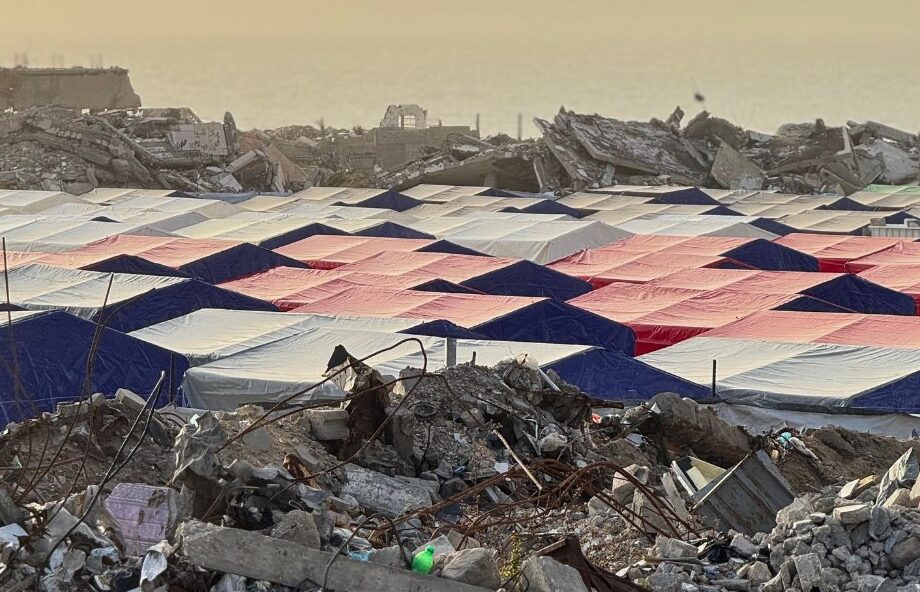
Production: By Europod, in co-production with Sphera Network. EUobserver is proud to have an editorial partnership with Europod to co-publish the podcast series “Briefed” hosted by Léa Marchal. The podcast is available on all major platforms. Find the full transcript below: Rebuilding Gaza will require tens of billions of dollars. European countries have just approved new funding for water and waste management. But with the ceasefire still fragile, can reconstruction really get underway? The EU has just approved two projects aimed at helping rebuild Gaza. Together, they provide €43m in support for the Palestinian Authority, mainly for water and waste management. The funding is intended to improve access to drinking water for around one million people in Gaza, restore waste collection and launch pilot recycling programmes. This comes on top of a much larger €883.6m package announced by the EU in July for Gaza. This is totally independent from the board of peace initiated by Donald Trump. The European Commission has brought together donors from EU member states, as well as countries such as Norway and Switzerland. The European Investment Bank and the European Bank for Reconstruction and Development are also involved. That is the purpose of the donor conferences regularly organised by the Commission. And this format has sometimes been seen as an alternative to the reconstruction efforts led by Trump's Board of peace. As far as the Board of peace is concerned, it also made new announcements last week, on the sidelines of the United Nations General Assembly. It announced a $2.45bn plan to support reconstruction over six months. Is that significant compared with Gaza's needs? And do the two funding plans complement each other? The short answer is: the funding is still far from enough. The needs for rebuilding Gaza are estimated at least $71bn. The economy has also collapsed, with very little economic activity currently possible in Gaza and unemployment affecting almost the entire population. But the different funding plans can complement each other. The Board of Peace six-month plan is divided into dozens of areas of spending. One of the largest is the construction of permanent shelters to replace the tents where many people are currently living. The plan also includes clearing rubble, rebuilding homes and restoring public transport, among other things. But reconstruction also depends on security. Is the ceasefire holding, and is Israel committed to allowing aid and reconstruction to move forward? That's one of the major questions. European commissioner Dubravka Šuica stressed this point at the UN last week, saying that European assistance relies on clear commitments from Israel to facilitate the implementation of these projects. Israel has reopened one crossing for international aid, but according to several international reports, it is still restricting the distribution of humanitarian assistance inside Gaza. And although a ceasefire has been agreed, Israeli military operations targeting Hamas have continued, with civilians among those killed. According to Gaza's Health Ministry, 22 Palestinians were killed and 209 injured between 9 and 16 September alone. Another 21 people were killed on 16 September when a residential building, already damaged during the war, collapsed. Overall, more than 1,300 people have reportedly been killed in Gaza since the ceasefire began, according to Gaza health authorities. What’s more, the National Committee for the Administration of Gaza, which is supposed to govern the territory under the peace agreement is still based in Cairo. Israel has not authorised all of its members to enter Gaza. And the committee says the conditions for carrying out its mandate are not yet in place. That is another obstacle to reconstruction getting fully underway. There is one more source of uncertainty: possible Palestinian elections in November. Those elections could also be postponed. So while funding for reconstruction is beginning to take shape, there are still major questions over security, governance and political stability.
Listen: How are Europeans contributing to the reconstruction of Gaza?
Full Article
Original Source
Read the full article at Euobserver →KhanList aggregates and links to publicly available news content. We do not host full articles from third-party sources. Always verify important information with original sources.