
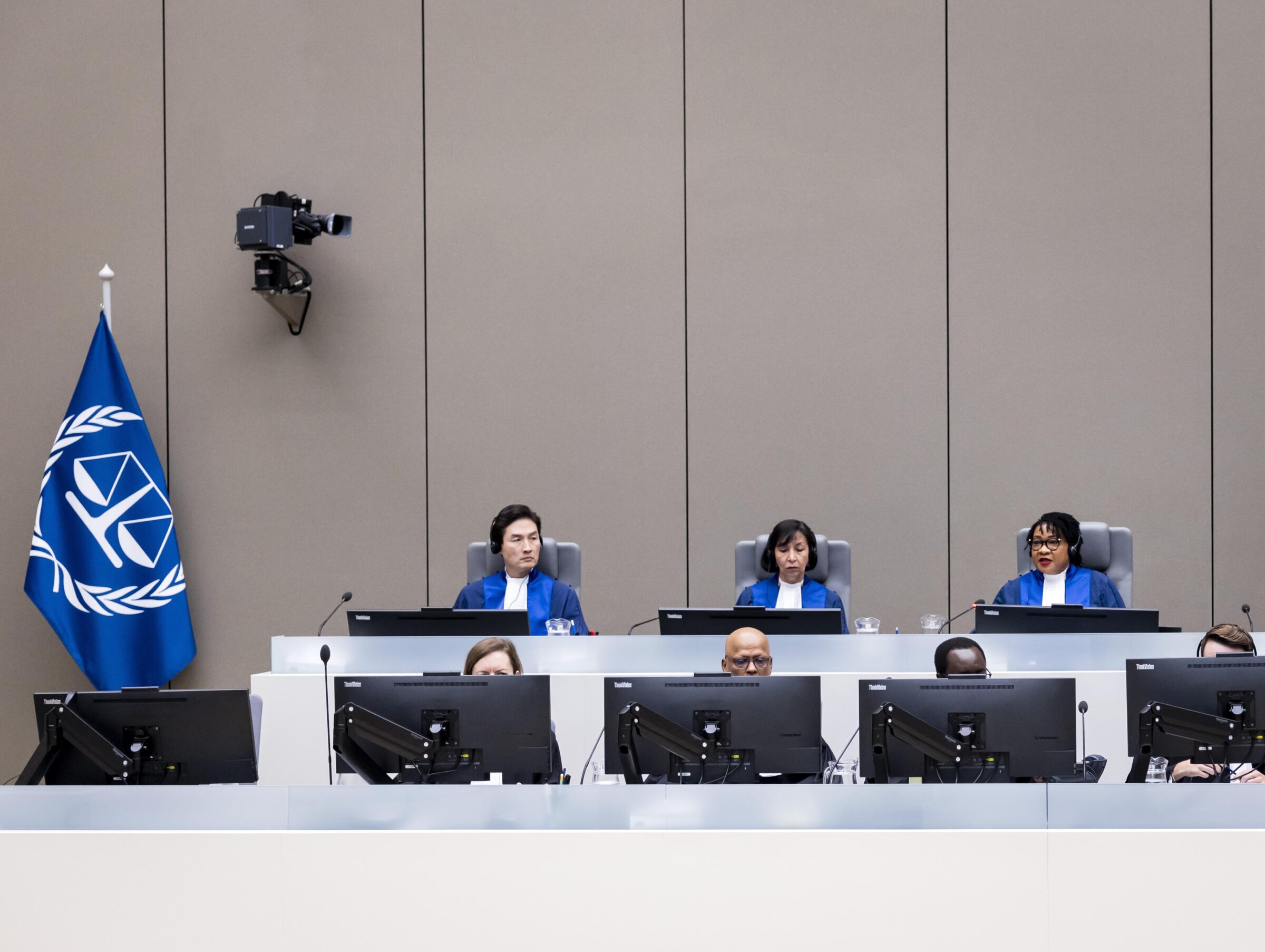
Production: By Europod, in co-production with Sphera Network. EUobserver is proud to have an editorial partnership with Europod to co-publish the podcast series “Briefed” hosted by Léa Marchal. The podcast is available on all major platforms. Find the full transcript below: The United States has imposed new sanctions on the International Criminal Court, this time targeting the institution itself. While the EU insists on its firm support for the ICC, it is still not using the one tool designed for this kind of situation: the blocking statute. So, why is the EU holding back? First, a quick reminder of what we’re talking about. The International Criminal Court, or ICC, is based in The Hague. It tries people accused of the gravest crimes: genocide, crimes against humanity, war crimes and the crime of aggression. With one important limit: It can act when a crime is committed on the territory of a state that is party to the Rome Statute, or by one of that state’s nationals. The United States is not a party. Neither is Israel or Russia. And Washington’s goal is clear: dismantling the court. The Trump administration considers it politicised and without legitimacy. It is particularly opposed to the arrest warrant against Israeli Prime Minister Benjamin Netanyahu. That's why, since 2025, the US has imposed several rounds of sanctions, targeting judges and, more recently, the court's president, the Japanese national, Tomoko Akane. On Friday, Washington went a step further, targeting the court as an institution. So what does that mean in practice? All of the court's assets in the United States are frozen. And, crucially, American companies and citizens can no longer provide services to the court or its members. You might remember the case of the ICC judge Nicolas Guillou, who has been under sanctions for some time. We’ve talked about him in a previous Briefed episode. He has explained that he can no longer use basic services such as Mastercard, or online platforms like Airbnb. He has also been warning that these sanctions are meant to intimidate, and that they undermine judges' independence. In a state governed by the rule of law, judges must not be put under pressure. This explains why the court's reaction is so strong. It speaks of an obstruction of justice and an attack on the rule of law. And it is now calling on its members to take concrete action to protect its independence. In response, the European Commission and the European Council have expressed their support for the court and its work. But without going too far. They say the EU is ready to take measures so that the court can keep functioning. Yet when the Commission is asked what those measures are, and this has happened several times in recent months, it sidesteps the question. Because beyond negotiations and diplomatic pressure, there is a tool created for precisely this kind of situation: the so-called blocking statute. It protects Europeans against the extraterritorial reach of sanctions imposed by third countries. It doesn't concern American actors. It concerns European companies and individuals who, under the threat of secondary sanctions, may become overly cautious. In the case of the ICC, it’s about the court's European banks, insurers and service providers. Several European countries have called for the blocking statute to be activated. Yesterday, at the Foreign affairs council in Luxembourg, the Belgian and Dutch ministers asked the Commission to start analysing whether to do so. But for now, they are still waiting for an answer. The Commission believes the priority is to use the six months before the sanctions take effect to negotiate with Washington, possibly to get them withdrawn. This approach was backed by several EU foreign ministers yesterday. Let's see whether that window for dialogue is enough, or whether the pressure to activate the blocking statute keeps growing.
Listen: Could the EU shield the ICC from US sanctions?
Full Article
Original Source
Read the full article at Euobserver →KhanList aggregates and links to publicly available news content. We do not host full articles from third-party sources. Always verify important information with original sources.