
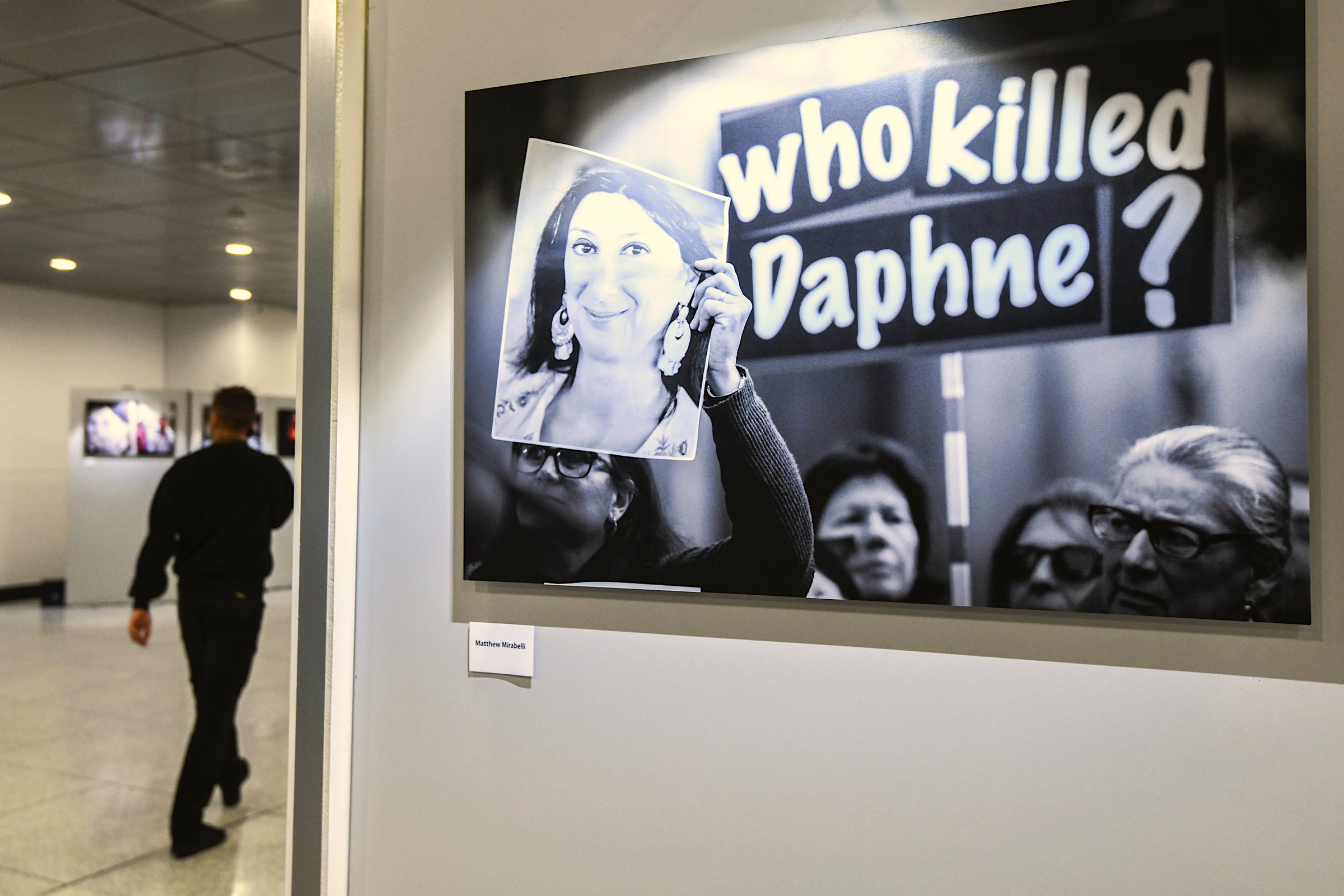
Production: By Europod, in co-production with Sphera Network. EUobserver is proud to have an editorial partnership with Europod to co-publish the podcast series “Briefed” hosted by Léa Marchal. The podcast is available on all major platforms. Find the full transcript below: Yesterday, several dozen people gathered in Valletta to demand justice for Daphne Caruana Galizia, the Maltese investigative journalist who was murdered in 2017. Nine years after her murder, the person who allegedly ordered it has still not been convicted. How can such impunity still exist in Europe? Daphne Caruana Galizia was one of Malta’s best-known investigative journalists. She was killed on 16 October 2017 when a bomb planted under her car exploded. She had exposed numerous corruption scandals involving Malta’s political establishment, including revelations linked to the Panama Papers. And at the time of her death, she was investigating alleged corruption involving businessman Yorgen Fenech, who would later become the main suspect in her murder. But nine years later, Fenech has just been acquitted by a Maltese jury, after a trial that lasted several years. On the second of September, the jury found that his guilt had not been established beyond reasonable doubt. The verdict was met with anger from Daphne Caruana Galizia’s family and supporters, who have continued to call for those responsible for her murder to be held accountable. Reporters Without Borders deplored that, nine years after the assassination, the Maltese authorities had still failed to identify and convict the person who ordered the killing. Their anger is fueled by elements pointing at Fenech’s guilt. One of the key pieces of evidence came from Melvin Theuma, Fenech’s former driver and an intermediary in the murder. Theuma told the court that he had been paid one hundred fifty thousand euros, to organise the assassination. He also provided text messages and recordings involving Fenech, which prosecutors argued showed that Fenech had ordered the murder and was trying to make evidence disappear. But Fenech ha s consistently denied any involvement and has maintained his innocence. As for the other people involved in the murder, five people have been convicted for their roles in preparing the assassination or supplying and planting the bomb used to kill Daphne Caruana Galizia. Melvin Theuma, who admitted organising the murder, was granted immunity from prosecution in exchange for his testimony. Now, what happens next? The Maltese prosecution service has announced that it intends to appeal the jury’s decision regarding Jorgen Fennech. But in order to do so, it first has to identify a serious legal error in the proceedings. According to the Times of Malta, prosecutors could challenge a decision by the judge not to tell jurors that Fenech had requested a presidential pardon shortly after his arrest in November 2019. For now, the appeal has not yet been formally filed. Prosecutors still have a few days to do so. So what can the European Union actually do in a case like this? The investigation and prosecution of the murder remain in the hands of the Maltese authorities. The EU cannot take over the case. What it can do is strengthen protections for journalists and the rule of law. The European Media Freedom Act, which entered into force last year, strengthens the protection of journalistic sources and, in principle, prohibits the use of spyware against journalists. The EU has also adopted new rules against so-called SLAPPs — lawsuits designed to intimidate journalists or drain them financially. This is particularly relevant in Daphne Caruana Galizia’s case. When she was alive, she was literally harassed with SLAPPs. And the tradition goes on: just a few days ago, Yorgen Fenech reportedly threatened several media outlets with legal action if they published what he considers to be false allegations — namely, that the jurors who acquitted him had been bribed. Daphne Caruana Galizia’s case is not the only example of how difficult it can be to bring those responsible for the murder of journalists to justice. In 2018, Slovak journalist Ján Kuciak and his fiancée, Martina Kušnírová, were also murdered. And in that case too, a suspected mastermind has been identified but has not been convicted. Nine years after Daphne Caruana Galizia’s assassination, her murder therefore remains a major test for Malta — and for Europe’s ability to protect journalists and ensure that those who attack them are held accountable.
Listen: After Daphne Caruana Galizia’s murder, why hasn’t justice been done?
Full Article
Original Source
Read the full article at Euobserver →KhanList aggregates and links to publicly available news content. We do not host full articles from third-party sources. Always verify important information with original sources.