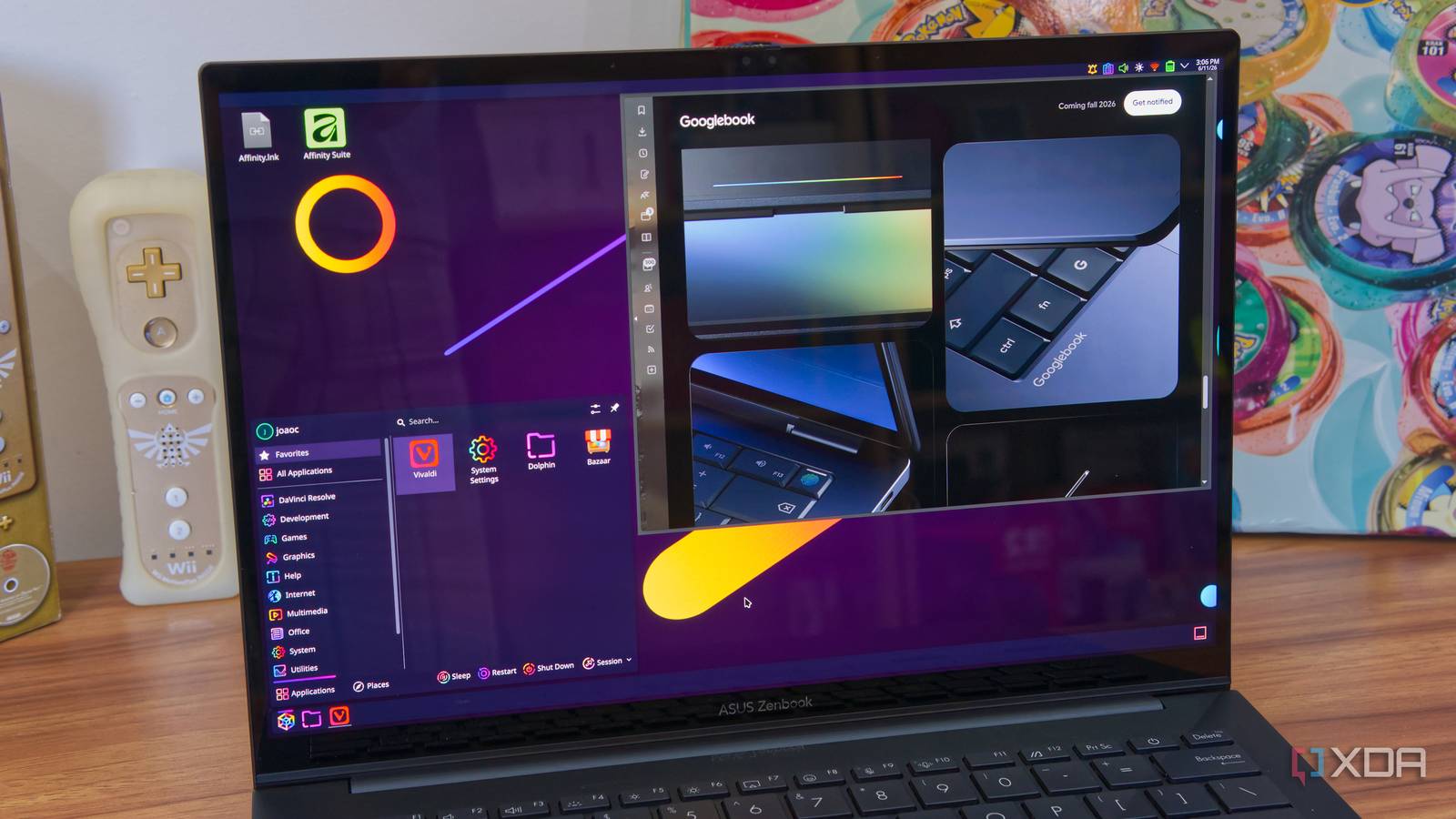
Published Aug 9, 2026, 12:30 PM EDT Simon is a Computer Science BSc graduate who has been writing about technology since 2014, and using Windows machines since 3.1. After working for an indie game studio and acting as the family's go-to technician for all computer issues, he found his passion for writing and decided to use his skill set to write about all things tech. Since beginning his writing career, he has written for many different publications such as WorldStart, Listverse, and MakeTechEasier. However, after finding his home at MakeUseOf in February 2019, he would eventually move on to its sister site, XDA, to bring the latest and greatest in Windows, Linux, and DIY electronics. Using Windows used to feel like moving through a new frontier. Microsoft would bring new features, tools, and advancements to the table, and following it in its journey was a joy. The bad news is that Windows 11 has become stale, and it's not as exciting to explore anymore. The good news is, Linux has no signs of getting boring any time soon. Windows 11 has become a "one-size-fits-all" OS There's not much flair to it Back in the Windows 95 to 10 days, Windows felt like it really had an identity. It was new ground for computers as a whole, and each version upgrade felt big and exciting. Sure, sometimes those changes didn't feel great—Windows Vista and Windows 8.1 did have a good reputation for a reason—but even the duds brought something new to the table. I still miss Vista's Frutiger Aero theme. As Microsoft became more of a worldwide name, it had to become generic. It couldn't afford to bundle in a pinball game with every PC, or have a flashy new UI, or mess around with how we used our PCs. Windows had to suit everyone, from someone using their first computer to a business running system-critical software. So it had to become bland. However, I do feel that the Windows power user has gone unsatisfied for years now. Microsoft could potentially release a "Windows 11 Advanced Edition" which gives people more control over their PCs and lets them break stuff if they want to. However, the best people can use right now as a power user is PowerToys. Don't get me wrong; I think PowerToys is fantastic. I'd just like to see more control over a Windows PC than what PowerToys can manage. Linux distros have become an "all sizes to suit everyone" OS It's the total opposite of Windows If Microsoft deliberately homogenised Windows to make it palatable for every use case imaginable, Linux goes the complete opposite direction. There is no single "main Linux distro." Sure, there are more popular distros, and there are distros that are more suited toward beginners, but there isn't one single distro to rule them all. The reason for that is that each distro aims to fill a specific niche. Ubuntu is your general-use distro, while CachyOS is all about performance. Fedora is the testing grounds for Red Hat's business ventures, and openSUSE's Snapper tool makes rolling back a bad update easy. As such, using Linux isn't about giving someone a base OS and telling them to find a way to gel with it. Using Linux is about finding something that gels with you. There are all kinds of development teams, with their own mantras, goals, and ethics, and a big part of finding your distro for life is about finding the camp that resonates with you best. One distro that someone swears by for life will be someone else's 'no-go' distro. Part of the fun of Linux is finding the distro that speaks to you directly. Maybe it's what the developers are doing with the distro, or maybe it just works in a way that you love. And exploring all the distros available to you is a lot of fun. Exploring Linux doesn't stop at your distro of choice I'd argue that the distro is just the start Credit: openSUSE, Google Gemini So you've settled on your distro of choice. That's the end of the explorative phase, right? Well, this is where things get interesting. Within your distro of choice are all kinds of ways you can tweak your experience and find the perfect 'home within a home'. Take Fedora, for instance. It was one of the first distros with which I really gelled, but just because I had found a comfortable foundation doesn't mean my explorative ventures were finished. For one, there are different 'flavors' of Fedora, called 'spins'. These add different desktop environments to your system that drastically change how it looks and feels. Do you go with the tried-and-true GNOME, or the flashier KDE? Or perhaps you want to check out the bleeding edge of desktop environments with COSMIC? You can even install multiple desktop environments onto one system and swap between them in the login screen to see how they all look and feel. On top of that, you have the atomic spins. These use a unique updating method alongside an immutable, read-only system structure that sounds like a hassle at first, but quickly became one of my favorite ways to use Linux. Linux is just a lot more fun to explore right now While Windows has become more same-y over the years, Linux has gone the complete opposite direction. I can't imagine myself going back to Windows now that Linux has given me so much choice.
Linux finally gave me back the joy of tinkering that Windows killed
Full Article
Original Source
Read the full article at Xda-developers →KhanList aggregates and links to publicly available news content. We do not host full articles from third-party sources. Always verify important information with original sources.