
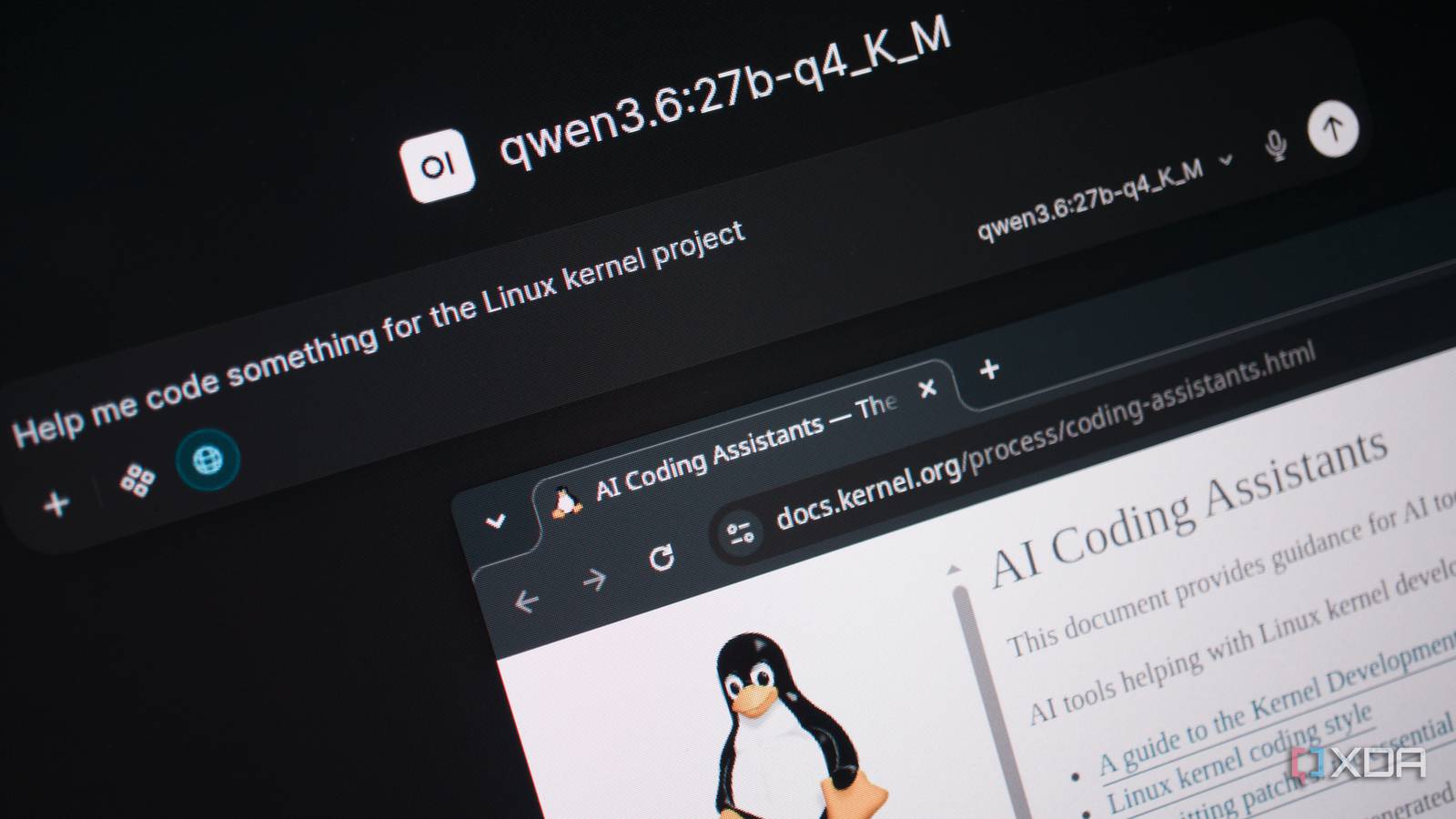
Published Oct 26, 2026, 1:30 PM EDT Simon is a Computer Science BSc graduate who has been writing about technology since 2014, and using Windows machines since 3.1. After working for an indie game studio and acting as the family's go-to technician for all computer issues, he found his passion for writing and decided to use his skill set to write about all things tech. Since beginning his writing career, he has written for many different publications such as WorldStart, Listverse, and MakeTechEasier. However, after finding his home at MakeUseOf in February 2019, he would eventually move on to its sister site, XDA, to bring the latest and greatest in Windows, Linux, and DIY electronics. This year was big for open-source projects and their stance on LLMs. Coding using AI agents has gotten so good that maintainers have had to draw the line on whether or not they allow LLM-generated code. Some projects outright ban AI for code or commit messages, while others allow it, usually with strict quality-control rules. But when it comes down to the head honcho of Linux, there's only one guy: Linus Torvalds, the original creator of the kernel. As Linux's figurehead, his stance on LLM-generated code will likely ripple through the community, which is fine because, in my opinion, his stance on AI code is the healthiest. Linus Torvalds does not have an anti-AI stance... He very much supports the use of LLMs to submit to the Linux kernel As LLM coding began to get very good, people were wondering whether or not Linus Torvalds supported it. Some people assumed he didn't like the tech, while others believed he was fine with it. It didn't take long for Torvalds to make his stance known. He stated a few months ago that he had used an LLM to locate and code up a fix for a bug, and even allowed it to write the commit message explaining what it did. He then used AI to write a patch for the kernel, thus cementing that he was very much pro-AI. In fact, when the Linux maintainers moved to remove the requirement to declare LLM usage in kernel submissions, Torvalds received concerns about how it was "setting [their] expectations, telling what [they] want and what [they] don't want." Torvalds responded in his trademark fiery way, claiming that people refusing to use AI to code should also forgo coding with an assembler and writing with an editor, finally calling the idea of setting such a rule "utterly stupid." Finally, he even came to the defense of the practice of vibe coding, claiming that it's a "wonderful way to find joy in programming" for people brand new to coding. He even went on record saying he "really likes using AI" for projects. ...but he's not about to turn Linux into a vibe-coded mess He understands vibe code has its place, and it's not in the kernel So, is Torvalds about to open the floodgates to AI-generated slop and allow agents to wreak havoc on the kernel? Fortunately, no; and this is a key reason why I think his stance on AI usage is the healthiest. Torvalds has gone public with his love for AI coding, but every time he talks about it, he's quick to add that he thinks it's good when used properly. In the email he sent out calling anti-AI rules "utterly stupid," he rounds it off like this: So no. We're not going to make stupid rules that say "you can't use tools for X". The kind of expectations *I* have is that people do their best and I expect people to understand what they are doing. When discussing how much he enjoys AI coding, he mentions how "AI is a wonderful tool if you use it correctly and treat it as a tool." He's always quick to point out that, yes, coding using AI is enjoyable and powerful, but it also needs to be high-quality when it counts. Vibe-coding a fun little project is fine; submitting it to the Linux kernel, not so much. Linus Torvalds' balanced stance is the healthiest one in this new age of AI A bit of both worlds Linus Torvalds' approach to LLM code is one of the healthiest, and I'm glad that he, as the face of Linux, has it. It's definitely not perfect; users who are anti-AI have had an uncomfortable choice to either keep using Linux or go somewhere else, and the sheer number of AI-generated bug reports is swamping maintainers. But what are the alternatives? Torvalds could ban AI, at which point he's locking out people who want to adopt this new tech for the good of the kernel. It would also be very hard to prove that someone's submission used AI, and we'd probably see a lot of witch hunts, accusations, and drama. Likewise, Torvalds could just tell people to generate whatever they want and submit it. That would cause huge problems with quality and stability, and would forgo decades of standards and enforcement for the sake of allowing Claude Code to whip up a patch in 10 minutes and automatically submit it with zero care for the rules. So, really, the most realistic choice is the middle option, and Torvalds' position is the fairest. If you want to use AI, use it. If you don't want to use AI, forgo it. There's just one rule: the stuff you submit has to be good. Doesn't matter if the code was manmade or spat out by an LLM; if it's bad, it doesn't make it in. It's that simple. Torvalds has made his thoughts known, and I believe they're the best for the community I think ignoring the power of AI coding isn't the right way; at the same time, I disapprove of people vibe-coding patches without a care. The healthiest way is to allow its use as a tool and to hold it to the same standard as human-made code. Fortunately, that's exactly what Torvalds believes, too.
Linus Torvalds is using AI to add to the Linux kernel, and his approach to the tech is the healthiest
Full Article
Original Source
Read the full article at Xda-developers →KhanList aggregates and links to publicly available news content. We do not host full articles from third-party sources. Always verify important information with original sources.