
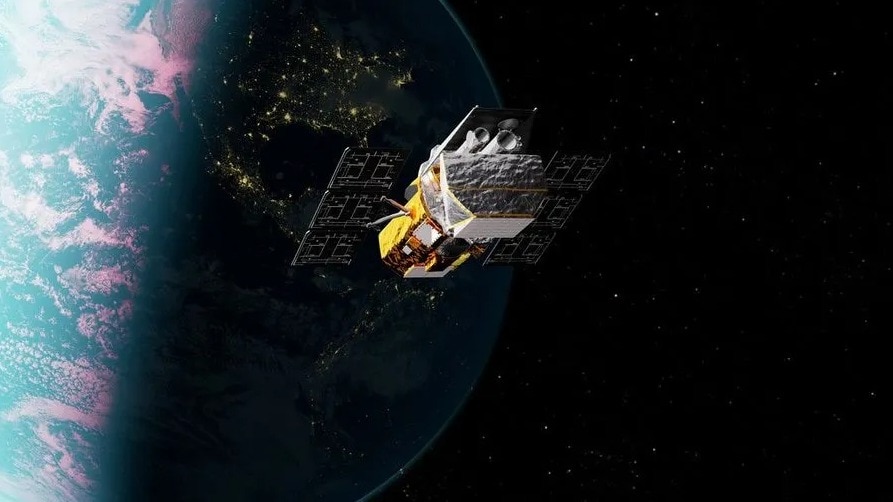
Nasa has called off a first-of-its-kind attempt to rescue an ageing space telescope after the spacecraft sent to save it developed a stubborn control problem in orbit.The agency and Katalyst Space said on Wednesday, August 19, that Link will no longer capture and raise Nasa’s Neil Gehrels Swift Observatory to a higher orbit.Instead, Link will still attempt to rendezvous with Swift and carry out operations nearby, allowing engineers to collect data that could help future satellite-servicing missions. An artist's concept of the Link spacecraft docking with Swift Observatory. (Photo: X) Swift’s orbit is falling, and it has been doing so a bit faster because increased solar activity has strengthened the drag from Earth’s upper atmosphere. Without the planned intervention, Nasa expects the observatory to re-enter the atmosphere and burn later this year.AN AMBITIOUS MISSIONSwift has spent more than 20 years in orbit after launching on November 20, 2004. Nasa originally designed it for a two-year primary mission, but it continued operating for decades.To extend its life, Nasa awarded Katalyst a contract in September 2025 to design, build, test and launch Link in less than a year. The spacecraft was finally launched on July 3, 2026, aboard a Northrop Grumman Pegasus XL rocket released from the company’s Stargazer aircraft over Kwajalein Atoll in the Marshall Islands.After launch, Link established contact with Earth and passed several early checks.By July 15, Nasa said its power and propulsion systems had been commissioned, while an early issue involving one of its three reaction wheels had been addressed through software patches and operational changes.Then Link began spinning.WHAT WENT WRONG WITH NASA'S SWIFT MISSION?On July 28, Nasa said two of the spacecraft’s three reaction wheels were not operating and that some functionality had been lost in its cold-gas thruster system.The spin caused communications issues and threatened the spacecraft’s ability to control its orientation.Some progress followed after the issue had been identified. An artist's concept of the Link spacecraft sent to rescue the falling telescope. (Photo: Nasa) By July 31, a series of thruster burns had reduced Link’s spin rate from about 9 degrees per second to less than 4 degrees per second.Nasa and Katalyst said potential routes to the original mission were still being examined.But now the correction has proved to be inadequate as Link continues to face problems. So much so that Nasa has cancelled the mission to save one of its most successful creations.WHY IS SWIFT OBSERVATORY SO IMPORTANT?Swift is not just a falling, ageing telescope.Launched to study gamma-ray bursts, among the most powerful explosions in the universe, Swift carries three instruments that observe gamma rays, X-rays, ultraviolet and visible light.Once its robotic arms are attached to Swift, LINK can begin to slowly push Swift upward. Over the course of a few months, LINK will attempt to return Swift close to its original launch altitude. Then, LINK will detach, leaving Swift in its new orbit. pic.twitter.com/rs9ES8W3uQ— NASA Universe (@NASAUniverse) July 6, 2026The observatory's speed is also crucial.After detecting a gamma-ray burst, Swift can rapidly turn towards it and study the fading afterglow, helping scientists understand events such as exploding stars and the mergers of neutron stars.The rescue may have failed, but Nasa has said that Link’s next rendezvous attempt can still demonstrate technologies needed to service spacecraft in orbit.For the falling Swift, however, the clock is running out.- EndsPublished On: Aug 20, 2026 11:07 IST
Link spacecraft sent to rescue Nasa's falling telescope fails, lost in space
Full Article
Original Source
Read the full article at Indiatoday →KhanList aggregates and links to publicly available news content. We do not host full articles from third-party sources. Always verify important information with original sources.