
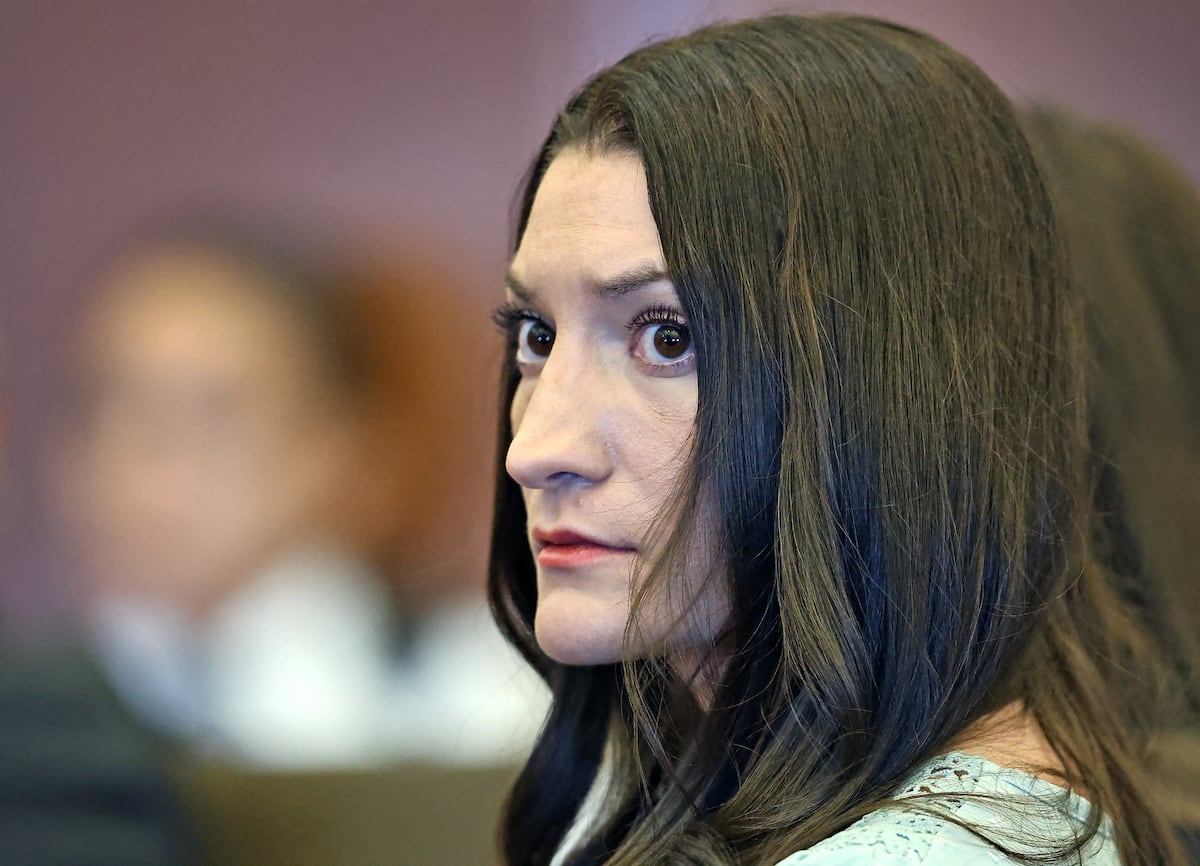
On Monday, Lindsay Clancy once again appeared in a wheelchair before a Plymouth court in the state of Massachusetts. She was returned to the Tewksbury psychiatric hospital without a decision on whether she will be retried on first-degree murder charges after strangling her three young children in the basement of her Boston home in 2023.The judge has not decided how to proceed with the case of the 36-year-old woman, a former nurse who has admitted killing her children. Her defense team says she was experiencing postpartum psychosis at the time, which they argue left her unable to fully understand her actions. Evidence presented at the first trial records that Clancy expressed suicidal thoughts and fear of harming her children, which her defense says the health system failed to identify and treat in time.Clancy’s face became a symbol in the national debate over maternal mental health and postpartum care as the trial of the defendant — who not only ended her children’s lives but also slashed her wrists and jumped from a second‑floor window in an apparent attempt to kill herself — moved forward.On Monday, prosecutors said they are considering re‑filing charges but did not yet know “what that process will look like.” Clancy’s lead attorney, Kevin Reddington, said he would not allow his client to “sit incarcerated for the next year or two or three” while awaiting a final verdict, especially if the case drags on and a new judge replaces the current one, who is scheduled to retire next summer.After two heated hours inside the courtroom, prosecutors did not say which criminal charges they intend to pursue against Clancy, but Judge William Sullivan said he hoped to set a trial date for March next year.At the first trial, Clancy faced three counts of first‑degree murder, but it remains unclear whether prosecutors will keep those charges or consider pursuing second‑degree murder or involuntary manslaughter. That uncertainty has left the defense in limbo: “Why do we not know if the next trial is going to be murder in the first degree, or a lesser charge or no charge?” Reddington said on Monday. In addition to asking that the murder charges be dismissed, Clancy’s defense asked Sullivan to investigate the lone juror who refused to vote for her acquittal. “It is clear from the record this juror did not refuse to deliberate,” prosecutor Jennifer Sprague said in response to the defense’s accusation. “He refused to agree,” she added.That was the reason the nationally televised trial was declared a mistrial in early September. Of the 12 jurors, one refused to sign a verdict that would have favored Clancy, something that very rarely happens in U.S. criminal trials.At the time, Donald Trump weighed in on the case, which dominated debate over the summer. “It’s a terrible situation. Look, she did a horrible, horrible thing. Can’t be worse,” he told reporters from the Oval Office, adding: “But you’ll find out what the price to pay is.”In September, Reddington asked the president to consider granting his client clemency. “I would hope that you would consider this young lady, the type of person she is, what she has been through, and consider a pardon,” he said in an interview with ABC.But to date there is no end in sight to the media spectacle surrounding one family’s tragedy.Sign up for our weekly newsletter to get more English-language news coverage from EL PAÍS USA Edition
Lindsay Clancy returns to court, but questions remain over new trial date and first-degree murder charges
Full Article
Original Source
Read the full article at English →KhanList aggregates and links to publicly available news content. We do not host full articles from third-party sources. Always verify important information with original sources.