
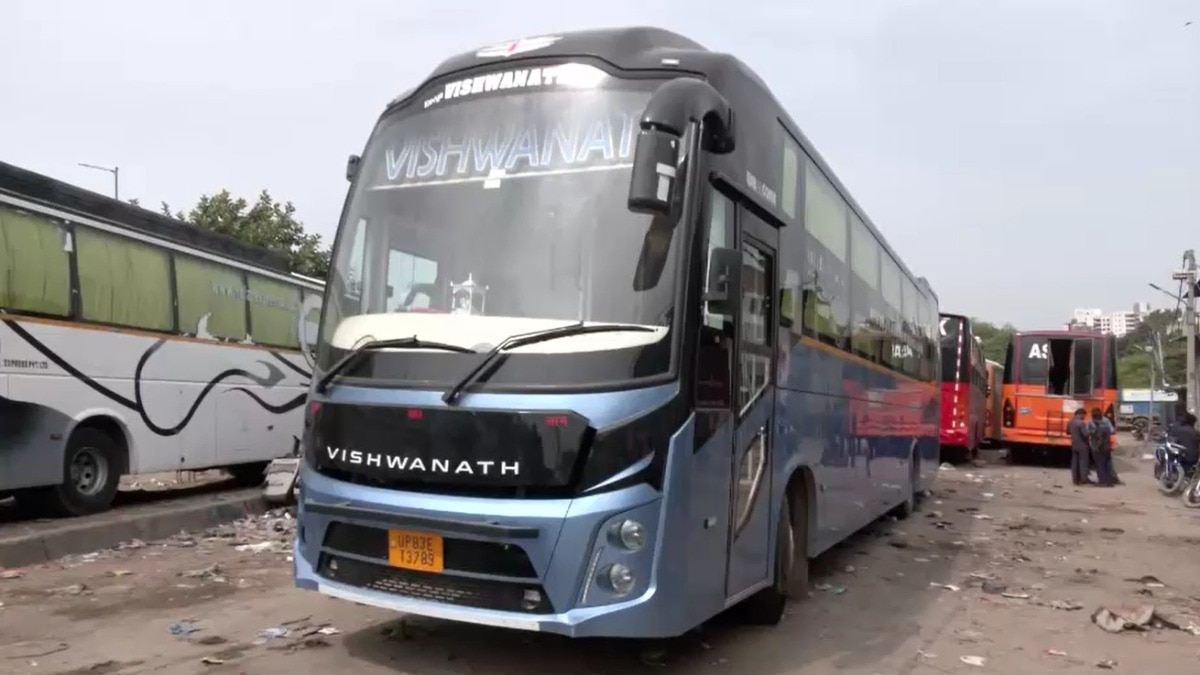
A reality check at Delhi's Kashmere Gate bus terminal revealed shortcomings in CCTV coverage, panic-button systems and their linkage with GPS or external control rooms, triggering major safety concerns.Noida-Delhi bus in teen rape case had 11 traffic violations in 11 months, 9 challans in 23 days (Photo: ITG)A day after the alleged gangrape of a Class 11 student inside a moving sleeper bus in Greater Noida sent shockwaves across the nation, an India Today/AajTak ground investigation found several gaps in the safety arrangements meant to protect passengers, particularly women and minors, travelling on long-distance private buses.A reality check at Delhi’s Kashmere Gate bus terminal revealed shortcomings in CCTV coverage, panic-button systems and their linkage with GPS or external control rooms, raising questions about how quickly an emergency inside a sleeper bus can be detected and acted upon.CLASS 11 STUDENT GANGRAPEDThe alleged crime has brought renewed scrutiny on the safety of sleeper buses, where passengers travel in enclosed berths often separated by curtains.According to police, the teenage girl had reached Greater Noida’s Pari Chowk amid heavy rain and darkness while travelling to meet her cousin in Noida. She boarded an empty sleeper bus after being told by its driver and conductor that they could drop her near Noida Sector 63.Police allege that the girl was sexually assaulted by the driver and conductor during the bus journey and was later dropped near Kashmere Gate in Delhi. The bus covered roughly 47 km before the girl approached the police. Both the accused have since been arrested, while the seized bus has been sent for forensic examination.WHAT INDIA TODAY INVESTIGATION FOUNDAgainst this backdrop, the India Today/AajTak team conducted a safety check at Kashmere Gate, one of Delhi’s major terminals for private buses travelling to destinations across North India and beyond.The inspection found that simply having security equipment onboard does not necessarily translate into effective surveillance.In one sleeper bus, only two CCTV cameras were found. One was positioned around the driver-conductor area, while another covered the front portion of the vehicle.The rear section, where several sleeper berths were located, remained largely outside the cameras’ field of view.A similar limitation was found in another bus operating on the Delhi-Indore route. Although CCTV cameras were installed, their positioning left parts of the rear berths and aisle without direct coverage.Such gaps could make it difficult to immediately detect suspicious activity or establish what happened inside the rear section of a moving bus.The reality check also examined panic-button arrangements. On one bus, when the crew was asked to identify the emergency button, a passenger-seat adjustment control was initially pointed out.A senior member of the crew subsequently clarified that there was no dedicated panic button on that vehicle.Another bus had panic buttons, but the system did not appear to be connected to an external control room or a GPS-based emergency response mechanism.According to the staff, activating the button would alert the driver and conductor. This raises a critical question: what happens if the crew itself is unable or unwilling to respond to an emergency?The design of sleeper buses presents another challenge. Curtains around individual berths are intended to give passengers privacy, but they can also obstruct the line of sight of the crew and other passengers. When combined with inadequate CCTV coverage, this can leave sections of the bus difficult to monitor during a journey.WHAT WOMEN PASSENGERS SAYWomen passengers spoken to during the ground check said the Greater Noida case had heightened their concerns, particularly about travelling alone or overnight in sleeper buses.They called for cameras covering the entire passenger compartment, properly functioning emergency buttons and systems that can transmit alerts to operators or authorities along with the vehicle’s location.TRAFFIC VIOLATION BY THE BUS USED IN CRIMEThe vehicle allegedly used in the crime has also come under scrutiny for its traffic record.Police records show that the bus accumulated 11 traffic violations in roughly 11 months, including nine challans within a span of 23 days. Eight of those nine violations were related to overspeeding. It also accumulated Rs 56,000 in unpaid challans in July, according to the records.INCIDENT SPARKS SAFETY DEBATEThe findings have therefore widened the safety debate beyond the installation of equipment. The key issue is whether CCTV cameras provide meaningful coverage, whether panic buttons actually trigger a rapid response, and whether bus operators have systems capable of locating and assisting a passenger in distress.With the investigation into the alleged gangrape continuing, the focus is likely to turn towards accountability, safety standards and enforcement.The incident has exposed the need for stronger safeguards on private sleeper buses, including comprehensive surveillance, functional GPS-linked emergency systems, effective grievance mechanisms and stringent verification of staff.For passengers, particularly women and children, the real test will be whether these measures work when an emergency actually occurs—not merely whether they exist on paper.- EndsPublished On: Sep 1, 2026 23:53 IST
Limited CCTV coverage, no GPS tracking: Major safety lapses on private Delhi buses
Full Article
Original Source
Read the full article at Indiatoday →KhanList aggregates and links to publicly available news content. We do not host full articles from third-party sources. Always verify important information with original sources.