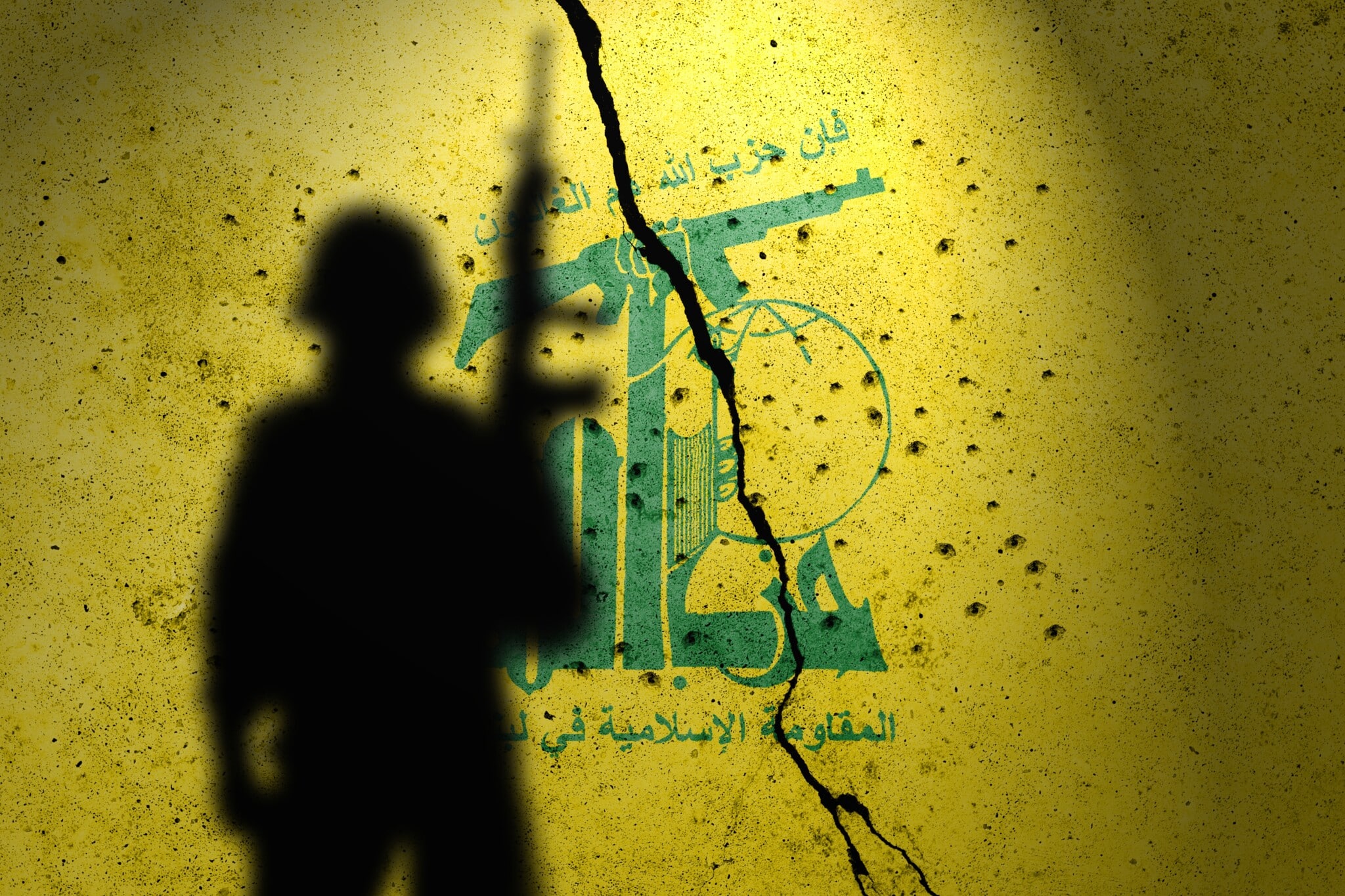
Iraq on Monday arrested Abbas al-Yaaqoubi, a commander in the pro-Iran Nujaba militia, on charges of planning attacks against U.S. targets. Meanwhile, in Lebanon, the country’s top officials over the weekend denounced what they believed was an “Israeli massacre of a whole family.” Hezbollah later announced that the strike had actually killed Ali al-Hajj Hassan, a commander in its Radwan Force, who had vowed in a video to attack and overwhelm Israelis. The contrast is striking. While Iraq is acting like a sovereign state in its effort to disarm militias, Lebanon has largely become a bystander as Israel pursues the dismantlement of Hezbollah. The Lebanese government has been largely irrelevant to the effort to seize Hezbollah’s non-state weapons, despite making that objective its platform. If a foreign intelligence service can flawlessly locate and eliminate Hezbollah commanders actively plotting the next regional war, there is no logical reason why the Lebanese judiciary cannot act as well. Beirut must immediately issue formal arrest warrants for these militants on charges of violating the cabinet’s March 2, 2026, resolution, which explicitly banned the militia’s military activities. Once issued, Lebanese military intelligence can locate and apprehend these outlaws and bring them before the courts to face justice under Lebanese law. For decades, Beirut has recycled the tired argument that the Lebanese Armed Forces (LAF) lack the capability to confront Hezbollah in open battle. Apologists for inaction routinely warn that any state-led crackdown would immediately trigger a bloody and uncontrollable civil war. This, however, is a false choice driven by political cowardice. Issuing arrest warrants for Hezbollah commanders requires precise, targeted law enforcement, not a massive military campaign. Any militants who choose to violently resist arrest will be forced to deal directly with Lebanese domestic security forces, fully supported by the LAF. Executing these pinpointed, intelligence-driven arrest missions is a far easier and less costly task than asking the LAF to dismantle Hezbollah’s massive subterranean fortress cities, such as the sprawling underground networks carved into Beaufort or the strategic heights of Ali al-Taher. Bringing Hezbollah’s military leadership to justice will yield far greater security dividends than any experimental, localized “pilot zone.” Once Israel detects genuine sincerity from Lebanon, the strategic calculus will shift. Confronted with a reliable sovereign partner in Beirut, Israel will find it politically and militarily viable to hand over border territories it previously seized to eliminate the militia threat. Global investors will also view Lebanon through a radically different lens. Capital will flood back into the country if Beirut demonstrates a baseline resolve to establish the rule of law. Reining in Hezbollah will finally end the perpetual cycle of existential anxiety, stopping the constant speculation over when the next devastating war will break out and instantly wipe out foreign investment. Once the militia state-within-a-state is systematically dismantled, Lebanon will finally project safety, stability, and institutional predictability. Under a responsible government, reconstruction will drive itself naturally through organic economic growth and robust private capital, ending Lebanon’s embarrassing reliance on begging foreign nations for humanitarian donations and emergency aid. Yet, Lebanese officials—from the presidency and prime minister’s office to parliamentarians—continue to audition for Hezbollah’s approval. State leaders routinely cater to radicalized factions, including segments of the Sunni community that have become deeply hostile toward regional normalization due to relentless Turkish efforts to obstruct peace. Instead of coddling Hezbollah loyalists, President Joseph Aoun, Prime Minister Nawaf Salam, and other state officials must prioritize earning the trust of two critical groups. First, they must reassure Israel, whose confidence in a strong Lebanese state will accelerate border stabilization. Second, they must reassure international investors, who expect to see rogue warlords held accountable under Lebanese law. Unfortunately, when Aoun and Salam craft their statements, they abandon strategic policies and instead pander to cheap, short-term political goals. Similar institutional cowardice has rendered the Lebanese parliament utterly irrelevant. A recent Parliament vote granted Lebanese who fled to Israel in 2000 the right to return without fear of state reprisal. However, these citizens understand the harsh reality: the government lacks the spine to protect them from Hezbollah’s immediate vengeance. By abdicating its sovereign duties, Beirut has forced outside powers to do its job. Continued state paralysis ensures the prolonged depopulation of southern Lebanon. The ongoing Lebanese tragedy can only be averted if Lebanon steps up and emulates Iraq’s example. Global trust will only return when Beirut demonstrates it will enforce its own sovereignty. Regrettably, history teaches us that Lebanon specializes in empty rhetoric rather than concrete action. While Iraq seems to have chosen the path of a sovereign state, no one is holding their breath for Beirut. Hussain Abdul-Hussain is a research fellow at the Foundation for the Defense of Democracies and a columnist focusing on Lebanon and broader Arab affairs.
Like Iraq, Lebanon Must Arrest Militia Commanders
Full Article
Original Source
Read the full article at Fdd →KhanList aggregates and links to publicly available news content. We do not host full articles from third-party sources. Always verify important information with original sources.