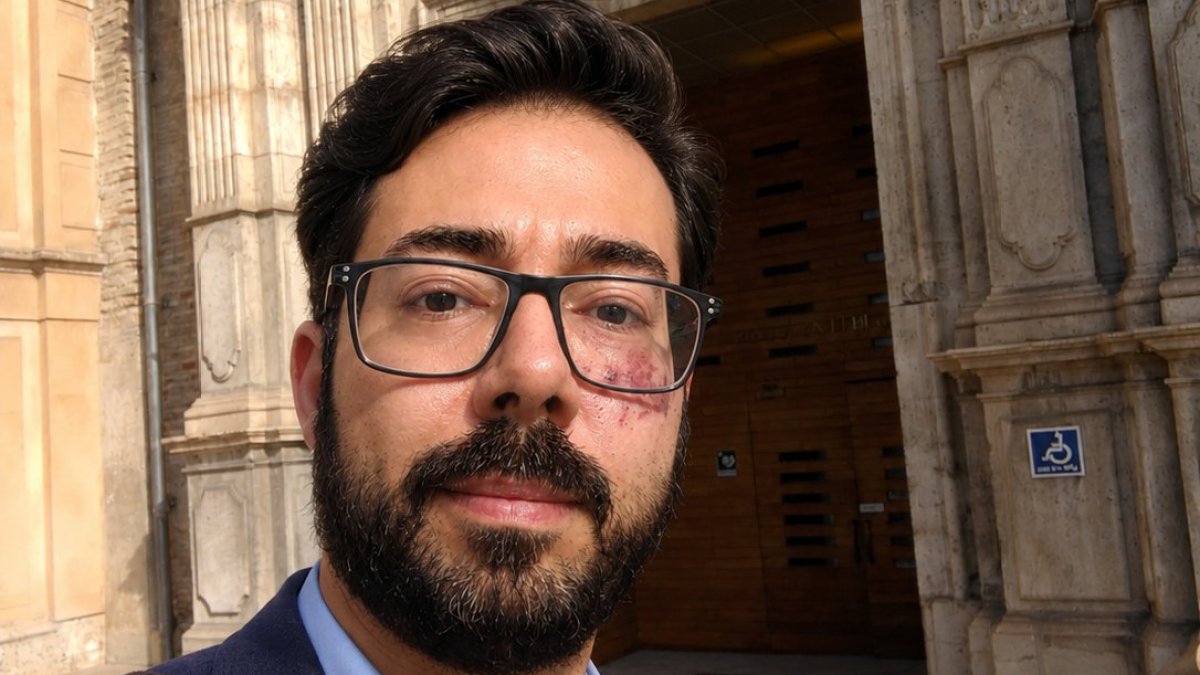
In the neighbourhood he grew up in, the old haberdashery, traditional tapas bar, and small shop run by a neighbour, have all disappeared. In their place, tourist apartments and storage units have popped up, “like a plague,” says Luis Andrés González Picazo, a local resident who has lived in Benicalap, a district not far from Valencia’s old town, his entire life. Now, there is a rental key box on every other door and Airbnb owners have installed imposing security cameras which point at the street. Local businesses have been gouged out to make way for tourist traps selling burgers, nachos, imported beer, and colourful, Instagram-worthy dishes that bear little resemblance to Valencian cuisine. “It feels as if everything that made the neighbourhood unique has disappeared,” he says. “It all looks the same.” When he was younger, walking around his neighbourhood meant seeing mostly Valencian and Spanish people, but now Picazo, 45, a software engineer, is faced with rowdy groups of drunken tourists making noise, often riding bicycles carelessly and breaking traffic rules. “More than once I have almost been hit by someone cycling dangerously,” he says. Picazo has seen the face of his neighbourhood and city completely changed by overtourism. Last year, the number of foreign visitors in Spain rose by 3.2 per cent to 96.8 million and once again it is preparing for another record-breaking year in which the number could reach 100 million for the first time. Shorts While tourism has long been a pillar of the Spanish economy, making up more than 12 per cent of its GDP, its rapid and rampant growth in many parts of the country over recent years has triggered backlash and protests. This summer, thousands of campaigners in Mallorca formed a three-kilometre human chain in the waters of Playa Es Trenc, a white-sand beach in the south of the island, in a demonstration against mass tourism. Last year, protests in Barcelona – another city reshaped by mass tourism – saw unsuspecting tourists sprayed with water guns, smoke grenades deployed, as well as chants of “tourists go home”. For the first time, the city has even appointed a commissioner for sustainable tourism to tackle the issue. Many campaigners argue that the uncontrolled tourist numbers are causing a drop in local wages, loss of quality of life, disruptive noise levels and an increase in the price of housing. Melita Cameron-Wood, a British-Maltese freelance journalist who has been living in Valencia since 2021, says she sometimes feels like part of the problem. “The influx of foreigners is often blamed for the surge in prices in Spain, so it can be awkward,” she says, “Sometimes you feel locals might warm to you more if you were Spanish, but then you remember that you pay your taxes locally, you have done the paperwork, and you have a right to be there.” Cameron-Wood thinks the blame shouldn’t be solely levelled at tourists. “Personally, I think the problem is that tourism is concentrated in major cities and not spread evenly throughout the country,” she says, adding that tourists could be more mindful when it comes to planning their holidays. “Why go to Ibiza when you can go kayaking in Asturias? I also think it’s about opting for low-season travel wherever possible, which often [is] a lot cheaper and less crowded.” ‘Tourism is concentrated in major cities and not spread evenly throughout the country,’ says Cameron-Wood, who has been living in Valencia for five years Anna Nicholas, an author and journalist from the UK, lives in one of the most tourist-saturated areas in Mallorca: Sóller Valley. She has lived on the island for 25 years. It has always been popular with Germans and Brits, but she noticed a massive upturn in visitor numbers after the pandemic. “With direct flights from the Middle East, US and Canada opening up here, many affluent visitors and investors have chosen to snap up properties and are willing to pay high prices,” she says. “This impacts the housing market in general, and there has also been a surge in holiday lets and illegal holiday rentals.” In her main shopping street, Carrer de Sa Lluna, she says they have now lost the local deli, butcher, bookshop, art shop, and photocopying store, which have been taken over by gift shops, estate agencies and cycle rental shops. Trendy, upscale restaurants with foreign owners have also opened, at which locals can’t afford to dine. The protests in Spain are part of a region-wide trend, overlapping with broader anti-tourism and anti-gentrification demonstrations happening across the Iberian Peninsula. Around 460 miles away on Portugal’s coastline, nearly identical scenes are playing out. Just weeks ago, hundreds of protesters marched in Parque Natural da Arrábida to protest the attempted fencing and privatisation of five beaches by a luxury real-estate firm, with more protests to come. According to figures from the Portuguese National Statistics Institute (INE), Portugal welcomed 29.9 million international tourists in 2025, around quadruple that of the 6.8 million who visited in 2010. Like Spain, the tourism and travel sector generates a large portion of Portugal’s GDP, in this case making up around 21.5 per cent of the economy, and accounts for roughly one in every four jobs in the country. Towards the capital, in Graça, one of Lisbon’s most vibrant neighbourhoods, there was a piece of graffiti that turned tourists’ heads just as much as the panoramic views. Spray-painted in huge letters on a wall on one of the busiest streets read, “Menos turismo, mais bairro” – translation, “Less tourism, more neighbourhood”. Although now painted over, the same slogan has multiplied all over the city, appearing on yellow banners draped from balconies and pinned to windows by local residents who fear that the city is being hollowed out by the record swells of visitors hitting the city every year. They have witnessed historic neighbourhoods, communities and local businesses being gutted to make way for short-term rentals, luxury hotels and souvenir shops. One person this has impacted is Duarte Lopes Soares, an estate agent who was born and raised in Sintra but commutes into Lisbon every day for work. “The first question my clients ask when visiting an apartment is whether there are any tourist flats in the building,” he says. “Nobody wants to live with suitcases rolling in and out at 5am.” Over the last 10 years, Lisbon has gone through a significant transformation, with house prices nearly doubling since 2015. In the historic centre, in the most tourist-saturated neighbourhoods, nearly two out of every three homes in the area operate as short-term rentals, shrinking permanent housing and inflating house prices. In some extreme cases, as locals have been priced out in huge numbers, some Portuguese residents have been left with no neighbours, surrounded entirely by tourist flats. In efforts to clamp down on the issue, more than 6,600 Lisbon residents recently signed a petition calling on city officials to ban short-term rentals in residential blocks. This diminishing goodwill is something that one British expat, who prefers not to be named, has noticed in the eight years she has lived in Lisbon. She recalls a number of negative brushes with locals, mostly with older Portuguese people who might be least inclined to accept the erosion of their old way of life. “Of course I’ve met lovely people, but a lot of the bad experiences – that have also targeted my race, such as dirty looks, audible irritation when I’m trying to communicate and once finding out a neighbour had called me a racist slur – have made me feel very cautious and put off,” she reflects. Nowadays she feels like she can only just about scrape by living in the city by herself. “When I first moved here eight years ago, I paid €400 (£340) for a double room in a really nice apartment with one other person,” she says. “For the last two years now I’ve been paying €1300 (£1100) for a one-bed in the centre of Lisbon, opposite a bar that has within the last week extended its opening hours until 3am. I have to contend with tourists everywhere making a lot of noise.” Since learning that her landlord has decided to sell the property, she has started flat-hunting again. “Looking at rent prices, it’s just scary to me,” she says. “There is a lot of stress around money that I didn’t have when I first came here – I can’t even imagine how Portuguese people who are on Portuguese salaries are feeling.” When she first moved to the city, she recalls falling in love with the light, the proximity to the beaches and the fact Lisbon still felt very “Portuguese”. In her opinion, that has massively changed. “I understand the Portuguese frustration because in some ways, the soul of Lisbon feels gone,” she says. “Apart from the sunshine, the blue sky and the architecture – we could be anywhere now. We’re paying London prices and you can go the whole day without hearing anyone speak Portuguese. I used to be able to eat out three times a week and now it’s maybe once a month. The price of a cocktail is the same as London now – it’s insane.” In his home town of Sintra, where the pastel-coloured hilltop palaces and proximity to Lisbon have made it a tourist favourite for day-trip excursions, Soares says that his favourite local restaurants and bars have closed because rents have skyrocketed or prices have surged so much to adapt to foreign budgets that they no longer cater to locals. He says he cannot even remember when he last visited the beautiful palaces on his doorstep because of the “chaos”. “The tourism we had 10 years ago was very different – there were fewer visitors and they were more respectful,” says the 31-year-old, who also works as an engineer consultant. “Now the traffic is crazy, and there are tuk-tuks and rental cars parked everywhere.” Some days he cannot even get to his own garage because a rental car is blocking his way. “When you complain or ask them to move, some of these tourists or operators are aggressive and feel entitled to behave however they wish,” he says. The hollowing out of the Portuguese communities and way of life is what saddens Soares the most. “Several houses on my street have been converted into tourist flats, so every day there are new cars and new faces,” he says. “There are homes that were once full of life, that are now empty assets waiting for buyers from the wealthy one per cent.” It’s not just the quality of life being affected. Over time, Soares fears that the impact of overtourism may chip away at the Portuguese psyche. “I’d say we risk losing our natural hospitality,” he says. “Portuguese people have always been genuinely happy to welcome visitors, but when tourism becomes overwhelming and disrespectful, that goodwill erodes.”
‘Like a plague’: How tourists destroyed two great European cities
Full Article
Original Source
Read the full article at Inews →KhanList aggregates and links to publicly available news content. We do not host full articles from third-party sources. Always verify important information with original sources.