
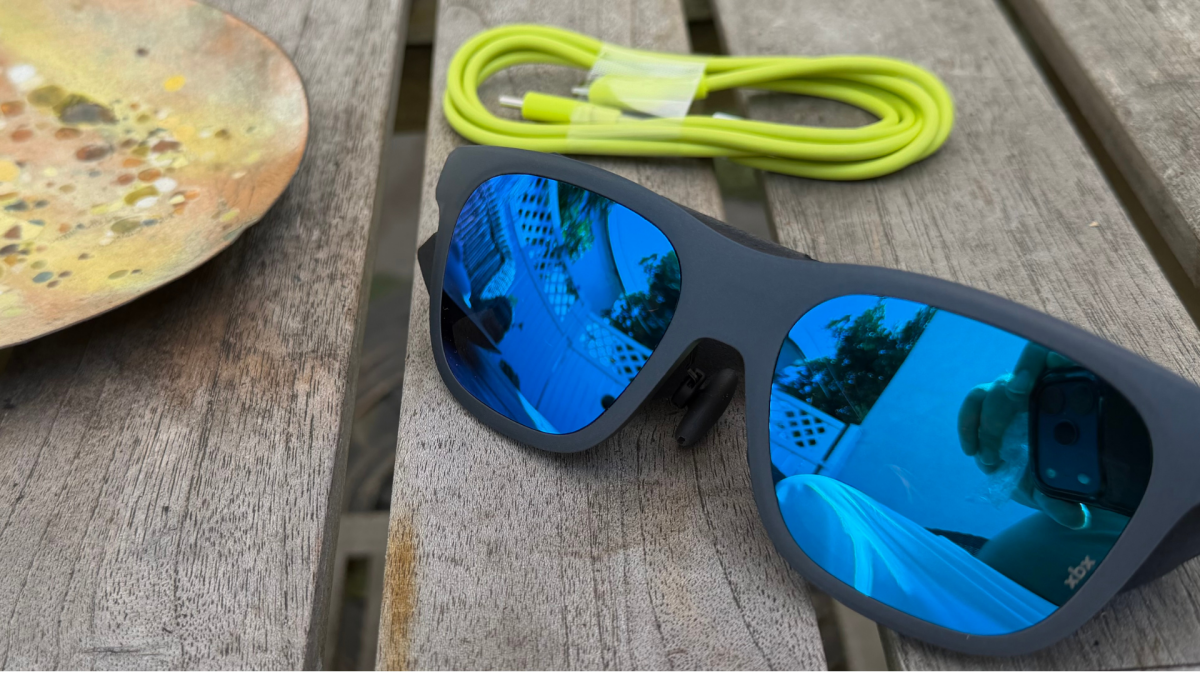
Stephen Johnson Stephen Johnson Senior Staff Writer ExperienceStephen Johnson is a senior staff writer at Lifehacker covering pop culture and technology, including the columns “The Out-of-Touch Adults’ Guide to Kid Culture” and “What People Are Getting Wrong This Week.” Read Full Bio November 11, 2026 Add as a preferred source on Google Add as a preferred source on Google We may earn a commission from links on this page. Credit: Stephen Johnson Table of Contents Welcome to Holiday Office Hours From the Labs, a collaborative multimedia project in which Lifehacker, CNET, ZDNET, and Mashable harness the power of our product testing laboratory and our editors' expertise to offer the best gift-buying recommendations possible. In this episode, we're talking televisions. I recently did a deep dive into TV development history, checked out what was on shelves for 2026, and I concluded that the best gift TV you can give this year is, actually, a pair of sunglasses. The XBX by XReal video display glasses are basically a TV you can shove in your pocket. Check them out: Credit: Stephen Johnson I looked past traditional sets for a couple of reasons. First, because as much as we all love a great show or movie, who actually buys someone a TV set as a gift? More importantly, there's the nature of television itself. Since it was invented in the late 1920s, television quality has been measured by how big the screen is and how clear and bright the picture is, but in 2026, a nothing-special 4K television delivers an image that is pixel-invisible to a typical viewer, and most of us don't have living rooms big enough to need a display bigger than 65 inches. I think the innovation in the space is going to come from the form factor and the use case, and what better form factor is there than a pair of sunglasses? Credit: Stephen Johnson These glasses deliver the equivalent of a 142" TV viewed from across the room. It's hard to compare resolution to traditional TVs—technically, the display is 1080p in each eye, but because the TV is just millimeters from your eye, it looks much clearer than that. The peak brightness is 1,600 nits, bright enough for most rooms, and there's a totally opaque shield if you need it. The refresh rate is a crisp 120Hz. They support HDR10 and real-time SDR-to-HDR upscaling, offer billions of colors, and it's all in a package that weighs only 62 grams. What do you think so far? Then there are the use cases. It can act as a separate monitor for your computer; you can watch a different show than your roommate without bothering them; but most of all, these are great for flights. There is no situation in life that calls for a big screen TV more than a cross-country airplane flight. Slip these on with a pair of headphones, and you can fly to Boise in your own private, virtual theater. They plug right into any device that supports USB-C video, there's no battery to remember to charge, and they cost less than $300. In other words: They're the perfect TV gift for the holidays, even if they aren't technically a TV. Lifehacker has been a go-to source of tech help and life advice since 2005. Our mission is to offer reliable tech help and credible, practical, science-based life advice to help you live better. Our Mission Our Team Newsletter © 2001-2026 Ziff Davis, LLC., A ZIFF DAVIS COMPANY. ALL RIGHTS RESERVED. Lifehacker is a federally registered trademark of Ziff Davis and may not be used by third parties without explicit permission. The display of third-party trademarks and trade names on this site does not necessarily indicate any affiliation or the endorsement of Lifehacker. If you click an affiliate link and buy a product or service, we may be paid a fee by that merchant.
Lifehacker's Pick for the Best TV to Gift in 2026 Isn't Actually a TV
Full Article
Original Source
Read the full article at Lifehacker →KhanList aggregates and links to publicly available news content. We do not host full articles from third-party sources. Always verify important information with original sources.