
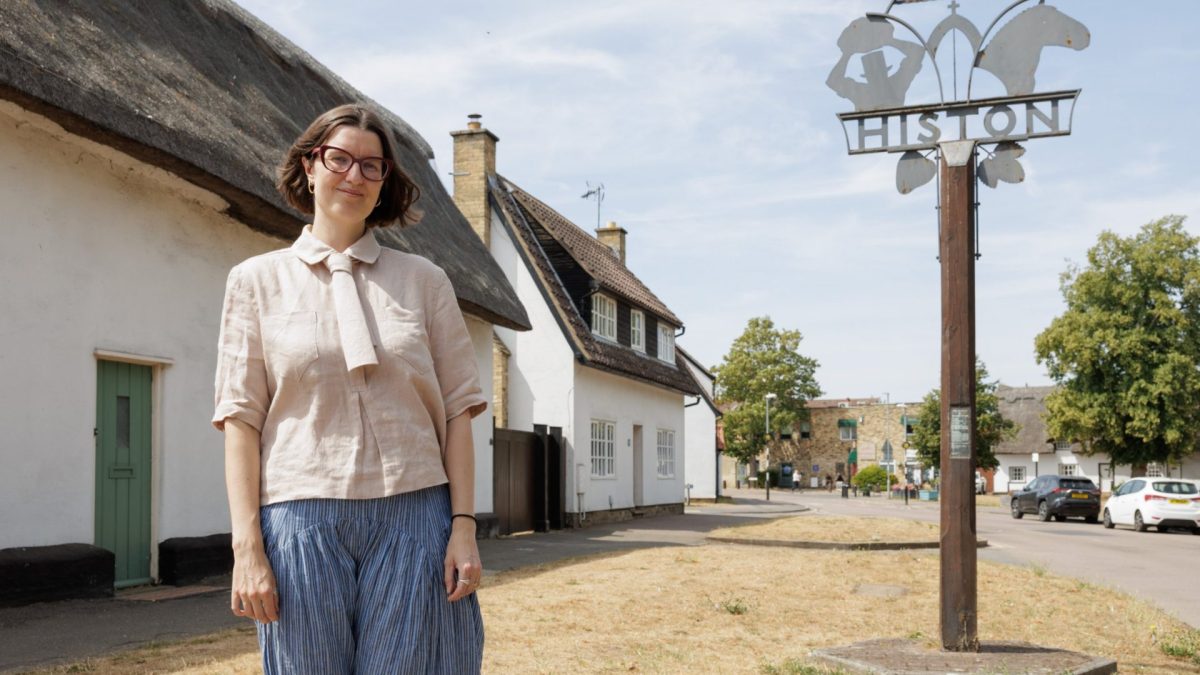
It’s 10.30am on the first Monday in August and Histon Recreation Ground, home to the Cambridgeshire village’s facilities for tennis, bowls, cricket and football, is looking barren. Today’s forecast was originally predicted as 26 degrees with cloud cover, but it has shifted overnight and now the dusty, yellowed sports field is once again baking in full sunshine. The few residents there to exercise are already sweating and sheltering in the shade while they still can. Histon, a small village in North Cambridge, was voted one of the best places to live in Cambridgeshire by Muddy Stilettos in 2025, with 1,300 people making the move from London every year. But as of the end of July, Histon is also the bearer of a very 2026 accolade: the driest village in the UK. According to the Cambridgeshire weather station, located at the National Institute of Agricultural Botany on the outskirts of Histon, the area has recorded 203.6 mm of rainfall since 1 January this year – beating out Shoeburyness in Essex (216.2mm) and Weybourne in Norfolk (219.2mm). It’s no wonder then that last week, Cambridgeshire was one of the seven regions across the country declared to be in drought by the Environment Agency. And getting through every day of this historically hot and dry summer has become something of an endurance sport itself, especially for the population’s most vulnerable. Sally Smith, the Lunch Club manager for HI Friends charity (Photo: Keith Mindham Photography) Sally Smith manages the Older People’s Team for the local charity HI Friends, which provides services and activities for local residents of all ages. One of the charity’s focuses is to support older people by reducing isolation and keeping them active with seated fitness classes, lunch clubs, and weekly shopping trips. But as she explains, the heat directly limits their ability to do that. “We have people who are mostly in their 80s and 90s and a few who are 100, and they are very at risk from extreme heat. But the knock-on effect of us cancelling activities like Lunch Club is that their isolation increases and they really miss their activities and their friends.” Isolation can seriously affect the physical and mental wellbeing of older people, but avoiding it in such conditions is difficult, she adds: “The forecast seems to change hourly – the temperature is spiking again and there were suggestions it might reach 34 today [it topped at 31] – we’d have had to cancel. It’s luckily not that extreme so we’re okay to keep going – for now.” “It’s affected all aspects of the community,” Neil Davies, parish councillor and charity manager for HI Friends agrees, “and we’ve seen a real reluctance and a concern from our older residents not to go out of the comfort of their homes.” “We’re going to have to plan for heatwaves in the future and have air conditioning as far as we can,” he adds. “Life’s not going to be the same again.” Inside the centre on Monday, 12 residents braved the heat for their Stronger4Longer class hosted in the one room with air conditioning. Residents tell me they’re simply biding their time to get through it. Elaine Blackburn, 87, says “we all just go to sleep in the afternoon and flop on the sofa”. Barbara Nye, 97, agrees: “The heat has sapped all my energy – nothing is growing in my garden.” Conversation, inevitably, turns to the heatwave of 1976 as a comparison point. “But even if it was as hot, it affects us much more these days,” adds Joan Goss, 92. This is not just because this group of people are elderly – while the high temperatures in the summer of 1976 were more persistent, 2026 has seen far more short and intense bursts of heat. Shorts The humidity, and therefore the ability to cope with the heat, is much worse this time around, as per the Met Office‘s analysis: “Unlike in 1976, where the air was generally drier, the 2026 heat developed from air originating over the Atlantic… As a result, even where peak air temperatures were comparable, the perceived heat and associated health risks were often greater.” While the grounds are technically still usable, there are concerns about the impact that the hosepipe ban will have on future usability. “The Recreation ground has had to adapt for its sporting fixtures, we are only watering the areas that would cause a health and safety issue,” a staff rep from the Histon and Impington Parish Council explains – only watering the cricket wicket strip or tennis courts that have cracks emerging. “We are concerned about the upcoming football season, unless we get some persistent rain soon, as the ground as it is would not be safe to play on.” Neil points out that there’s a bit of a tension emerging when you compare the rec centre grounds with those of private schools in the city of Cambridge (some schools are reportedly using loopholes to keep their grounds lush, despite the schools being closed for summer). But there is little they can do, especially with the hosepipe ban: “We just have to get on with it.” Julie, a hairdresser in her 50s who’s hiding from the sun in The Red Lion, one of Histon’s six pubs, with her dad, has come up with a novel way to weather the hosepipe ban. “It’s been quite difficult having a large garden and trying to keep it alive. Obviously all the lawns are just straw and I’d never water them, but the pots and expensive plants have got to be kept alive, which we’re having to do with water butts.” She’s been having “watering parties” where friends come round, drink wine, and water her pots over an evening. One unanticipated side effect, she adds, has been how the increase in dust is affecting everyone’s lungs. “All the mud has turned to dust and the lawns to straw. All of us are noticing that we’re coughing quite a lot. A lot of people who have got asthma are struggling quite a lot more.” Aerial view of the drought at Abbey Farm, Histon (Photo: Keith Mindham Photography) Beyond her garden, the weather has also caused a financial hit: when the temperatures hit 35 she had seven clients cancel in one day. While other local businesses are now considering imposing cancellation fees, she’s opted not to as her clientele are largely older people. Similarly, friends of hers who work outside have taken a hit: “The impact has been really unkind and horrible to see. You don’t want to be on a roof or doing roads in 40 degrees, and everything has an impact on people’s wages.” But she’s well aware that all this complaining is a classic British pastime. “Hey ho! We complain that we don’t get a summer, and then when we get one we’re not happy.” One person who is tentatively happy about Histon being the driest village is Don Kelly. As chairman of the local beer festival, he’s hoping that the seven day long event which raises money for the local community will quench everyone’s thirst: “Long summer evenings are just great for attracting people out and getting people to come to the beer festival.” It’s been a boon, too, for local tourism. Michael Watson is the owner of the recently opened private country estate with luxury suites called The Fold. He says that despite only being open a couple of months, they are far busier than they expected thanks to the weather. “We’ve had quite a few people make the choice to not vacation abroad because they’ve heard it’s too hot and they much prefer to stay in the UK,” he says. “We’re also getting people who find London a little bit too oppressive in this hot weather, want to come to the countryside but don’t want to travel too far.” As well as supporting his business, this increase in visitors benefits the local economy: “the people staying with us are going into the village, spending time outdoors and money in pub gardens. You just want to do that more when the weather is great.” He acknowledges that there are plenty of negatives, particularly on the surrounding agricultural areas. He describes their lawns and meadows as looking like “the African savannah” and is worried about the impact both on his ancient meadows and on the wider agriculture. For example, the wheat field next to The Fold was a very early harvest this year, meaning the ground is going to be so hard that the ability to plow and sow the next crop will be severely curtailed. “You won’t see the problem immediately, but you will see the problem next year potentially with crops not really being established, effectively putting up the price of wheat in this country.” Desert-like conditions around Histon Brooke (Photo: Keith Mindham Photography) But in general he thinks that as a nation we should lean into the positives now this is the new normal. “We really should lean in more to this whole concept of becoming a real holiday destination for people. We’ve had so many parts of the country that would have claimed that, rundown seaside towns and so on, and I think we can get a renaissance if we really put our energy into creating that similar Mediterranean type lifestyle here in the UK.” Laura Potts, a 35-year-old psychologist, agrees. She moved to Histon from London four years ago to have her kids and hasn’t looked back – even in the heat. “The evenings are difficult because it takes a long time for them to go to sleep, especially the bedroom at the back of the house which is quite hot. And the hosepipe ban meant that you couldn’t use the paddling pool. But Histon is just a really nice place to live. Since coming here and having children, it’s just perfect. I couldn’t do London again, especially in the heat”. Down the road from the rec centre, surrounded by thatched roofs and wooden benches, is an equally parched and drab village green. But if you were to stand on the bridge looking over the brook, you wouldn’t necessarily know there was a drought at all, as it is surrounded by thriving reeds and green-leaved trees. Michael, whose family has lived in the village for seven generations, explains that this is because of the plants and boxes that were installed about 30 years ago to shore it up. It’s inspired his next steps at The Fold. “One of the things I’m planning to do is create a small pond in one of our meadows, which will be great for the environment. Just as with the village green in Histon, you have luscious growing plants around the edge of a pond even despite the drought we’re seeing.” He explains that the installation of those plants around the brook was initially protested – people didn’t like the idea of the change. Those same voices of dissent arose more recently with the announcement of a new reservoir being built in the Fens – residents said they could just rely on other reservoirs as usual. But the intensity and severity of this year’s heatwaves have changed locals’ tunes and encouraged a longer term view. “As a country we need to take a longer-term view and really plan ahead, like the person who planted those reeds around the brook did 30 years ago,” Michael says. “They may not have done it anticipating a drought, but we’re certainly seeing the benefits of it now.” In Histon, more plans for the future are already underway. “This year has been a turning point,” says Yvonne Murray, parish councillor. “We’re shaping a more structured response for the future, a clear plan that sets out when we act, how we protect people, and how we manage our environment safely. We’re responding, we’re learning, and we’re preparing for conditions like those we’ve already experienced over this year.” In the meantime, they are looking back fondly on the last time it rained (once on the last Thursday of July) and keeping cool however they can. With another month of heat looming, residents remain grateful for their community, their air-conditioned supermarkets, and six pubs/watering holes. As local Reverend Jenny Pathmarajah puts it: “Histon may be the driest village in Britain, but we’re determined not to become dry in spirit!”
‘Life won’t be the same’: I went to England’s driest village – and saw our future
Full Article
Original Source
Read the full article at Inews →KhanList aggregates and links to publicly available news content. We do not host full articles from third-party sources. Always verify important information with original sources.