
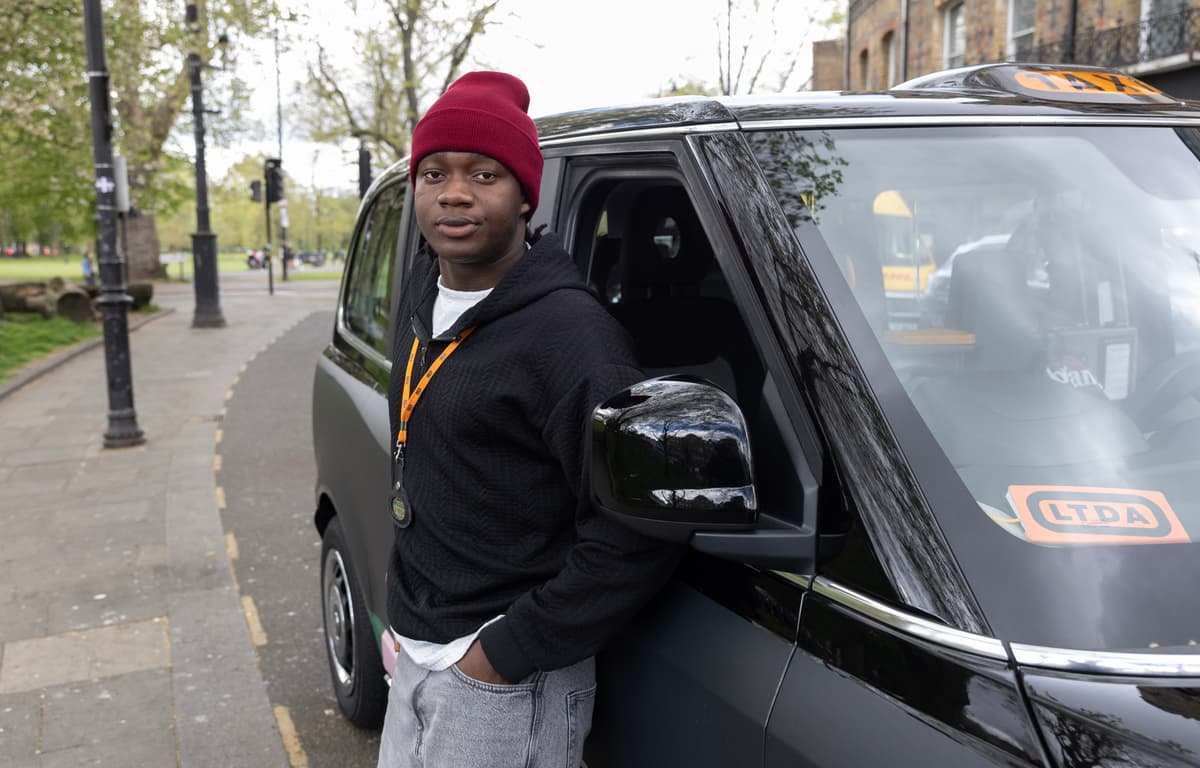
Black-cab drivers have complained of worsening congestion after the pedestrianisation of Oxford Street forced taxis onto surrounding roads.Drivers say traffic on nearby routes including Regent Street has become noticeably heavier since the landmark scheme came into force.Bahrain Mujagata, believed to be London's youngest licensed black-cab driver at 21, said some journeys were already taking significantly longer.He told the Local Democracy Reporting Service that trips towards Paddington were taking up to 20 minutes longer as traffic was diverted away from Oxford Street.The comments offer an early glimpse of the impact of one of the capital's most significant transport changes in years.“Yesterday, I felt the real-time repercussions—there was so much traffic on Regent Street with nowhere else to go . Sitting through traffic that I used to bypass makes life much harder,” he said.“Regent Street going northbound is very crowded, with a cycle lane on the left and a central reservation. If a bus picks up passengers, you have to stay behind it. If it’s like that at night, I can only imagine what it’s like during the day.”Mr Mujagata said that he was not against the idea of pedestrianising Oxford Street in principle but that the Mayor of London’s new scheme was not the best option.“We will evolve and get used to it, like whenever they change a road or turn. But drivers who knew how it was before will always remember,” he said.Oxford Street traffic crossingsDuke Street (northbound only) Davies Street/Stratford place (both directions for local access) Vere Street / New Bond Street (Southbound only) Harewood Street / Holles Street (Northbound only) Regent Street (both directions) Mohammed Essalhi, 31, who works at a crepe shop within the pedestrianised zone said that he also believed that pedestrianisation was going to be an overall negative for businesses.Read More“I think our shop will be more popular as more people can come to the street, but I think pedestrianisation will be bad for businesses on Oxford Street,” he said.Mohammed Essalhi, 31, works at a crepe shop within the pedestrianised zoneLDRS“You have too many restaurants and businesses which need to get deliveries,” he said, adding: “We get our supplies delivered twice a week so this is going to be really hard to organise now.”A spokesperson for Transport for London said: “Following two public consultations in 2025 and 2026, which asked the public about the principle of pedestrianisation as well as set out the scope of the scheme and how traffic, including buses and taxis, would be diverted to allow this, Oxford Street is now traffic-free between Orchard Street and Great Portland Street.“As part of this scheme, TfL has engaged extensively with stakeholders including taxi driver associations on the plans. As part of the changes, we have worked to locate bus stops and taxi ranks as close as possible to Oxford Street, with additional signage installed to direct customers to and from them, and have retained blue badge parking provision in the area. There remain designated taxi ranks close to Selfridges, Marks and Spencers and John Lewis, and there are also five points that traffic – including taxis – can cross the traffic-free area.“Further future stages of our work will make additional changes to ranks and we are working with the taxi driver associations on changes delivered so far.“TfL has traffic modelled its highways changes to Oxford Street which during the day was primarily used by buses and taxis. As you would expect, Oxford Street will see a decrease in traffic from the 26 October. Significant traffic, noise and air quality modelling has been carried out across the West End as part of the development of these plans. These include on nearby roads around Oxford Street as well as down as far as Piccadilly Circus.“A comprehensive plan has been developed with the Oxford Street Development Corporation to monitor impacts on Oxford Street and the surrounding area. This includes impacts on safety and security, pedestrians, buses, taxis, cyclists, accessibility, environment, general traffic, urban realm, economic and growth, and visitor behaviour and experience.”“As with any scheme which TfL implements, we will be closely monitoring the scheme for any impacts and should any issues become apparent, we will look to understand and address these where possible.”A spokesperson for the Mayor of London’s office said he did not have anything to add to TfL’s comments.
'Life is much harder now': Westminster cabbies feel impact of Oxford Street traffic ban
Full Article
Original Source
Read the full article at Standard →KhanList aggregates and links to publicly available news content. We do not host full articles from third-party sources. Always verify important information with original sources.