
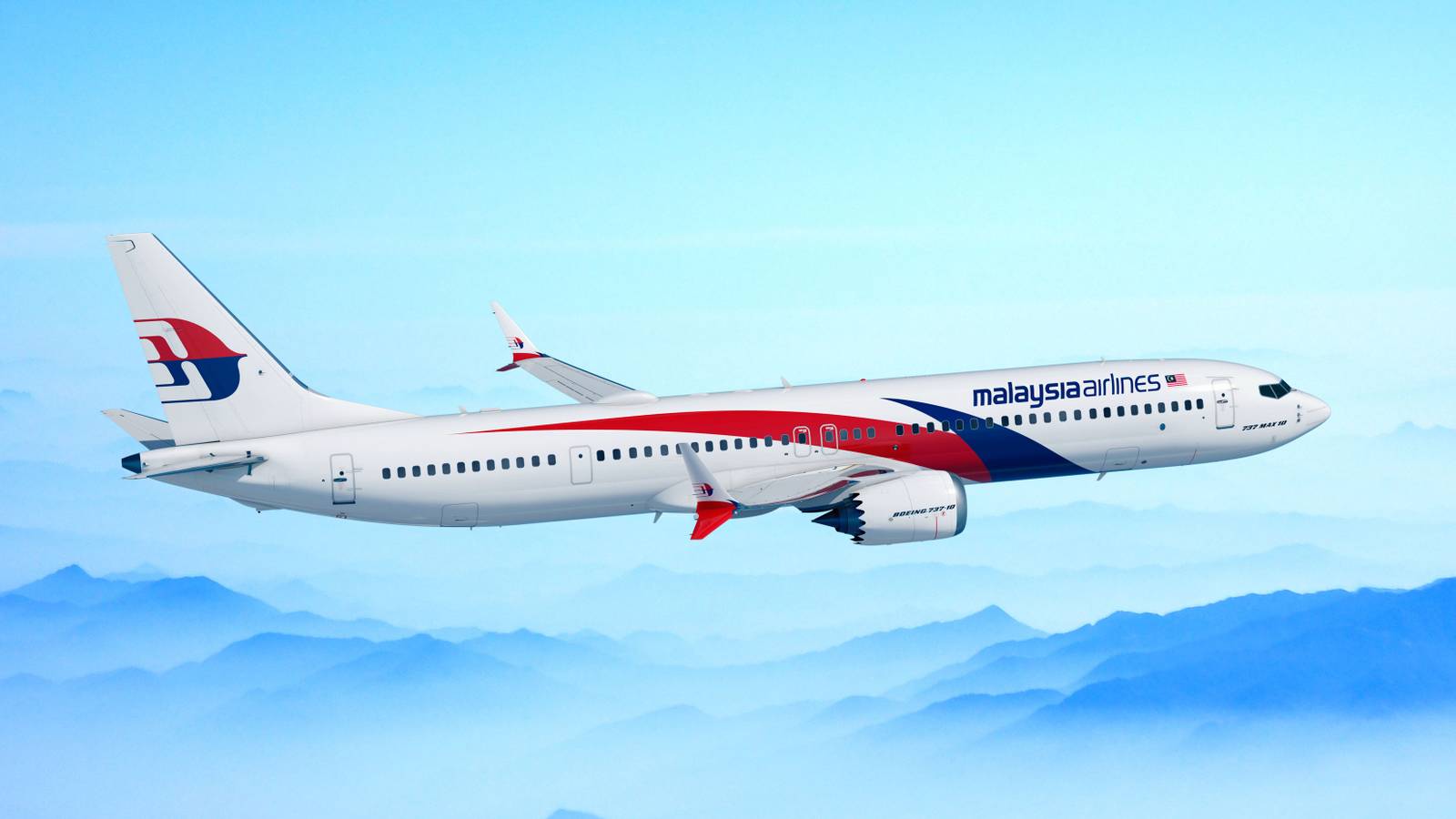
Published Nov 15, 2026, 4:00 PM EST Experienced ICAO English Language Proficiency Instructor for pilots and ATCOs and conference interpreter who is passionate about facilitating effective communication within aviation-related businesses. Possess a deep understanding of the aviation industry, including aviation regulations, terminology, and industry-specific communication protocols. Has been working at numerous airshows across Europe since 2014. Being an ultralight pilot in her free time, she also promotes safety and efficiency in aviation operations. Based in Italy and Malta Malaysia Airlines is preparing to bring a traditionally long-haul luxury product to its single-aisle fleet by introducing lie-flat business-class seats on selected Boeing 737 MAX 10 aircraft. The decision is unusual because fully reclining business-class seats are generally associated with widebody aircraft on longer international routes. However, the Malaysian flag carrier believes that combining a premium cabin with the flexibility of a narrowbody jet could give it an advantage in regional markets across Asia-Pacific. In an exclusive interview with Simple Flying, Bryan Foong, CEO of Airline Business at Malaysia Airlines, explained how the airline plans to deploy its 12 Boeing 737 MAX 10s as part of a wider fleet of 55 MAX aircraft. The strategy goes beyond improving passenger comfort, with the aircraft expected to open secondary markets, strengthen connections through Kuala Lumpur International Airport (KLIA), and complement the airline's expanding widebody fleet. It also signals a major shift in Malaysia Airlines' long-term fleet philosophy, with the carrier targeting an approximately equal balance of narrowbody and widebody aircraft by 2030. Why Malaysia Airlines Is Introducing Lie-Flat Business Class On The Boeing 737 MAX 10 Credit: YnetteT | Shutterstock Malaysia Airlines intends to make its Boeing 737 MAX 10 a distinctive addition to its fleet by equipping the aircraft with lie-flat business class seats. Of the 55 Boeing 737 MAX aircraft planned for the airline, 12 will be the larger MAX 10 variant, while the remaining 43 will be MAX 8s. The two versions will have different deployment roles, with the MAX 10 receiving a premium cabin designed to offer greater flexibility across the carrier's regional and international network. Explaining the decision, Foong told us: "Out of the 55, 12 will be MAX 10s. The balance will be MAX 8s. So the MAX 10s for us have a very agile role, flexible role, in the perspective that because we intend to spec it out with the business class seats, but yet try to maintain the same seat count as a narrowbody, and that allows us flexibility to swap with the narrowbodies. But because we now have a very premium product on board, I can now swap it with my widebodies." Maintaining a competitive seat count while introducing lie-flat accommodation will be an important part of the aircraft's commercial proposition. Such seats typically require more cabin space than conventional business class recliners, potentially reducing the number of passengers an aircraft can accommodate. Malaysia Airlines wants the MAX 10 to retain the capacity advantages of a narrowbody while offering a premium product that can also complement its widebody operations. This raises another question: which markets will benefit most from the unusual configuration? How The MAX 10 Will Open New Markets Across Asia-Pacific Credit: Simple Flying Malaysia Airlines sees the Boeing 737 MAX 10 as an opportunity to expand into secondary cities that might not generate sufficient demand to justify regular widebody operations. These destinations could nevertheless attract premium passengers, particularly business travelers and connecting customers who value a more comfortable journey. A narrowbody with lie-flat business class would allow the airline to serve these markets without committing an Airbus A330 or A350 to routes with more limited demand. Foong described the aircraft's intended role: "So the deployment plan would be, I call it a mid- to short-haul market opener, because secondary cities in the Asia-Pacific, we can deploy the MAX 10s, right? Yet still give a premium product to the customer." Kuala Lumpur provides a good starting point for these services, with Malaysia Airlines able to connect passengers from smaller regional markets to its wider international network. The MAX 10 is the largest member of Boeing's single-aisle family, measuring 143 feet, 8 inches (43.8 meters) in length. It typically accommodates 185–210 passengers in a two-class configuration, with a maximum capacity of 230 and a range of up to 3,100 nautical miles (5,740 km). Powered by CFM International LEAP-1B engines, it offers more capacity than the MAX 8 while retaining narrowbody operating characteristics. However, opening new markets is only part of the plan. Malaysia Airlines also wants to use the MAX 10 on regional routes feeding its long-haul network, making consistency between narrowbody and widebody business class an important consideration. Connecting Regional Passengers To Long-Haul Flights With Lie-Flat Seats Credit: HU Art and Photography | Shutterstock The Boeing 737 MAX 10 will also help Malaysia Airlines strengthen connections through Kuala Lumpur. Passengers traveling from regional destinations could experience lie-flat accommodation on selected narrowbody flights before continuing their journeys on larger aircraft. This would reduce the comfort gap between the regional and long-haul portions of an itinerary, especially important for business travelers. Foong provided a specific example: "There are some where we will deploy intermixed with the widebodies, so that the customer [...] will see consistency. For example, you could do Delhi to KL on a MAX 10 lie-flat, and continue that experience on the lie-flat all the way to Sydney and Melbourne. So that's why we see the advantage of MAX 10 design." The strategy complements Malaysia Airlines' investment in its Airbus A330neo fleet. Malaysia Aviation Group (MAG), the airline's parent company, has committed to acquiring 40 A330neo aircraft, including an additional 20 ordered in July 2025. The aircraft feature an updated premium cabin with full-flat business class seats and are intended to support services across ASEAN, China, India, and Australasia. By combining the MAX 10 with its widebody aircraft, Malaysia Airlines could offer a more consistent premium experience across connecting journeys. However, deploying lie-flat seats everywhere would not necessarily make commercial sense. The airline must identify routes where premium demand justifies the additional investment, particularly those with thinner frequencies or seasonal passenger traffic. Why Lie-Flat Business Class Makes Sense On Thinner Routes Credit: Jina Ihm | Shutterstock The commercial justification for the MAX 10 becomes clearer on routes with relatively low frequencies or seasonal demand. Malaysia Airlines does not necessarily need a widebody aircraft to serve every destination with premium passengers. A narrowbody with a dedicated lie-flat business class cabin could provide sufficient capacity while offering a product more comparable to the airline's long-haul services. Foong explained the reasoning: "There will be seasonal, but then there will be flexibility for us, and that's why the MAX 10 is a clean product, right? Because it allows us to deploy a premium product because we intend to have lie-flat business class on thinner frequencies, on thinner routes where it makes more sense, right? That helps us to balance that flexibility of the network and the fleet together." This approach suits markets where overall passenger demand is healthy, but the number of travelers willing to pay for business class remains relatively small. Deploying an A330 or A350 simply to provide lie-flat seats could introduce unnecessary capacity, whereas the MAX 10 offers a smaller platform with a more sophisticated premium cabin. The final seating configuration will be important, as Malaysia Airlines must balance the space business class takes up against the revenue potential of its economy cabin. Nevertheless, the airline's strategy works in both directions. While the MAX 10 will serve thinner routes, Malaysia Airlines also sees opportunities to deploy larger aircraft on some of its busiest existing services. Why Malaysia Airlines Is Increasing Its Widebody Operations Credit: GingChen | Shutterstock. Malaysia Airlines intends to replace selected narrowbody services with widebody aircraft on routes where passenger demand, particularly among corporate travelers, justifies additional capacity. This could help the carrier increase available seats without necessarily adding more frequencies. The approach is relevant at congested airports, where limited takeoff and landing slots can restrict opportunities to expand schedules. Foong outlined the plan as follows: "Our plan is for those thick routes which we serve with a narrowbody today. We expect because of congestion, availability of slots, our ability now to increase capacity on the routes, particularly those that are premium-focused, corporate segment timings. That makes sense for us to now deploy a widebody to just capture that flow, and then in between we'll deploy the narrowbodies." Operating an Airbus A330neo or A350 instead of a narrowbody on selected departures could provide more seats and a larger premium cabin at commercially important times. The MAX 8 and MAX 10 would continue operating other frequencies, allowing the airline to maintain connectivity while matching aircraft capacity more closely with demand. The planned division of responsibilities across the fleet illustrates how Malaysia Airlines intends to approach its network: Aircraft category Fleet size (November 2026) Primary deployment role Sample routes Boeing 737 MAX 8 19 Conventional domestic and regional services KUL–Singapore; KUL–Shanghai Boeing 737 MAX 10 12 planned Thinner routes, lie-flat business class and regional connections KUL - Delhi (planned example given by Foong) Airbus A330neo 10 Regional and long-haul expansion KUL–Melbourne; KUL–Sydney; KUL–Adelaide Airbus A350-900 7 Longer international routes and higher-capacity services KUL–London; KUL-Paris Source: planespotters.net This more flexible approach explains why the airline is investing in both narrowbody and widebody aircraft rather than concentrating on one category only. It also marks a departure from its traditional fleet structure, which historically relied more heavily on single-aisle aircraft, including an impressive fleet of 74 Boeing 737-400s that served the airline for over two decades until their retirement in 2014. Malaysia Airlines Targets An Equal Narrowbody And Widebody Fleet By 2030 Credit: Alen thien | Shutterstock Malaysia Airlines' Boeing 737 MAX 10 strategy is part of a broader fleet transformation. Historically, the carrier relied heavily on narrowbody aircraft because its core network focused on domestic services and regional destinations across the Association of Southeast Asian Nations (ASEAN). Many of these markets are within four or five hours of Kuala Lumpur, making single-aisle aircraft an obvious choice. Foong described the historical approach: "Malaysia Airlines has always been traditionally a more narrowbody-focused fleet structure because our backyard in terms of domestic services into ASEAN as a region, Southeast Asia, and within the four-five-hour range." He also added the following: "But moving forward, our plan is to now move shifted to more widebody. And so, by 2030, we will have rebalanced the number to be about equal between narrowbody and widebody." The narrowbody renewal program is supported by MAG's March 2025 Boeing agreement for 30 additional aircraft, comprising 18 737-8s and 12 737-10s, with options for another 30. Combined with its existing arrangement for 25 737-8s through Air Lease Corporation, this brings the planned MAX fleet to 55 aircraft. Meanwhile, its commitment for 40 Airbus A330neo aircraft supports the expansion of widebody operations. An important milestone came on October 20, 2026, when the US Federal Aviation Administration (FAA) certified the Boeing 737 MAX 10 following an extensive testing and safety assessment program. The approval cleared the way for Boeing to begin delivering the aircraft, removing a major regulatory obstacle for customers such as Malaysia Airlines. Finally, the success of Malaysia Airlines' strategy will depend on whether the MAX 10 can generate sufficient premium revenue while retaining the flexibility of a conventional narrowbody. If the airline achieves that balance, it could offer an interesting model for regional aviation, bringing long-haul-style business class accommodation to markets traditionally served by single-aisle aircraft.
Lie-Flat Business Class On Narrowbodies: Malaysia Airlines Reveals Its Boeing 737 MAX 10 Strategy
Full Article
Original Source
Read the full article at Simpleflying →KhanList aggregates and links to publicly available news content. We do not host full articles from third-party sources. Always verify important information with original sources.