
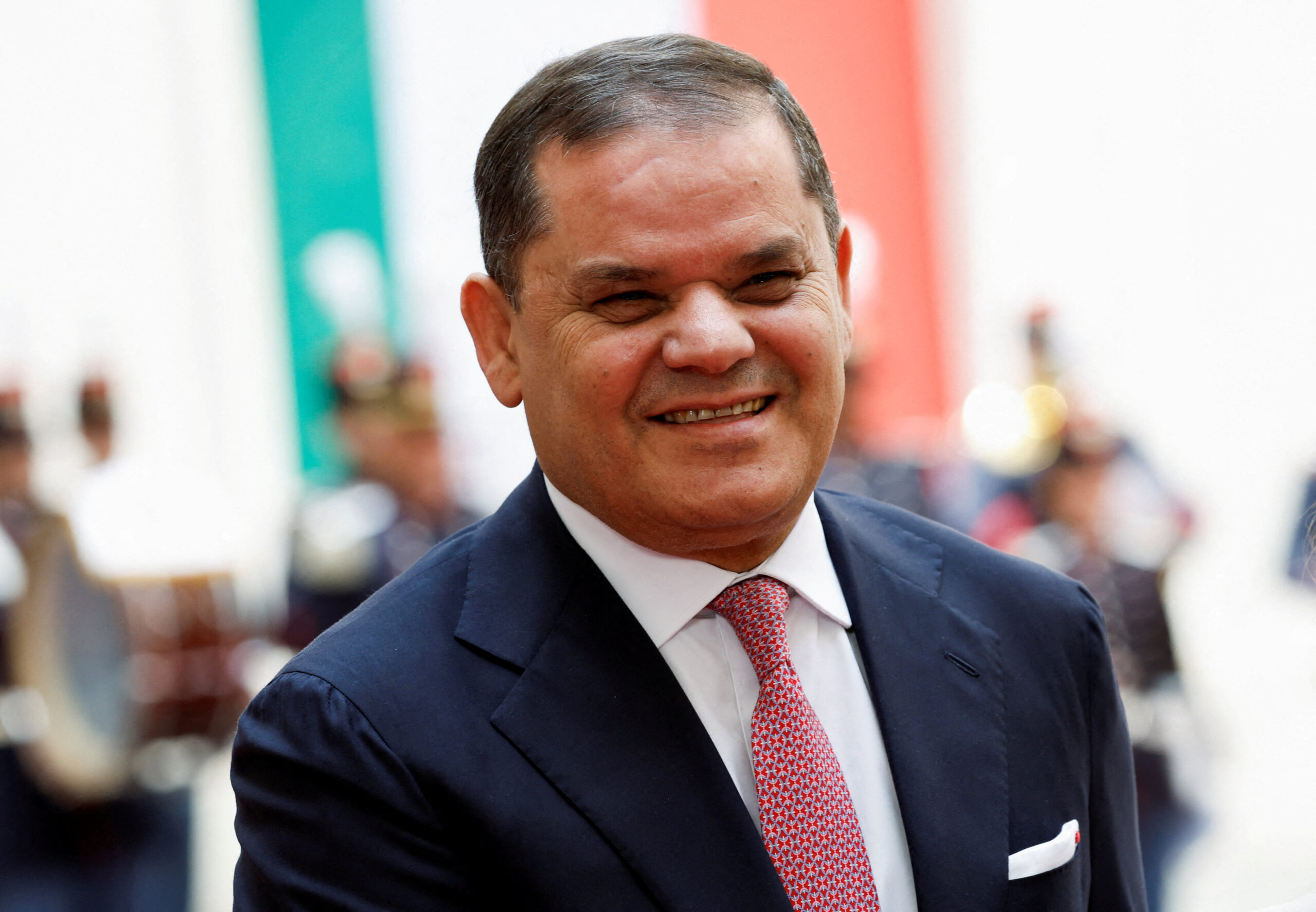
Reconciliation in Libya is now firmly on the agenda. After years of armed conflict, leaders from the rival eastern and western governments are starting to shift toward political competition, focused on development projects and the provision of services. On October 16, the Atlantic Council’s North Africa Program hosted a roundtable in Rome to bring together Libyan officials, Italian policymakers, and international experts and analysts to examine efforts by the United Nations and United States to reunite the country, and to explore a pathway to credible elections. The participants found ample common ground, even if they come at the problem from differing perspectives. Initially, the US initiative to unify the authorities, the government, and the state was not sufficiently attuned to the realities on the ground in Libya, according to the Libyan participants in the roundtable. The Tripoli-based Government of National Unity (GNU) therefore proposed addressing the most pressing practical problem arising from the country’s division: uncontrolled public spending. In Tripoli, the administrative costs of established institutions drove expenditures, while in the east, institutions created by the House of Representatives were spending without limits, to the point that officials referred to a public debt exceeding 300 billion dinars ($46.5 billion). The GNU therefore insisted on bringing a political dimension to a dialogue that had previously been purely technocratic and had failed to produce results. The Government of National Unity consequently established two principles: Libya should have no parallel institutions and a degree of equity in public spending across the country’s three historical regions. Under the Unified Development Agreement, agreed to by eastern and western authorities, the Central Bank determines the overall amount of available funding. Spending on salaries and operating costs had already been largely unified, while the main point of contention concerned development projects. Centralized development expenditures, including funding for students abroad, electricity, and similar items, are deducted from the total, with the remaining resources distributed geographically. The agreement on the overall framework was signed in April of this year, after which the Central Bank determined the specific figures. For the first time in thirteen years, Libya had a unified financial framework. This achievement encouraged the United States to move forward with efforts to unify the country’s authorities. Even if this US initiative does not ultimately lead to a final agreement, it has nevertheless laid important foundations: one of its key achievements has been reducing the number of actors involved in the negotiations. The approach adopted by the United Nations and the broader international community has been consistently criticized domestically, as it tended to multiply the number of parties involved in the dialogue, whereas the two de facto authorities in Tripoli and Benghazi control territories, command military forces, oversee projects, and bear concrete responsibilities. For them, agreeing to or rejecting a proposal carries tangible consequences, making the negotiation process more serious and meaningful. Perspectives from Italy and Algeria The Italian participants in the roundtable acknowledged that the Libyan reality is far more nuanced than a simple confrontation between two centers of power or two families. The April agreement on the unified budget represents, in their view, a significant step forward, the first in a long time. However, their priority now is to ensure its effective implementation, as public spending continues to increase in both the east and west, while revenues are failing to keep pace. Fiscal discipline, transparency, and effective oversight of public resources are therefore essential—making the Central Bank of Libya, one of the country’s most respected institutions, all the more important. The roundtable participants said that Italy intends to deepen its cooperation to strengthen the bank’s capacities, alongside those of other technical bodies. Furthermore, the Italian participants strongly reaffirmed their commitment to elections as the only path toward stabilizing the country and fostering progress for the benefit of the Libyan people. During the 2025 municipal elections, voter turnout exceeded 70 percent of registered voters across twenty-six municipalities—sending a clear message that when given the opportunity, Libyans want to participate in shaping their country’s political future. From the perspective of the Algerian participants, the deep historical ties between the two countries—including Libya’s support for Algeria during its war for independence—are reflected in Algeria’s support for a united and strong Libya. Algeria’s position is clear and consistent: any solution must be political, negotiated, and agreed upon by the Libyans themselves. The Algerians believe that foreign initiatives, including those led by the United States and the United Nations, should serve only to facilitate and support this process, rather than replace it. However, Algerian participants noted that the central challenge revolves around issues of internal security and foreign interference, which must be addressed first. Libya remains subject to interference by external powers, the presence of foreign militias, and the influx of weapons from abroad. One of those external powers is Russia, a subject of conversation at the roundtable. Moscow appears to be somewhat overstretched by its military engagement in Ukraine, yet it continues to seek opportunities to exert pressure on Europe by influencing surrounding areas of instability—including in Libya. What policymakers should know When it comes to Libya’s democratic transition, participants across the various nationalities agreed on a few key points: Among possible approaches to managing Libya’s institutional and political crisis, partitioning the country is not a viable option. Formally dividing Libya would represent an unnecessarily complicated response to a problem that could otherwise be resolved. The country’s national infrastructure, including its financial system, water supply, electricity, oil sector, and broader energy network, is deeply interconnected. Recognizing potential separatist entities would also create dangerous precedents. Regarding institutional solutions, participants were equally opposed to the idea of presidential elections, with a preference instead for parliamentary elections. Such a solution would allow for broader consensus and the inclusion of a greater number of political actors, while avoiding the risk of concentrating power in the hands of a single individual. Consequently, participants expressed strong support for proceeding directly to elections under the current circumstances. The government also believes elections should be held without further delays, given that no institution in Libya currently retains legitimacy, as all have lost their democratic mandate. Parliament itself has not elected its president for twelve years, representing a serious institutional failure. Participants agreed that democracy is not limited to election day but fundamentally rests on the people’s ability to renew or withdraw the mandate of their representatives. Sveva Cristina Pontiroli is a researcher for the Atlantic Council’s North Africa Program, based in Rome. Emma Torresi is a researcher for Geopolitica.info Research Center. Image: The prime minister of Libya's UN-recognized Government of National Unity, Abdulhamid Dbeibah, reacts on the day he meets Italian Prime Minister Giorgia Meloni at Chigi Palace, in Rome, Italy, May 7, 2026. REUTERS/Remo Casilli/File Photo
Libya’s reunification and path to democracy start with fixing its budget
Full Article
Original Source
Read the full article at Atlanticcouncil →KhanList aggregates and links to publicly available news content. We do not host full articles from third-party sources. Always verify important information with original sources.