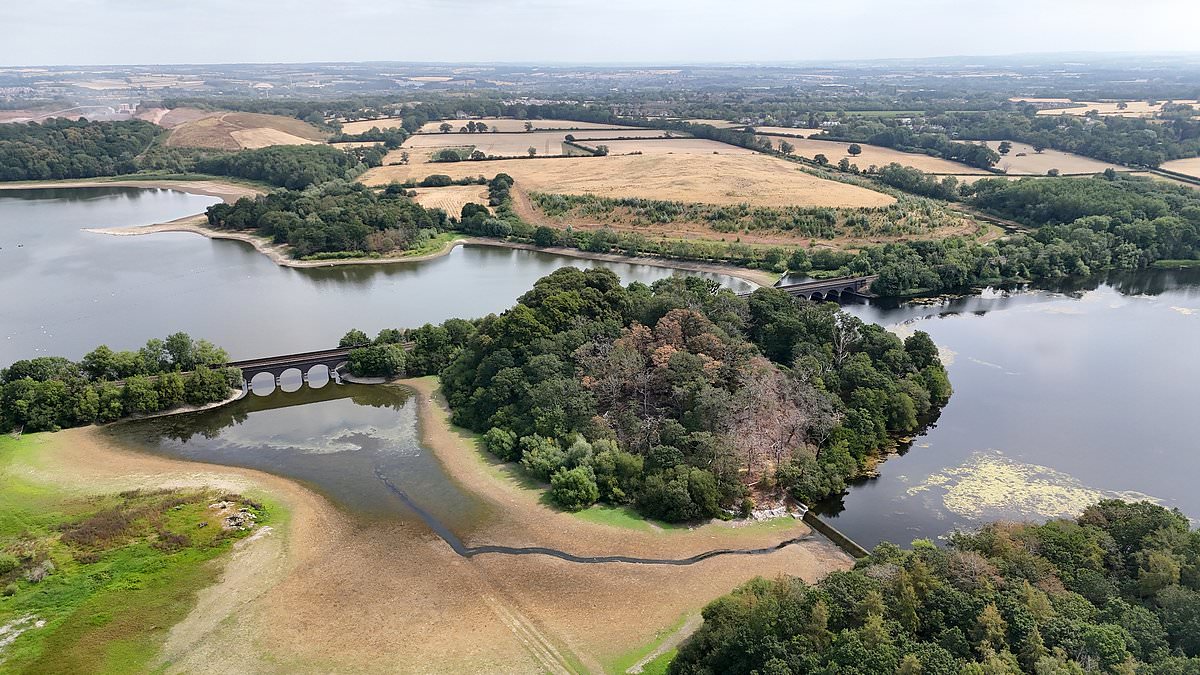
Across the land, in 23million gardens, hosepipes are lying dry, coiled like sad, dead serpents in the sun. Or are they?Over the weekend, as more water companies announced or implemented hosepipe bans across Britain there have been growing signs that many of us are not playing the game.In fact, after becoming suddenly subject to what the Water Industry Act amusingly calls a 'TUB' (temporary usage ban), a few gardeners have been spraying away in defiance.Perhaps not with sufficient reckless selfishness to keep a croquet lawn green, but certainly enough to put a smile on the face of the vegetable patch and give the last roses a chance.Nor do parents much fancy carrying 30 buckets from the kitchen tap to their children's paddling pool – a resource without which the long summer holidays are taxing to even the most experienced toddler-wrangler.Now the Environment Agency has declared a drought in seven regions covering half of England, from Devon and Cornwall to East Anglia.Will this ensure that people keep their hosepipes coiled and empty? I doubt it. At the heart of it, I suspect, is that much of Britain is suffering from a sudden, but oddly deep, revulsion to rules and bans.Possibly this current aggravation is the result of the still-sour memory of the more pointless bits of Covid regulation, only six years back. Swithland Reservoir in Leicestershire is currently at less than 44 per cent capacity and the Environment Agency has declared a drought in seven regions covering half of England A woman walks her dogs over the parched grass at Wimbledon Common, south-west London, earlier this monthMany prime ministers have risen and fallen since, yet streams and eddies of resentment still boil in many hearts, memories of how largely pointless the unprecedently bossy regime of the government was at the time.No10 was unruly, chaotically unable to curb their own revelry and yet rigorous as a Mother Superior in laying down ridiculous local 'tiers', 'bubbles' or 'distancings' and antisocial rules about the crime of sitting down on park benches.Somehow, we're less docile than we were then. It's not quite a revolutionary fervour – come on, they're only hosepipes, and we're well-behaved Britons – but it's certainly a stroppy and disobliging mood, and a steady abandonment of community spirit.The irritation of gardeners and paddling-pool fillers is also aggravated no end by water-mains bubbling up in the street (water companies are wasting 2.87billion litres of water a day through leaks), sewage pumped into our rivers just as we need a refreshing dip, and reports of the massive pay rises awarded to water company bosses despite this (the head of Anglian Water got a £1.3million bonus this month regardless of the hosepipe ban). Not to mention the dividends harvested by these companies' international shareholders.Moreover, we are only now learning how vast an amount of water gets used by data centres (one small centre could use 26 million litres per year), especially since the AI boom, and how keen our masters are to build more.So, if your patience with the corrupt water barons, your kids' summer prospects and perhaps your local landscape are all under threat, there's a strong temptation to uncoil the Hosepipe of Rebellion and save your begonias and courgettes for the nation.Online and among acquaintances, I find it fascinating to hear these rumblings of rebelliousness over the simple, quite logical and desirable business of saving water.In 1976, the last really serious drought in the public's memory, I was on local radio covering Oxfordshire and beyond. We had experienced an oddly parched autumn and winter, then a series of heatwaves.It was the driest 16-month span in two centuries. Tarmac melted, rails buckled and reservoirs depleted to dangerous levels. There were periods when people had to queue at standpipes in the street to get water and carry it home. Local women queue to collect water in Northam, Devon, during the drought of 1976 Libby Purves worked for BBC Radio in the 1970s, when stations ran a 'Droughtline' during the extreme water deficit of 1976On those old BBC local stations, we were very close to our audience and got to know them well. My memory is of an extraordinary, almost wartime-style willingness among our listeners to buckle down, keep to the rules and help out.We had a 'Droughtline' section in the morning and afternoon shows, and people would ring in with useful tips for others. They told us about finding the best way to wash dishes and keep clothes clean with least wastefulness, and useful ideas about re-routing the washing-machine water outlet.They told us how you could use your hose to siphon the children's bathwater out of the upstairs window into the garden and make sure any soapiness didn't damage your plants (I really can't remember now quite how this was done – I think it may have come down to just using less soap).There was an ironmonger offering lightweight plastic watering-cans at cost price to pensioners, and others who weighed in and said they were carrying the cans for elderly neighbours and, in standpipe areas, fetching cans for them too.Of course there were complaints, but there were also a lot of jokes. Fewer people had showers in the 1970s, so couples sharing a bath was one of the saucier running gags.I remember being so impressed by this Blitz spirit at the time that when the drought had really ended and the reservoirs were visibly becoming healthy, I got genuinely angry that the local water board refused for weeks to stop nagging about their economic plight. As a result, some careful souls were still siphoning bathwater months later, into rainswept gardens. It didn't seem fair.One glaringly obvious difference then, which has probably contributed to the contrast with today's stroppiness, was that we all knew that we owned the water system.Those who ran it were civil servants, like the police, or nurses, or train drivers – secure jobs but not particularly cushy. When water was privatised under Mrs Thatcher in 1989, with a hefty sweetener of public money to entice investors, England and Wales got the only wholly commercialised water supply in the world (Scotland's and Northern Ireland's stayed public).There have been some benefits, some good feats of engineering and, at times, some decent management but, as the population grew, pipes got older and shareholders more demanding. We know of the inefficiencies we now suffer, and we also know that the system is not ours. In its ownership and motive it's every bit as commercial and international as Netflix or Disney. Drought Minister Denis Howell speaks next to a standpipe in Wakefield, West Yorkshire, during a visit in the summer of 1976 That, I think, makes a difference to anyone's willingness to manoeuvre watering-cans with an aching back or save up cabbage-water to wash the dog. It really does.But we are also less inclined to follow the small rules, it seems. When infrastructure breaks down, so does the public's eagerness to help out.Not only has Britain's belief in a mutually beneficial relationship with our utilities deteriorated, but we have become atomised within communities and less likely to help out for the general good of everyone.So, it's interesting to watch the small rebellions of some, and the admirable and citizen-like behaviour of others. And perhaps it's also useful to remember that this too shall pass.Just as hot, dry Britain was reaching the end of its tether, in the last week of August 1976 the Prime Minister James Callaghan appointed a specific Minister for Drought: Denis Howell.There was talk of getting him to do a rain dance, though at least one clergyman condemned the very idea. Manfully, the cheerful little Brummie Howell invited reporters to his home and spoke of how he regularly shared the bath with his wife, Brenda.Within days, torrential rain caused floods across the hard dry land, and he was renamed minister for floods. In the subsequent winter, 1978-9, there were blizzards and naturally we all hailed him as minister for snow. Ah, happy days.
LIBBY PURVES: As drought is declared in half of England... why revulsion of petty officialdom and corrupt water barons is driving the Great Hosepipe Ban Rebellion
Full Article
Original Source
Read the full article at Dailymail →KhanList aggregates and links to publicly available news content. We do not host full articles from third-party sources. Always verify important information with original sources.