
Nearly a decade ago, Liam Neeson, long resident in the United States, sat down to read an article in The New York Times titled The Lost Children of Tuam. Written by Dan Barry, the piece told how Catherine Corless, a dogged amateur historian from that Co Galway town, had uncovered startling and upsetting irregularities in the records of the local Bon Secours home for unmarried mothers. The deaths of hundreds of infants at St Mary’s had been recorded, but no corresponding burial records were in evidence. Corless’s research, which uncovered the deaths of 796 infants, went on to trigger yet another period of national anguish at the actions of the Catholic Church. Some bodies appeared to have ended up in a septic tank.Neeson felt the world needed to know about this. Could this grim story really generate a feature film?“It was Dan Barry’s article that was brought to my attention in October 2017,” he tells me. “I read this and reread it and reread it, and I got angrier and angrier – and quite depressed. I’m an Irishman, proud, brought up in the six counties, Irish Catholic. I was an altar boy for a number of years. I entertained the priesthood for 25 seconds during that period. READ MORE“But I was horrified by it. And I thought, with whatever standing I have in the movie profession, I’d love to try and get this off the ground as a film.”All these years later, we find ourselves discussing Frank Berry’s fine, gruelling The Lost Children of Tuam. Starring the Yorkshire-born actor Monica Dolan as Corless, the film had a triumphant premiere at Galway Film Fleadh in July. Survivors of the homes were in the audience. Corless dominated the stage with a humble but assured oration. The Town Hall Theatre rocked with applause.Neeson ended up acting as producer on the project. I was surprised to learn that he had never received that credit before. Actors of his stature invariably drift into producing or directing at some point.“I called my dear friend Jules Daly,” he says. “She’d trained under Ridley Scott and Tony Scott for 20 years. We worked together on a film years ago. I said, ‘Jules, let me send you this article. Just read it.’ She read my mind. She says, ‘Let’s do something about this.’”There is little doubt that Neeson felt he had a moral duty. The story was everywhere in Ireland following the publication, from 2014 onwards, of Corless’s revelations. The investigations continue. A report in this newspaper on continuing investigations from July noted that “in nine short months Tuam excavation team uncovers 99 infants and children”. But much of the world still needs to hear about it. Indeed, as Neeson points out, these sorts of outrages are far from unique to these shores.[ Catherine Corless: ‘I was always a bit determined. I was teased a lot growing up’Opens in new window ]“There is a legend at the end of the film that says up to 9,000 babies, they think, are buried at various institutions that are no longer with us,” he says. “It could be more than that, you know. We are still discovering about it: here, in America, in Canada. Indigenous peoples. Burial mounds they are finding with bodies of kids in them. We have to uncover the truth. We have to. As uncomfortable as it is, we have to.”The Lost Children of Tuam: Monica Dolan as Catherine Corless in Frank Berry's film. Photograph: Enda Bowe Nolan and Neeson make a contrasting pair. Now someway into his eighth decade, the Ballymena man has become more gravelly and sonorous than ever. He speaks quietly and slowly, but the room seems to shake when he does so. Dolan, both of whose parents were born in Ireland, is a sharp, lively presence with a friendly line in northern humour. Over the past decade or two she has developed into one of the age’s most admired actors. I joke with her that few actors other than Michael Sheen have played so many real people. She was chilling as Rosemary West in Appropriate Adult. She was amusing as Marion Thorpe, wife of Jeremy, in A Very English Scandal. She was touching as Jo Hamilton, campaigning postmistress, opposite Toby Jones in Mr Bates vs the Post Office.I wonder if it helps, in this case, that she had Irish parents.“Not necessarily, because my father was from Swords and my mother is from Enniscorthy, in Co Wexford,” she says. “So they’ve got very different accents to each other but also very, very different to someone who’s from the west of Ireland and how they speak. “There’s definitely a history and a spirit that was extremely helpful. But the actual sounds I had to work on quite hard, and I got a lot of help from the dialect coach, Poll [Moussoulides], and also from Catherine Corless herself.”It is good that film-makers now actually care what part of Ireland a character comes from. As recently as 30 years ago any vaguely Irish accent would do.“I remember, when I went over to London for the first time, when I left Ireland, you’d meet casting directors,” Neeson says. “‘What height are you?’ they’d say. ‘Six foot four.’ ‘You can change your accent, right?’ Ha ha!”“Yeah. That’s the thing,” Dolan says. “But if you go in speaking RP” – received pronunciation – “they assume that you can change your accent.”She got the green passport a few years ago.“Not that long ago,” she says. “It was right after Brexit, actually. The day after we all found out that we weren’t going to be in the European Union any more. I was just in shock. The day after that I applied for my Irish passport.“When I was a child I always wanted one. I just really liked them because they were green. And my parents said, ‘No, you can’t have one.’ And I didn’t realise that you could have two.”Neeson’s fascinating trajectory is well known. Born in Co Antrim in the early 1950s, he grew up as the son of a caretaker dad and a cook mum. He picked up an interest in drama while at St Patrick’s College in Ballymena. He was also a decent boxer. More than once, Neeson has talked about how the shadow of Ian Paisley loomed over his hometown. He was daunted by the preacher’s gifts at the pulpit.“He was very intimidating but extraordinary. I remember a couple of times creeping into his gospel hall to hear him,” he told the BBC. “He was a big, big man ... He was my height but twice as broad. He was pretty electrifying.”The Lost Children of Tuam: Liam Neeson. Photograph: Gareth Cattermole/Getty Which is to say there was no escaping religion (in its various shades) while growing up in Northern Ireland. The grim collection of scandals involving the Catholic Church that have bubbled up over the past few decades have sent many Irish people scurrying back to memories of childhood. Were their hints of abuse we ignored? How much was hiding in plain sight?Dolan and Neeson come from different sorts of Irish background.“There was absolutely nothing that could have prepared me for the news in 2014 that there were nearly 800 babies found in a sewage tank in the west of Ireland,” Dolan says. “That was just absolutely unfathomable and impossible to me.”“And certainly the whole – 30 years ago, as it is now – sexual-abuse stuff,” Neeson says, pondering stories that broke later than they should have. “I got that. I wasn’t surprised by that. But on this I agree with Monica. Seven hundred and ninety-six babies? And they’re going to be excavating for them over the next two years.”It is an ongoing story. It is not over.“Nor should it be over.”Mother and baby home: Catherine Corless at a remembrance ceremony in 2019. Photograph: Joe O'Shaughnessy Neeson has contrasting public faces. For the first few decades of his career, when he appeared in films such as The Mission, Schindler’s List and Michael Collins, he came across as a serious actor in the grand style. A mighty presence with a mighty voice. Much sympathy came his way in 2009 when his wife, the actor Natasha Richardson, died in a skiing accident.As a new decade broke, he reinvented himself, thanks largely to the Taken films, as a hugely prolific, frequently ruthless star of action cinema. Looking at the enormous array of such films, one wonders when he sleeps. Neeson does have a habit of generating controversy in interviews with eccentric outbursts, but for the most part he comes across as the most gently avuncular of fellows. Just note now everyone beamed over his rumoured romance with Pamela Anderson while publicising the recent Naked Gun reboot.The Lost Children of Tuam: Frank Berry, Monica Dolan and Liam Neeson at Toronto International Film Festival. Photograph: Gareth Cattermole/Getty At that Galway premiere of The Lost Children of Tuam Corless noted that, as a Neeson fan, she could scarcely believe the movie star had expressed an interest in telling her story. Taking a hands-on approach, he visited her and Aidan, her husband, in their own kitchen. How could she say no?“I don’t think she was on board at the beginning,” Neeson says. “She was very curious. Yes, I was in her kitchen with Aidan. And her pets. And the main thing I wanted to say to her was – and I did a lot of listening; she did a lot of talking – was to be patient. Any film takes a period of time. I think I did say to her that Schindler’s List took 10 or 11 years for Steven [Spielberg, its director] to be happy with a script and a writer. But just exercise patience.”[ ‘Would you believe I got a call from Liam Neeson?’: Catherine Corless film premieres in GalwayOpens in new window ]They chose well. Frank Berry, director of acclaimed social-realist projects such as Michael Inside and Aisha, has a graceful touch with actors. Dolan has a gift for winding strength in with everyday decency.“I was also struck – I just told Monica this before – how ordinary it was to be in her kitchen,” Neeson says. “The gardens in the field at the back. And Aidan. And they had been married forever. And yet she is still doing this extraordinary thing, this extraordinary investigation, and not taking no for an answer.”The Lost Children of Tuam: Andrew Bennett as Aidan Corless and Monica Dolan as Catherine Corless in Frank Berry's film. Photograph: Enda Bowe The film makes clear that not everyone in Tuam was happy with the attention that came their way following the revelations. That must have layered greater pressure on the film-makers.“Sure, it’s a small little township, you know,” Neeson says, sympathetically. “Here’s Catherine stirring the pot. And you sensed that they all kind of knew something bad had happened. But, because it was the Catholic Church, and because it was a long time ago, and it was a workhouse, and there was a famine where a million and a half died, there were burial mounds. That is what Tuam means: burial mounds. It was, ‘You know, leave it.’”What does he make of how long it took for these stories to emerge? There has always been resistance to displaying the church’s dirty linen in public.“The State and the Catholic Church were hand and glove, as we know,” Neeson says. “And I think the State gave a lot of authority to the Catholic Church, certainly in the running of these institutions. And the morals and the ethics of what it was to be ‘How dare a girl or a woman that’s not married have a child?’ They were the devil’s issue, these children.”Neeson’s near-subsonic anger is striking. He appears to be speaking to himself as much as to Dolan or me.“What am I trying to say? It’s horror. My mum and dad are no longer with me, nor are my grandparents, who were from Waterford. Even as a kid I could always detect ... nothing sinister in them, but just something sad in their lives. Do you know what I mean?”What does he attribute that to?“Being Irish. Being aware of so many secrets and the State and the church being together. I think. I know I am waffling a bit.”But still making sense. Being Irish still comes with its burdens.The Lost Children of Tuam is in cinemas from Friday, September 25th
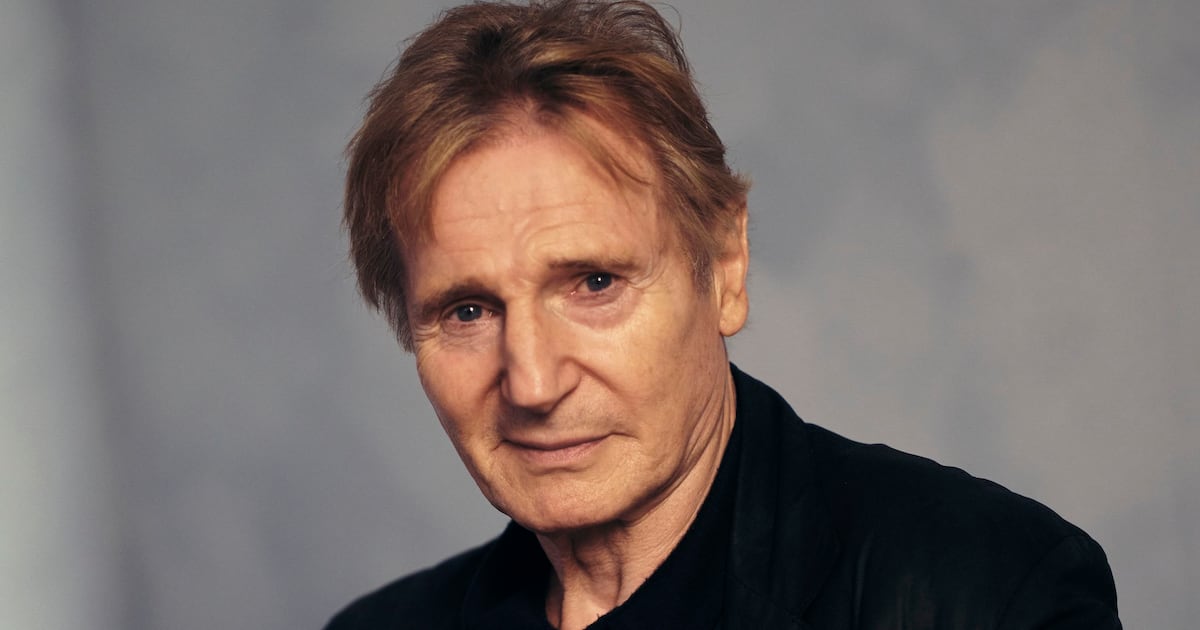
Liam Neeson: ‘I got angrier and angrier. I’m an Irishman. I was an altar boy. But I was horrified’
Full Article
Original Source
Read the full article at Irishtimes →KhanList aggregates and links to publicly available news content. We do not host full articles from third-party sources. Always verify important information with original sources.