
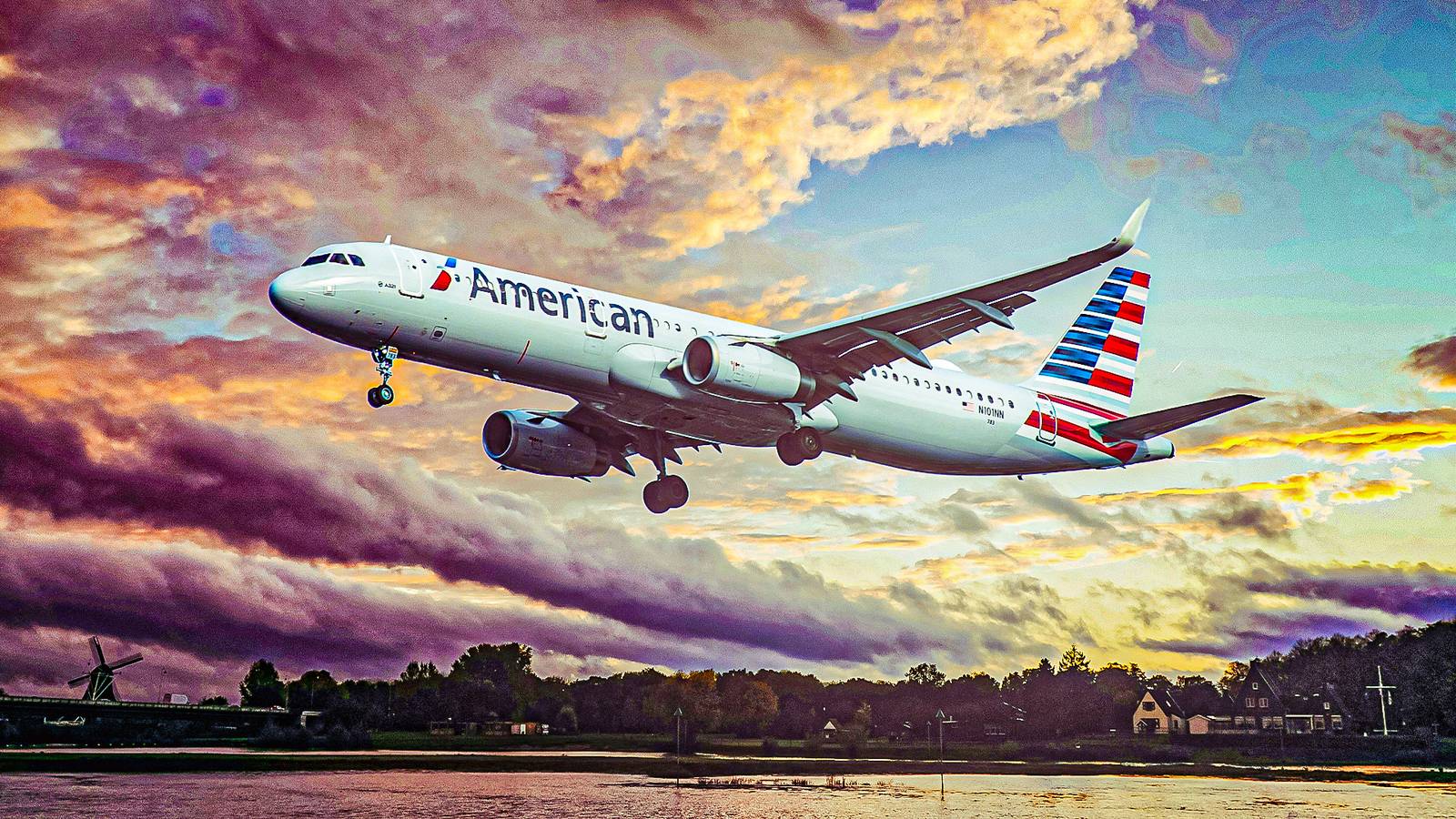
Published Nov 25, 2026, 1:18 PM EST Paul has had a career of 25+ years focused on the international technology sector, which has taken him to over 100 countries. Along the way, he developed a deep love for aviation, with a travel bucket list measured by aircraft types flown rather than destinations reached. Now he brings that avgeek passion, along with the journalism experience he accumulated early in his career, to write insightful pieces for Simple Flying. An American Airlines flight traveling from San Diego International Airport (SAN) to Chicago O'Hare International Airport (ORD) was diverted to Phoenix Sky Harbor International Airport (PHX) overnight following a serious onboard security incident. According to ABC 15 Arizona, air traffic controllers reported a "Level 3 threat" aboard the aircraft, with cabin crew and passengers restraining a disruptive passenger before the aircraft landed safely. While initial reports suggested that the passenger attempted to breach the cockpit, according to AIRLIVE, police have yet to confirm which aircraft door was targeted. Federal regulations impose strict requirements on airlines to safeguard their flight decks, and several passengers who have attempted to gain unauthorized access to cockpits in recent years have subsequently been sentenced to federal prison and substantial fines. American Airlines Airbus A321 Diverts To Phoenix Credit: Robin Guess I Shutterstock AA1494 departed San Diego late on Tuesday evening, and according to flight tracking data, the overnight service was operated by an Airbus A321 registered N568UW, according to Planespotters.net. The 13-year-old aircraft originally entered service with US Airways before joining American's fleet after the merger of the two carriers. The Phoenix Police Department said preliminary findings indicated that a male passenger had disregarded repeated instructions from flight attendants and attempted to interfere with an aircraft door. Initially, this was reported as an attempted breach of the cockpit door, but subsequent ATC recordings suggest the unruly passenger might have tried to open door R in the forward cabin, triggering an alarm. Authorities have yet to confirm if it was one or both of these doors involved. Video footage recorded by passengers showed the individual being restrained, while police confirmed that both passengers and crew members were involved in subduing him. The Federal Aviation Administration (FAA) confirmed that the aircraft landed safely in Phoenix, where law enforcement officers removed the passenger. It also said that the FBI has been notified of the incident, and confirmed that it will investigate. According to Arizona's Family, the individual was taken to hospital with a minor injury, while no other injuries were reported. The aircraft later continued on to Chicago, and American Airlines subsequently issued a statement: “We want to thank our team members for their professionalism, as well as our customers for their assistance and understanding.” What Are Flight Crews Required To Do During A Security Threat? Credit: Denver International Airport The International Civil Aviation Organization (ICAO) classifies onboard security threats into four levels of increasing severity. In February 2026, the International Federation of Air Line Pilots' Associations (IFALPA) and the International Federation of Air Traffic Controllers' Associations (IFATCA) called for wider adoption of the framework to improve coordination between airlines, flight crews, air traffic controllers and law enforcement agencies. Threat Level Classification Description Level 1 Disruptive behavior Suspicious conduct or verbal threats Level 2 Physically abusive behavior Physical aggression toward other occupants Level 3 Life-threatening behavior Conduct that endangers human life Level 4 Flight deck breach Attempted or actual unauthorized cockpit entry Notably, an attempted cockpit breach would ordinarily constitute a Level 4 threat, and the fact that ATC reported a Level 3 threat further supports the theory that the unruly passenger was tampering with door R. Either way, it represented an unacceptable risk to the aircraft and its passengers, which fully supports the pilot's decision to divert. Under 14 CFR § 121.533, the captain is responsible for the safety of the aircraft, its passengers and crew. Federal regulations also grant captains considerable emergency authority, including the ability to deviate from standard operating procedures when necessary to safeguard the aircraft. While publicly available regulations do not mandate an automatic diversion for every threat classification, captains will usually divert when continued flight presents an unacceptable safety risk. Previous Cockpit Breach Attempts Have Resulted In Prison Sentences Credit: Markus Mainka | Shutterstock American Airlines experienced a similar incident in February 2022, when Flight AA1775 from Los Angeles to Washington, DC, diverted to Kansas City. According to the Associated Press, the passenger attempted to access the cockpit and open an aircraft exit. In July 2024, Juan Rivas was sentenced to 19 months in federal prison and ordered to pay American Airlines $64,434 in restitution. Incident Date Airline Route Sentenced Federal Prison Sentence Additional Penalties April 16, 2021 United Airlines Washington Dulles – Pensacola April 2022 12 months $7,500 fine, civil penalties and three years of supervised release June 25, 2021 United Express Los Angeles – Salt Lake City January 2022 18 months $20,132 restitution February 13, 2022 American Airlines Los Angeles – Washington DC July 2024 19 months $64,434 restitution March 31, 2024 Swiss International Air Lines Newark – Zurich June 2026 10 months Over $73,000 restitution and one year of supervised release One of the most recent convictions involved a Swiss International Air Lines flight that returned to Newark in March 2024 following an attempted cockpit breach and assaults on cabin crew. In June 2026, Belgian passenger Jan Daeninck was sentenced to 10 months in prison. The case also highlights the considerable financial consequences for offenders, with Daeninck ordered to pay more than $73,000 in restitution. While the federal prison sentences in these four recent cases ranged from 10 to 19 months, US law allows for considerably harsher punishment. Under 49 USC § 46504, interference with flight crew members through assault or intimidation carries a maximum sentence of 20 years in prison, with even more severe penalties possible under certain circumstances. Whether the passenger aboard Flight AA1494 faces federal prosecution will depend on the findings of the ongoing investigation.
“Level 3 Threat”: American Airlines Flight To Chicago Diverts After Cockpit Breach Attempt
Full Article
Original Source
Read the full article at Simpleflying →KhanList aggregates and links to publicly available news content. We do not host full articles from third-party sources. Always verify important information with original sources.