
It’s the day after the budget, and Morning Ireland (RTÉ Radio 1, weekdays) carries the verdict of people in Kinnegad, Co Westmeath. “Spoiler alert,” its presenter Gavin Jennings warns. “They’re not happy.” Well, colour me stunned. The day when a vox pop yields a glowing evaluation of Government expenditure policy will surely be the harbinger of the apocalypse, the rapture or the singularity, depending on your belief system of choice.That said, the sample of views that the reporter Cian McCormack hears is revealing. All his respondents voice concern about the spiralling cost of living, even those who stand to benefit from budget tax cuts. Others offer blunter views. One man calls the budget a disgrace, complaining about his €300-a-week expenditure on diesel in authentically angry, if faintly farcical, terms. “I just hope the demonstrations start again, the blockades,” he says. “And this time I’ll be going. The last time I didn’t because I was working.” Start the revolution without me, as Gene Wilder’s 1970 comedy film counselled.READ MOREMcCormack cautions that his report is “only a snapshot of opinions” – he’s broadcasting from a service-station plaza, which may account for the priorities of some respondents – but the dissatisfied mood chimes with the wider restiveness conveyed by other items on Morning Ireland. Speaking to Jennings’s fellow host Justin McCarthy, Owen Reidy of the Irish Congress of Trade Unions characterises the Government’s package as “anything but a worker’s budget”, rejecting the call by Minister for Public Expenditure Jack Chambers to stand down planned industrial action in the public service: “Public sector workers are very angry.”But while Reidy disdains the budget for being aimed at farmers, hauliers and investors, the mood music from those sectors is hardly encouraging. Peter Brown of Baggot Investment Partners doubts the wisdom of the tax-free personal investment accounts announced in the budget, suggesting the Government has fashioned a rod for its own back by encouraging inexperienced savers to sink their money into the volatile world of stocks and bonds.[ Ireland’s new personal investment accounts: Here’s how the scheme will workOpens in new window ]The underwhelming mood even extends to the presenters, as Jennings apologises for getting the date wrong at the start of Wednesday’s programme. “It’s the seventh of October, not the ninth,” he says ruefully. “The budget didn’t cut the year by two days.”Maybe not, but one suspects some Cabinet members may wish that was the case. Chambers, for one, endures a long week on the airwaves. No sooner has the Minister delivered his budget address to the Dáil than he’s being grilled by Katie Hannon on Drivetime (RTÉ Radio 1, weekdays), where the host’s precision-guided dismantling of the Government’s thinly spread profligacy is arguably more lethal than the brickbats of Opposition TDs. Hannon initially focuses on the fuel allowance, suggesting that the €5 increase will be offset by a curtailment of the payout period, while curtly dismissing Chambers’s assertions to the contrary. “It will be less next year than this year, that’s the truth of it,” she says, with the firm manner of someone scolding an errant child. In contrast, when it comes to the €3 increase in the weekly living alone allowance, the host’s tone is one of scornful puzzlement: “Was it worth your while putting it in at all?”Faced with such assessments, Chambers doggedly lays out the reasons for each measure while pointing to the wider context: “We’re managing significant geopolitical conflict.” True, but as the old saw has it, if you’re explaining, you’re losing. This may explain why the Minister eventually lays out the limits of his budgetary ambitions in tetchy terms: “The Government can’t insulate every price increase.”It’s not all gloom for the Coalition. True, Sinn Féin’s finance spokesman Pearse Doherty excoriates budget tax cuts as inadequate when interviewed by Claire Brock, repeating his snappy judgment – “Gone before you get it” – with the relentlessness of a salesman parroting an ad slogan. But qualified support comes in the shape of the Kerry Independent TD Michael Healy-Rae, who welcomes the reduction in fuel tax, and even makes a stab at defending the minuscule living alone allowance rise. “You have to do something, and you have to try to help,” he says. That said, the deputy’s can-do positivity speaks more of a politician seeking to rebuild bridges with the Government he reluctantly exited rather than someone truly pleased with the budget.(As for the news that RTÉ’s funding is to be cut by €20 million next year, the show’s coverage is studiedly neutral, though its reporter Barry Lenihan describes the reaction of the Montrose hierarchy in exquisitely understated style: “This has come as something of a surprise.”)Having been dragged over the coals on both Drivetime and its Newstalk rival, The Hard Shoulder, on Tuesday evening, Chambers is back on air the following morning, joining Tánaiste and Minister for Finance Simon Harris on Today with David McCullagh (RTÉ Radio 1, weekdays). The Cabinet colleagues are there for the programme’s traditional postbudget phone-in, a once-lively ritual that has grown stale in recent years, to the point that the main point of interest is how McCullagh performs in his debut turn as host of the annual special.Proceedings start promisingly enough, with Noel, an octogenarian widower, describing how his household income was halved when the State cut off his late wife’s pension, a practice he describes as unfair and cruel. Chambers, whose on-air persona hovers between the unruffled and the rote, makes emollient noises before highlighting the already much-derided increase in the living alone allowance. “That in itself is a joke,” Noel acidly comments. “I’d love to meet the genius who decided that.”Mostly, however, the phone-in is dominated by questions about specific budgetary measures, from the lack of grants for second-time buyers – “It might push prices higher,” Harris says – to the persistence of the universal social charge, which the Ministers candidly admit is integral to running the country’s finances. [ A hushed Brendan O’Connor amplifies Nikita Hand’s traumatic testimonyOpens in new window ]This detail-oriented approach is of course welcome in our fake-news age. But with most people gaining something, however puny, from the budget, the narrow remit tamps down the potential for drama that ran through similar phone-ins in harder times. (And social media allows disgruntled voters to vent their fury on Ministers more directly than during the crash.)Even the dependably droll and laconic host occasionally sounds flustered by the format, hurriedly wrapping up exchanges with individual callers as he keeps an anxious eye on the clock. Much like the ostensibly bonanza budget McCullagh covers, the programme leaves few people happy.Moment of the weekGiven he’s also an impressionist, it’s no surprise that Oliver Callan (RTÉ Radio 1, weekdays) should be fascinated by the vagaries of speech, as shown by his chat with the author Kunak McGann about her new book on regional slang, Around Ireland in 80 Words. McGann gives an entertaining tour of Ireland’s linguistic quirks, from “brusk” – Cork shorthand for boiled-sweet shrapnel, from the Gaeilge word for rubbish, bruscar – or “foundered”, the Ulster-Scots term for freezing. Callan enthusiastically joins in; when his guest notes that runners are called “tackies” in Limerick, the Monaghan-born host cites the equivalent northern term, “gutties”. Amid the lively vocabulary, however, Callan spots one problem: “Imagine trying to learn English in this country.” It’s certainly an illuminating lesson for this listener.
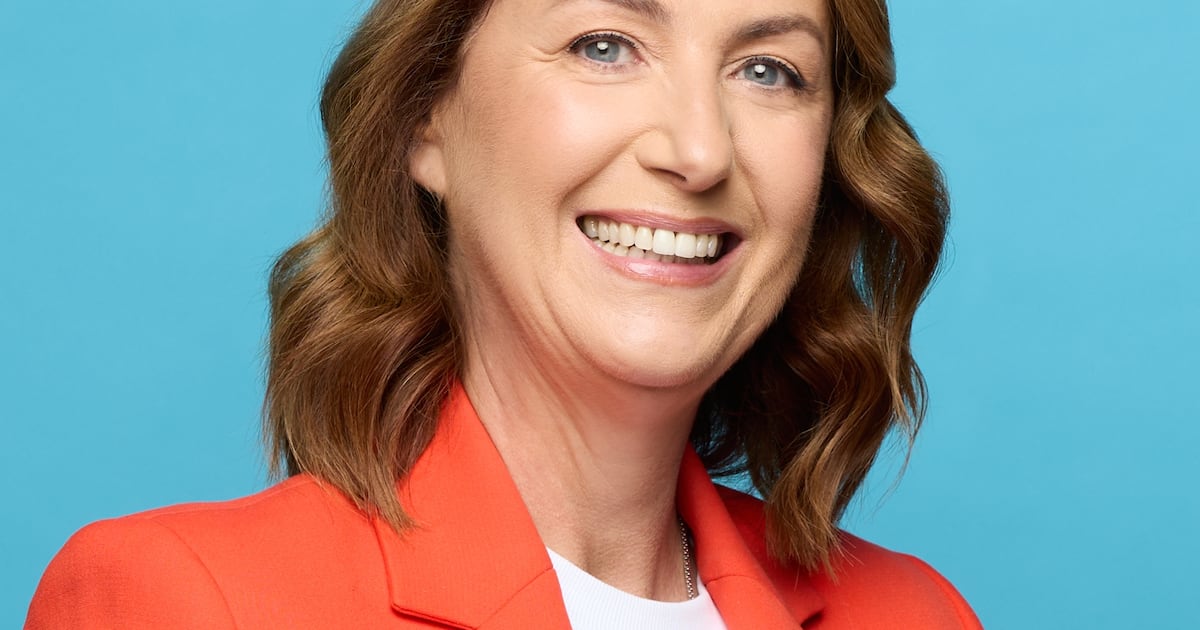
Lethal Katie Hannon dismantles the budget and dismisses Jack Chambers
Full Article
Original Source
Read the full article at Irishtimes →KhanList aggregates and links to publicly available news content. We do not host full articles from third-party sources. Always verify important information with original sources.