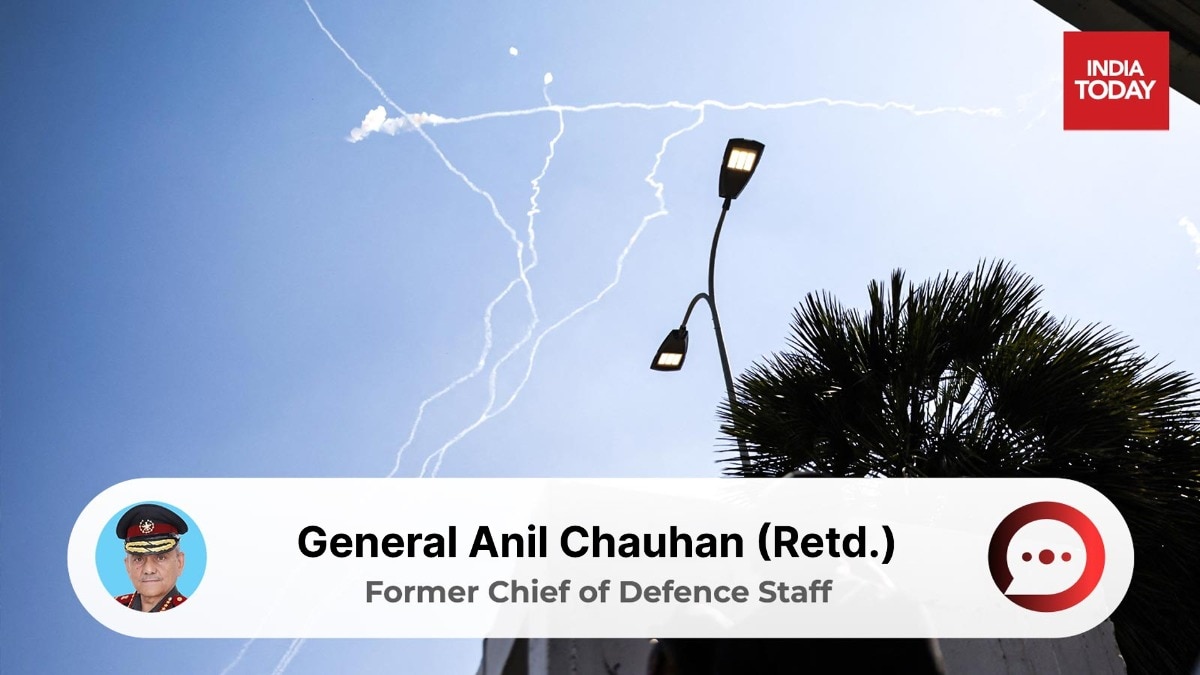
All wars are unique. The history of the geopolitical conflict that precedes them and the compulsions that drive them, the geography over which they are fought, the force levels involved, the main protagonists in the political and military arena that give the conflict its direction, the strategy employed, and the technology used; all of these differ from one case to the next. Which is why every war is dissected: lessons are drawn out by strategic analysts, commented upon by critics, and studied by military professionals.On February 28, 2026, the United States and Israel launched military operations against Iran, codenamed Epic Fury and Roaring Lion respectively. This article offers the perspective of a military professional on what that conflict has revealed. It sets out my views, not all views.Three caveats are in order. First, the guns have barely fallen silent, and much of what follows rests on open-source reporting that will be revised as fuller accounts emerge. Second, a war fought between a superpower, a technologically advanced regional state and a sanctioned, largely isolated adversary cannot be transplanted wholesale onto other theatres. Third, the focus here is deliberately narrow: the military and strategic dimensions; this article leaves aside the economic and diplomatic threads that will ultimately decide how this war is remembered.With those caveats entered, one conclusion stands out and shapes everything that follows: this was the first war in history fought almost entirely without contact between opposing forces, and that fact alone should reorder how we think about distance, defence, and deterrence. NON-CONTACT WARIn the history of warfare, most wars have been contests between neighbouring states. Very few commanders of the ancient and medieval periods fought wars in distant lands; Alexander and Genghis (Changez) Khan stand out. Even in their case, however, the firm base from which the invading armies fought their decisive battles ended up adjacent to that of the adversary. Essentially, the contact battle decided the outcome of these wars.In modern times, amphibious and airborne forces have been applied to overcome the spatial distance between two warring sides. Such operations were part of a larger design to surprise the adversary by adopting the strategy of an indirect approach. Ships, aircraft, and helicopters became the means of carrying troops. This helped achieve strategic surprise. But here again, the most decisive phase of such operations was the contact battle that followed the amphibious or airborne landing. Normandy in 1944, Inchon in 1950, and the Falklands in 1982 all illustrate the pattern: the landing bought access, but the issue was settled by the fighting ashore. The Iran-US-Israel war stands out because it was fought in its entirety, between belligerents separated by vast swathes of land and maritime geography. This was possible due to the availability of long-range vectors: drones and loitering ammunition and ballistic, cruise and hypersonic missiles, apart from traditional fighter aircraft.This, in the truest sense, is the first non-contact war fought in its purest form. Modern technology now allows force to be applied across distant geographies. This opens up numerous new scenarios and possibilities for the initiation of future conflicts. The adversaries of the future will no longer be restricted to bordering nations.Technology can now create new vulnerabilities at great distances. Geography and distance are no longer an insurance against the offensive actions of an adversary. Like technology, geopolitics also opens up new possibilities for the expansion of the battle space. Iran relied on its non-state allies, the Houthis and Hezbollah, to create new vulnerabilities in the Red Sea and the Mediterranean. As far as Iran was concerned, this was a manifestation of a non-contact war in the geopolitical domain.TECHNOLOGY AND STRATEGYIn modern wars, technology decides the outcome of most engagements. It has an overriding influence on who wins and who loses at the tactical and operational levels. Ideally, the sum of all tactical and operational battles should decide the victorious and the vanquished of the war. Unfortunately, that is not always so. The outcome of a conflict still depends, in significant measure, on the strategy adopted and on the geography of the battle space.Going by open-source accounts, the US and Israel flew more than 800 and 400 sorties per day, respectively, in the opening days of the conflict. The Wall Street Journal reported that the US and Israeli forces had carried out more than 16,000 strikes against Iranian targets in the first three weeks of the conflict.Air strikes of this scale, supported by air-to-air refuelling aircraft, AWACS (airborne surveillance aircraft) deployments, analysis of satellite imagery for targeting data, and airspace coordination with several nations, would be a complex operation by any standard. They would not have been possible without sophisticated enablers such as data analytics and artificial intelligence (AI), and without highly skilled military professionals to employ them. There is no doubt that the US and Israel won all but a fraction of these force-on-force engagements.Iran leveraged the maritime geography of the Persian Gulf, especially the Strait of Hormuz, for strategic purposes. The closure of the Strait shifted global focus onto the chokepoint rather than the high-tech American operations. Hormuz became the dominant narrative of the war and left AI-based targeting by the US far behind in catching the attention of the world. Iran thereby enlarged the scope and range of conflict. While the US and Israel's military operations remained focused on Iran's geography, Iran shifted the strategic centre of gravity outside its own territory.The point is not that technology failed; it did not. The point is that winning every engagement is not the same as controlling the war. Technology decided the engagements; geography and strategy decided what the war came to be about. A weaker power unable to contest the air can still choose the ground on which the contest is judged.ANTICIPATION AND PREPAREDNESSIran anticipated this war and knew that such a conflict was coming. It had decades of warning time, and it prepared accordingly. Iran's readiness to risk escalation underscored its preparation for the conflict and the confidence it placed in its distributed command architecture. Some of the preparatory work that the Iranian regime undertook is described below:(a) Underground Infrastructure: It was well known that Iran had housed some of its nuclear facilities in underground shelters. While global attention remained riveted on Iran's nuclear infrastructure, its conventional capability escaped scrutiny. Iran's long-range vectors were well dispersed and housed in underground tunnels, bunkers, and caverns. This increased the survivability of its missile launchers and long-range drones. Airstrikes destroyed most of Iran's above-ground military capability, but its long-range strike vectors survived and continue to be a major source of worry for the US and Israel.(b) Missiles and Drones: Iran knew it would not be able to match up to its adversaries in airpower. It invested in long-range strike drones and missiles. For navigation, Iranian drones use the Chinese BeiDou constellation rather than the GPS, a deliberate choice that placed their positioning, navigation, and timing beyond the reach of the adversary who owns the alternative.(c) Mosaic Defence: Israel opened Operation Roaring Lion with decapitation strikes, eliminating the top leadership of Iran in a highly coordinated operation. Iran appears to have anticipated such a contingency. It had built a distributed command architecture, also called Mosaic Defence, to prosecute the war even in the absence of its top political and military leadership. Iran's ability to sustain the war at an undiminished tempo even in the absence of top leadership was probably a greater surprise than the US-Israeli strike, albeit with a more lasting impression. It demonstrated that decapitation does not dismantle a system that has been designed to survive it.AIR DEFENCEThe air defence infrastructure of most nations is optimised to counter combat aircraft, and its sensors are calibrated to the speed and radar cross-section of that target set. In the last few years, the air domain has witnessed the introduction of varied and diverse aerial platforms for combat, and this has expanded the boundaries of traditional airspace.The lower airspace is crowded with loiter munitions and drones of every hue and type. These are difficult to detect by conventional means such as radars, which are optimised for detection of aircraft. Hence, these are also difficult to interdict. At the upper end lies near space, which is being exploited by hypersonic and ballistic missiles besides Intelligence, Surveillance, and Reconnaissance (ISR) platforms such as High-Altitude Platform Stations, Balloons, and Unmanned Aerial Vehicles.There is, at present, no foolproof solution for a comprehensive air defence (AD) that can counter all types of threats. Israel, with its compact geography, is comparatively far easier to defend against aerial threats. It also fields one of the most modern air defence systems in the world, a system that operates at multiple levels: Iron Dome against short-range attacks, David Sling against medium-range missiles, and the Arrow Missile Defence System to defend against long-range ballistic missiles.Yet Israel's air defences were repeatedly breached by Iranian missiles and drones. The utility of these new weapons of war has not been lost on other nations. Their proven track record against the US and Israel will accelerate the proliferation of drones, missiles, and related technologies. This may become the single biggest strategic concern for nations in times to come.There is a second, less visible lesson buried in the air defence account. An interceptor costing a million dollars or more expended to destroy a drone costing a few thousand, is a tactical success and a strategic liability. No ammunition magazine, however deep, survives that arithmetic indefinitely. Affordable effectors, electronic warfare, and directed energy and gun-based terminal defence, are no longer a supplement to interceptor-based air defences. They are the condition on which air defence remains sustainable.NATIONAL RESILIENCE AND NUCLEAR DETERRENCEThe US is a nuclear weapon state, while Israel is widely believed to possess nuclear weapons. These two nuclear-empowered states were imposing their will by force of arms on a nation ironically trying to acquire nuclear capability. The nuclear capability of these nations did not deter Iran. In theory, nuclear weapons are instruments of deterrence rather than of war fighting; in this conflict they proved to be neither, functioning largely as symbols of power and prestige. They exerted no discernible influence on Iran's conduct.Iran has withstood the unrestricted use of air power by a regional power and the only superpower against it. It may have lost a functional air force, navy or army but has demonstrated the will to survive and fight back. The resilience demonstrated by Iran and its people indicates that deterrence by conventional means has its limitations. The contest of opposing wills in this war may have strengthened the concept of national resilience but may equally have also lowered the threshold for the use of nuclear weapons.LESSONS FOR INDIAThe lessons of the US and Israel's war against Iran cannot be applied universally. One thing, however, is certain. The current geopolitical flux and atmosphere of uncertainty are likely to prevail. The shape and contours of the future global order are difficult to discern. The threats and challenges to national security may appear from an unexpected quarter, direction, or altogether in a new dimension. It would therefore be prudent to be prepared for all contingencies and keep one's powder dry. The more important lessons India can take from this war are given in the paragraphs that follow.Underground infrastructure: Given the ubiquity, range, and diversity of modern sensors, it is becoming difficult to conceal capability on the surface. Survivability can be assured only in sub-surface infrastructure. The Indian armed forces have little option but to invest in underground infrastructure.Sudarshan Chakra: While there is no foolproof defence against aerial threats of the future, lack of preparedness against them opens up the risk of blackmail. Mission Sudarshan Chakra offers the framework for a comprehensive solution. Fielding a fully operational air defence system will take considerable time, but the effort must begin without delay.Integration: Integration of communication architecture, ISR networks, intelligence platforms, data centres, and administrative backbone is essential for battlefield transparency and real-time situational awareness. Warfare is rapidly transforming from Net Centric to Data Centric and Intelligent Warfare. We must lay a clear pathway for this transition.Rebalancing: Following the 2020 crisis on the northern borders along with China, the defence forces, especially, had carried out a major rebalancing of their force array. The Ukraine and Iran wars make a compelling case to review our R&D projects. Conceived a long time ago, some of these may have lost their relevance. Similarly, all planned defence procurements also need re-prioritisation, if not a review.Focus on new domains: While there is certainly a need to build capabilities in new domains, the expansion of the domains themselves needs to be taken into account. These include underwater, sea bed, near space, and sub-terrain warfare.Geographical choke points: The Iran war has brought to fore the importance of geographical choke points. India must build capabilities to influence these choke points. It will provide us geo-strategic leverage in both peace and war.Energy and sea lanes: No country had more at stake in the closure of Hormuz than India. A substantial share of our crude and gas moves through that channel, as do the remittances and safety of a very large diaspora in the Gulf. Strategic petroleum reserves, diversified sourcing, flagged tanker capacity, and naval escort capability are not commercial questions. They are elements of war preparedness and should be planned as such.Sovereign positioning, navigation and timing: Iran's shift to BeiDou is a reminder that positioning, navigation, and timing form a dependency an adversary can switch off. NavIC must be expanded, hardened and made the default across our munitions and platforms rather than a fallback of last resort.CLOSING THOUGHTFour threads run through this war. Distance no longer confers safety. Survivability is now bought below ground and through dispersion rather than through mass. No air defence yet built is fullproof against the full spectrum of aerial threats. And the will of a society to endure remains a strategic asset that no targeting cycle can destroy. Each of these bears directly on India.As a civilisational state, Bharat is unique. It would not be prudent for India to build a national security architecture that is dependent on a network of friends and allies; this war showed how quickly coalitions form, and how selectively they hold. We need to be self-reliant. Sovereign capabilities, built and sustained at home, are what convert strategic autonomy from an aspiration into a fact. That, more than any tactical lesson of this war, is the one worth acting upon.- Ends(The author retired from the Indian armed forces as the Chief of Defence Staff. Views expressed are personal)Published By: Dev GoswamiPublished On: Aug 8, 2026 08:00 IST
Lessons of the Iran war
Full Article
Original Source
Read the full article at Indiatoday →KhanList aggregates and links to publicly available news content. We do not host full articles from third-party sources. Always verify important information with original sources.