
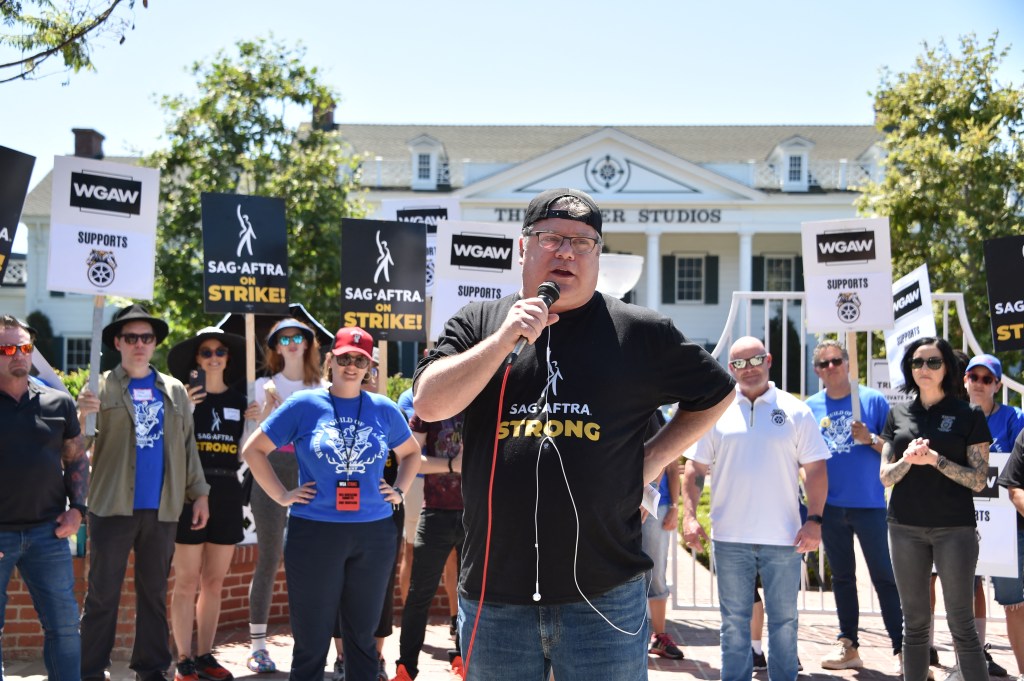
SAG-AFTRA is doing damage control as the actors’ union is forced to confront how the ongoing domestic production decline has crippled its membership. The union revealed some sobering numbers over the weekend during the national board’s in-person plenary, including the fact that less than 1% of its members will so far stand to benefit from the bonus distribution fund that the above-the-line guilds pushed for during the 2023 negotiations with the AMPTP. Roughly $1.5 million will soon roll out from the fund to about 700 performers for work on high-budget SVOD projects released in 2024, the guild said Monday in its overview of the in-person meeting. That comes out to about 0.4% of the guild’s 160,000+ members, more than 100,000 of which are considered actors and performers. Details for those who will benefit are expected to go out in the coming weeks, as are some changes to the union’s health plan, which has also been ruffling feathers since SAG-AFTRA agreed to deep cuts in exchange for a much-needed infusion to the health fund in negotiations with the studios earlier this year. Watch on Deadline In a video message Monday, SAG-AFTRA President Sean Astin tried to assuage concerns, admitting to “a palpable disconnect between the work of this union and the lived experience of too many of our members.” “I find myself thinking a great deal about the working-class actor who used to get hired consistently enough to build a life, someone who could earn a living, raise a family, maintain health coverage, and perhaps even retire with some measure of security,” he said. “Part of what once made that possible was residual income. For decades, it sustained actors and their families through the inevitable periods between jobs. Cable and then streaming steadily dismantled that system, and we’ve spent years fighting to reclaim it. What we’ve won back is substantial, but it’s nowhere near what it was.” SAG-AFTRA was extremely bullish about implementing a streaming success bonus in 2023, as was the Writers Guild of America. It is one of several hot-button issues that led to a historically long, dual strike that lasted half the year. Since that contract was finalized, the unions have spent the last several years trying to actually put that bonus distribution into action, which is why performers are just now receiving checks from work released two years ago. As Deadline reported at the time, the success bonus has a very high threshold that makes it difficult for most projects to qualify. For SAG-AFTRA, any title that surpasses the viewership threshold will trigger a payment to each principal performer equivalent to 100% of the fixed residual. However, the performer will only receive 75% of that payment. The other 25% will be funneled into a fund controlled by both SAG-AFTRA and AMPTP trustees to be distributed among the rest of the union’s members. There’s still no details, exactly, on how that 25% is being distributed and to whom — nor whether these distributions are included in the figures from SAG-AFTRA on Monday. Astin spent most of his 12-minute speech asking members to hold on a little longer, particularly in the face of some brutal upcoming maneuvers. At the end of October, SAG-AFTRA is returning to its regular membership policy, meaning members who are not caught up on their dues will be terminated. However, despite acknowledging, “few issues weigh more heavily on our members than health care,” Astin had little else to say about that topic. In its memo about the national board plenary, the union noted some improvements for senior members with extensive retiree health credits, though it did not have anything to say about the mounting complaints from high-profile members about their difficulties qualifying and affording services in the first place. Last week, actor Drake Bell called out the union after revealing he didn’t have health insurance because he didn’t qualify, having not hit the required $28,933 in annual union-contracted income. “Do not become an actor. Do not join SAG,” Bell captioned his Instagram Stories post. “You can work steadily for 35 years and they will say [middle finger emoji].” Bell is not alone. Cecily Strong also recently lamented hikes in mental health coverage prices via the union’s insurance plans earlier this year. Atypical actor Jack Haven and Princess Diaries star Heather Matarazzo also recently revealed that they would lose their health insurance if they did not get more work soon. After nearly losing access to his own insurance (and getting an unnamed role on CBS’ Matlock to boost himself over the threshold), actor Cheyenne Jackson launched a social media initiative to spotlight other SAG-AFTRA performers at risk of losing their coverage. “I’m starting a little series called ONE JOB AWAY, spotlighting fellow actors who are close to qualifying for their SAG health insurance and could use a little help with that next booking,” Jackson wrote in an Instagram post on Monday. “I’ll share their faces, their work, and how to reach them. Casting directors, producers, friends making things…maybe your next hire is someone you meet here. Actors…DM me your info if you want to be featured.” He says he’s already received “hundreds” of submissions.
Less Than 1% Of SAG-AFTRA Members Have Qualified For Streaming Bonus So Far As Union Faces Reckoning Over Post-Strike Conditions
Full Article
Original Source
Read the full article at Deadline →KhanList aggregates and links to publicly available news content. We do not host full articles from third-party sources. Always verify important information with original sources.