
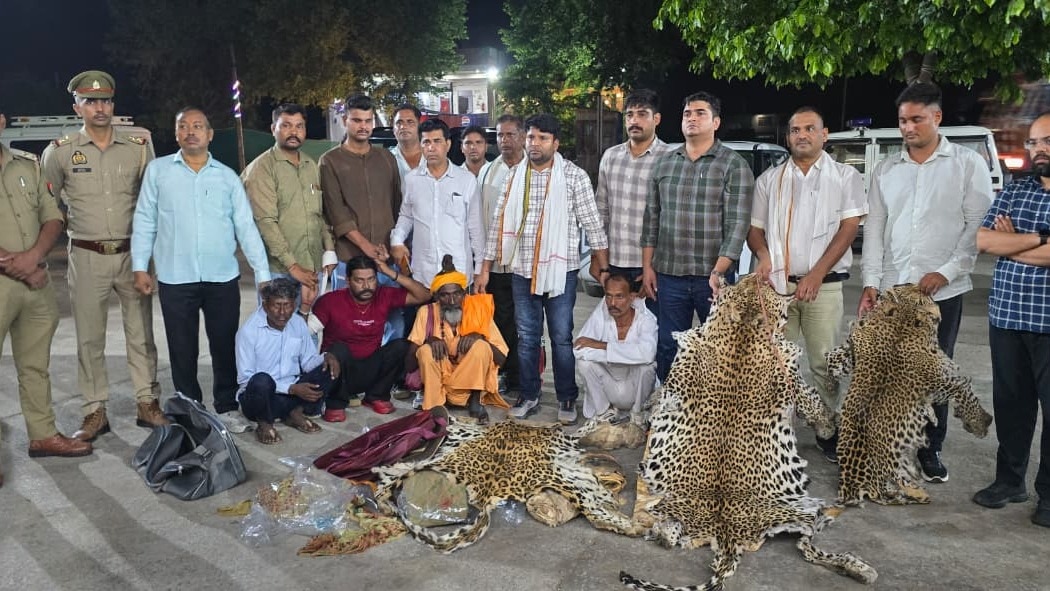
A joint probe has uncovered an interstate leopard poaching and trafficking network centred on Madhya Pradesh. Investigators are now examining whether two arrested men used links to a Delhi NGO to aid the operation.Poaching network busted in MPA major interstate network involved in the poaching of leopards in Madhya Pradesh and the trafficking of their skins and body parts has come under the scanner following a joint investigation by the Uttar Pradesh Forest Department, Madhya Pradesh State Tiger Strike Force (STSF) and the Wildlife Crime Control Bureau (WCCB).Nine accused have been arrested so far as investigators work to piece together a chain that allegedly stretches from poachers operating in the forests of Madhya Pradesh to those involved in transporting and trading wildlife contraband across state borders.The probe took a new turn after investigators found links between two of the arrested accused and a Delhi-based wildlife conservation NGO. The organisation is known for its work in wildlife protection, and its alleged association with the accused has prompted investigators to examine whether they had access to information, networks or other resources that could have aided the trafficking operation.The STSF has issued a notice to the NGO's CEO, directing him to appear before the investigating officer in Shivpuri on August 17. The summons is part of the ongoing investigation, and the alleged involvement of the organisation or its officials has not been established. According to the investigation, Bhagwan Singh alias Salim, described by officials as a history sheeter in wildlife trafficking cases, was arrested on August 11. His associate Wasim was arrested two days later, on August 13.Investigators suspect that the two men had been associated with the wildlife conservation NGO for around five years. Their alleged association has become a key part of the probe as agencies try to determine the nature of their work with the organisation and whether it had any connection with the alleged trafficking activities. At this stage, investigators are questioning the accused and examining the circumstances surrounding their association with the NGO. The allegations will be subject to verification as the investigation progresses.HOTEL RAID IN AGRA EXPOSED WIDER TRAFFICKING NETWORKThe investigation began to reveal the scale of the operation after a joint action on July 23 at the Rajputana Hotel in the Saiyan area along the Agra-Gwalior Highway.Four suspected wildlife traffickers were arrested during the operation. Their interrogation and subsequent investigation led agencies to recover leopard skins, severed heads and other wildlife remains.Further leads indicated that the suspected network was not restricted to one region. Investigators are examining links spanning Madhya Pradesh, Uttar Pradesh, Haryana, Delhi and Rajasthan.So far, 10 leopard skins have reportedly been recovered during the investigation. Seven other suspected poachers had also been arrested earlier, taking the total number of arrests in the case to nine, according to the latest information available in the investigation.KUNO, SHEOPUR AND CHAMBAL AMONG SUSPECTED HUNTING GROUNDSInvestigators have also reconstructed the hunting operations from information obtained during questioning.According to the probe, six leopards were killed in the Kuno Wildlife Division, two in Sheopur and another two in the Chambal Sanctuary in Morena.During the interrogation, the suspects told investigators that leopards were trapped using nylon nets before being beaten to death with sticks.Once the animals were killed, the skins were removed, and different body parts were separated for trafficking. These reportedly included the head, bones, claws, teeth and whiskers.Investigators have also learnt that the remaining carcasses were allegedly buried in pits dug inside the forest to conceal evidence of the killings.INVESTIGATORS TRACING ENTIRE SUPPLY CHAINThe STSF is now attempting to establish the complete chain behind the operation — from those involved in hunting the animals to intermediaries, buyers and the eventual suppliers of leopard skins and body parts.The agency is also examining the interstate movement of the wildlife contraband and the role played by individuals who may have facilitated transportation or connected poachers with prospective buyers.At the same time, the links between the arrested men and the Delhi-based NGO are being investigated separately as part of the wider probe.The investigation is expected to focus on identifying the remaining members of the network, establishing the origin and destination of the recovered wildlife remains, and determining whether others were involved in organising or financing the alleged poaching operations.- EndsPublished By: Akash ChatterjeePublished On: Aug 17, 2026 16:40 IST
Leopard poaching network busted in Madhya Pradesh; Delhi NGO links under scanner
Full Article
Original Source
Read the full article at Indiatoday →KhanList aggregates and links to publicly available news content. We do not host full articles from third-party sources. Always verify important information with original sources.