
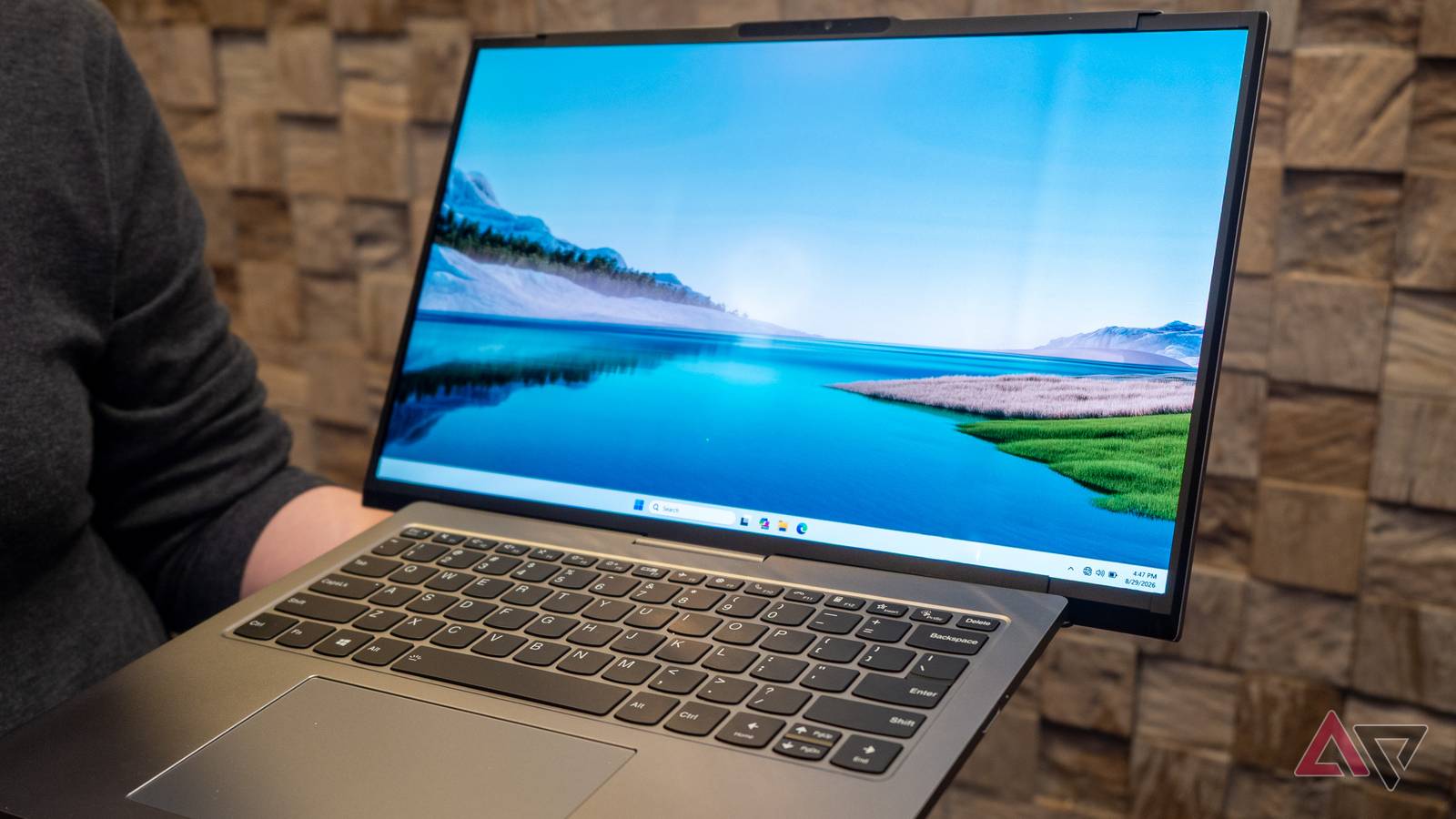
Published Sep 3, 2026, 12:00 PM EDT Rita is a Senior Writer at Android Police. Her love story with Android started in 2010 and has been going stronger with every update, device, tip, app, and game. She's a huge Pixel fan and has spent an inordinate amount of time using and testing Google's ecosystem, apps, and services. She lives in France, speaks more than three languages, follows Real Madrid, and spends any free time she has traveling. Once upon a time, she was a pharmacist as well. A few years ago, the idea of a laptop with a display that rolled and expanded felt like magic. I was there when Lenovo introduced its first concept at MWC 2023, and I remember staring in awe, not really understanding how the mechanism worked at first glance. The more the laptop's screen was rolled down and up, the clearer the intricate gears behind it became, and yet the more mystifying it looked. It was such a huge promise: A small, portable display in a normal-sized laptop, that expands vertically to become much larger when needed. Lenovo has since pushed its rollable laptop concepts further, and even commercialized the ThinkBook Plus Gen 6 in 2025. But I don't think the tech has been as convincing as what I just saw with the latest Project Swan Concept from the company at IFA 2026. Rollable laptops finally make sense, perhaps even more than foldable phones. A regular laptop display that spreads sideways From 14-inch 4:3 to 17-inch 16:9 in a couple of seconds Project Swan, like its name suggests, spreads its "wings" sideways. One second, I was looking at a normal laptop with a regular 14-inch 4:3 display. Well-built, simply designed, zero extra bulk, and no sign whatsoever that something else is lurking behind it. Yet one simple tap on a star button on the keyboard launches the mechanism, which causes the display to roll sideways, on both sides. The screen rolls out, relatively fast, very smoothly, seamlessly, with nearly no visible creases and only a few ripples to make a 17-inch 16:9 display. Your regular work and browsing-centric laptop suddenly becomes a wider one, tailored for multimedia consumption, image or video editing, and media creation. It's also perfect for running side-by-side vertical apps for productivity. I repeated the process multiple times, closing and re-opening the display, rolling it back and unfurling it, to enjoy it, and it felt both magical and equally simple each time. I'm honestly struck by how smooth and seamless the roll is. This is so far ahead of what I saw in 2023 — I mean, you'd expect leaps forward that in the world of tech, but still! Just look at the photo above, and try to guess how it works and where the rollable system hides. Yeah, it's almost invisible, and that's the whole point. Compared to the Motorola rollable mechanism from 2023, for example, the difference is night and day. It's a huge advancement, and what was a bulky, slow mechanism that didn't feel like it could withstand a few successive rolls now feels like it's "normal." Almost boring, almost not impressive. And boring is good in this case. It's the same effect that foldables have today versus a decade ago. Even though Lenovo is calling this a prototype or concept, it feels nearly ready for the mass-market. There's nothing clunky, no extra bulk, no hiccups, almost nothing "concept-y" about this. This is the rollable laptop I would like to buy The form factor just makes so much sense Seeing Lenovo's Project Swan in person made me realize I've always wanted this experience, I just didn't know I did. Ha! Lenovo really solved the problem of laptop weight and portability versus usability with this one simple mechanism. I'd still be carrying a 14-inch laptop, with the size and weight and relatively simple portability of a small laptop. I wouldn't worry about a bulky, heavy laptop that doesn't fit in my backpacks or slings and becomes inconvenient each time I want to carry it or move around. But one simple tap expands that horizontally and gives me the larger screen I need when I want to watch movies, edit photos in Lightroom, or write articles in Chrome while browsing or chatting or controlling Spotify in a side window. All of this, without adding heft, size, or complications. It's smart, it's efficient, and it's probably the future. Perhaps more than foldables are for now. The one caveat that remains, though, is that most of these use plastic displays that are very shiny and still suffer from ugly glare under any kind of light. But we're clearly on the right track with laptops. Laptops today, phones soon? After seeing Project Swan from Lenovo, I'm convinced that we're not far from seeing these rollable laptops become more widely commercialized and democratized. The tech feels like it's reached a state of stability, miniaturization, and reliability that makes it feel ready. But as a mobile-first, Android-centric person, I can't help but think that this is the first step towards rollable form factor adoption for smartphones, too. Motorola had its Rizr concept a couple of years ago, and we keep hearing about Samsung's rollable phone, but there's nothing tangible yet. Clearly, the mechanism has to be even more invisible, more reliable, and more compact on phones than laptops, which makes this a bigger challenge. But we're on the right path to that. I hope Samsung, and other companies, start getting serious about rollables soon. The idea is cool, and if it can be done on a normal-sized phone to give us double the screen estate without adding bulk and weight the way foldable phones do today, it would be amazing.
Lenovo's new Project Swan rollable laptop made me realize that foldable phones are dumb
Full Article
Original Source
Read the full article at Androidpolice →KhanList aggregates and links to publicly available news content. We do not host full articles from third-party sources. Always verify important information with original sources.