
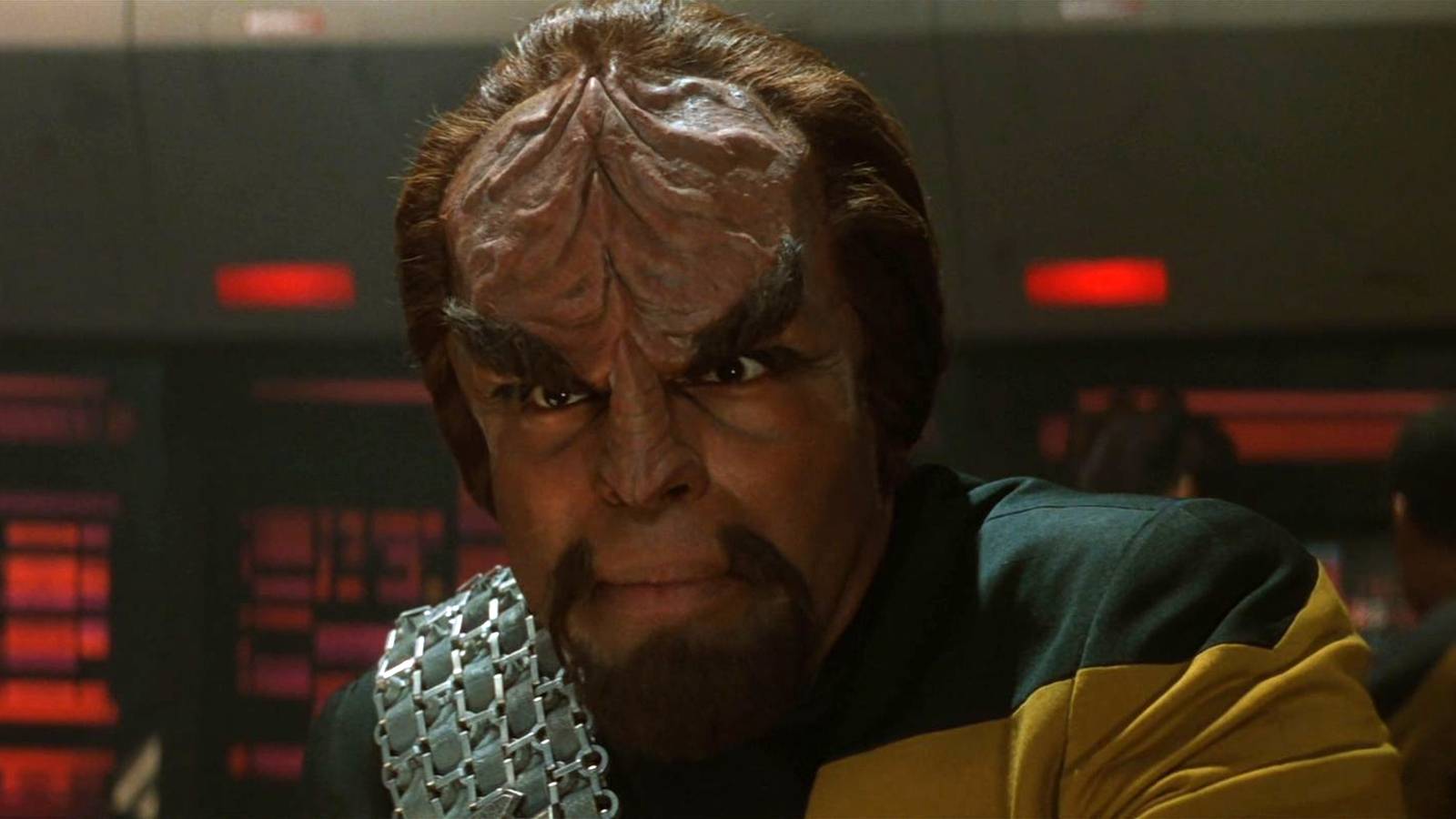
Published Oct 11, 2026, 9:00 PM EDT John Orquiola is a TV Editor, Senior Writer, and Interviewer with a special focus on Star Trek. John has over 5,000 published articles at SR, and he has interviewed the biggest names in Star Trek on the red carpet and VIP events, among other beloved shows, movies, and franchises. Sign in to your ScreenRant account Legendary Star Trek writer Ronald D. Moore explains step-by-step how he evolved the Klingons in Star Trek: The Next Generation, and his changes are still popular among fans decades later. Star Trek: The Next Generation marks its 40th anniversary in 2027. One of its most celebrated writers, Moore joined TNG in season 3 and wrote iconic episodes like "Yesterday's Enterprise," "Family," "Relics," "Chain of Command," and "Tapestry. Teamed with Brannon Braga, Moore co-wrote Star Trek: The Next Generation's acclaimed series finale, "All Good Things..." and the feature films Star Trek Generations and Star Trek: First Contact. Within TNG, however, Ron was known as 'The Klingon Guy,' for his meticulous world-building of Worf's (Michael Dorn) people. Ronald D. Moore was a guest on The 7th Rule with Cirroc Lofton and Ryan T. Husk to look back on his seminal work on Star Trek: The Next Generation. When Lofton asked Moore about his world-building for the Klingons, Ron delved into his thought process after showrunner Michael Piller assigned him his first Klingon episode, TNG season 3's "Sins of the Father." Moore explains how he crafted the Klingon culture to be a meld of the Vikings and the Japanese samurai below: Ronald D. Moore: “["Sins of the Father" was] one of the first assignments that Michael [Piller] gave me the first months I was on the show… because Michael didn’t really know Star Trek that well when he joined. [He said], ‘I don’t really know the difference between the Romulans and the Klingons. Can you write me a memo? You’re the fan on the show.’ I said, ‘Okay, so I get to write a memo about who the Klingons and Romulans are.’ I just started making it up, for the most part, because there wasn’t a lot in the canon at that point that gave you a lot between those two cultures. The Klingons were more interesting to me. There were certain things that had been said, and when I started world building… It was: We’ve seen certain things, what does it imply? One thing implies another. There had been a suggestion of ritual around when a Klingon dies. [That] had been established in The Next Generation… in “Heart of Glory,” they do this thing where they all yell [when a Klingon dies]. So, the idea that there is ritual in this culture was step one. Okay, well that implies there’s other rituals. That implies there’s a certain spirituality. That implies they think about sending a soul, a spirit some part of themselves to some other place. Okay, well, this culture is very martial, it’s very warrior forward, so it has to center around that. Hm. Well, that reminds me of Japan. And I was writing the memo, I was like, ‘Well, [Klingons] are sort of like the Japanese samurai. So they’ll have ritual, and they’ll have things about swords and knives, and they take it very seriously. But we’ve also seen a very bigger, broader thing about Klingons. They were very larger than life. So, I said, ‘They’re sort of like the Vikings. They’re like the Vikings combined with the Samurai.’ And that was the core idea put in the memo that then influenced how I started writing Klingon stories. Those were the two sort of pop culture archetypes. Whoever the Vikings really were, the pop cultural idea of the Vikings and the very centered, precise thing of the samurai combined with the party animals, and the berzerkers, and the raiders of the Viking culture. Let’s combine those two as I approach [their] society. What does it say about the society? How is it probably structured? They’re probably not electing presidents, that’s probably not their thing. I could see how that implies the Great Houses. In Japan, there were the Houses and the families. Oh, so they probably have the House of Mogh, and the House of so and so. So how does that work? If there are Great Houses, what’s the relationship between that and the political structure? Well, they must be represented. How are they represented? Probably on a council. There’s probably a council that represents people from the different Houses, right? So you can see, one thing was implying another as I was approaching it.” Watch Ronald D. Moore on The 7th Rule: The success of "Sins of the Father" made Moore an "organic" choice to continue expanding the Klingons' culture and political structure, with Worf at the center. When Ron joined the writers' room on Star Trek: Deep Space Nine, Worf and the Klingons followed. Thanks to Moore's work, the Klingons became the most complex, and arguably the most popular, alien culture in Star Trek. Moore was a fan of Star Trek: The Original Series when he joined The Next Generation. TNG generally resisted and frowned upon references to TOS, but Ron's knowledge of what was known about the Klingons up to that point made him ideal to add new facets to their lore. What Moore did was build upon what was established about the Klingons and then make logical decisions that deepened their culture and characters while centering it all on Worf. Every era of Star Trek attempts to put its own stamp on the Klingons, but Moore did it properly and successfully. J.J. Abrams' Star Trek Into Darkness introduced the alternate Kelvin timeline Klingons but didn't explore them. The most ill-fated reimagining of the Klingons was by Star Trek: Discovery, which made the Klingons unrecognizably grotesque, aesthetically and as a culture. Each attempt to change the Klingons only made fans cling to Ron Moore's work as the gold standard. Ronald D. Moore's ingenious conception of Klingon culture in Star Trek: The Next Generation as a mix of the Japanese samurai and the Vikings gives them the depth of religious rituals, the cunning of political intrigue, and explains how they can be bloodthirsty conquerors and "party animals." When Star Trek fans think of Klingons today, they hold fast to the warrior race consumed by honor as defined by Ron Moore. Star Trek: The Next Generation is streaming on Paramount+ Release Date 1987 - 1994-00-00 Network Syndication Showrunner Gene Roddenberry Cast Commander William T. Riker Directors Cliff Bole, Les Landau, Winrich Kolbe, Rob Bowman, Robert Scheerer, Jonathan Frakes, Robert Wiemer, Gabrielle Beaumont, Alexander Singer, David Carson, Paul Lynch, Corey Allen, Patrick Stewart, Chip Chalmers, Joseph L. Scanlan, James L. Conway, Robert Lederman, Tom Benko, Timothy Bond, Robert Legato, Adam Nimoy, Robert Becker, David Livingston, LeVar Burton Writers René Echevarria, Maurice Hurley, Richard Manning, Melinda M. Snodgrass, Tracy Tormé, Hannah Louise Shearer, Stuart Charno, Ira Steven Behr, Sara B. Cooper, Peter Allan Fields, Herbert Wright, Frank Abatemarco, Burton Armus, Hilary Bader, Morgan Gendel, David Kemper, Michael I. Wagner, Philip LaZebnik, Robert McCullough, Susan Sackett, Nick Sagan, Fred Bronson, Robert Hewitt Wolfe, Sam Rolfe Franchise(s) Star Trek Creator(s) Gene Roddenberry
Legendary Star Trek Writer Explains In-Depth How He Changed The Klingons The Right Way
Full Article
Original Source
Read the full article at Screenrant →KhanList aggregates and links to publicly available news content. We do not host full articles from third-party sources. Always verify important information with original sources.