
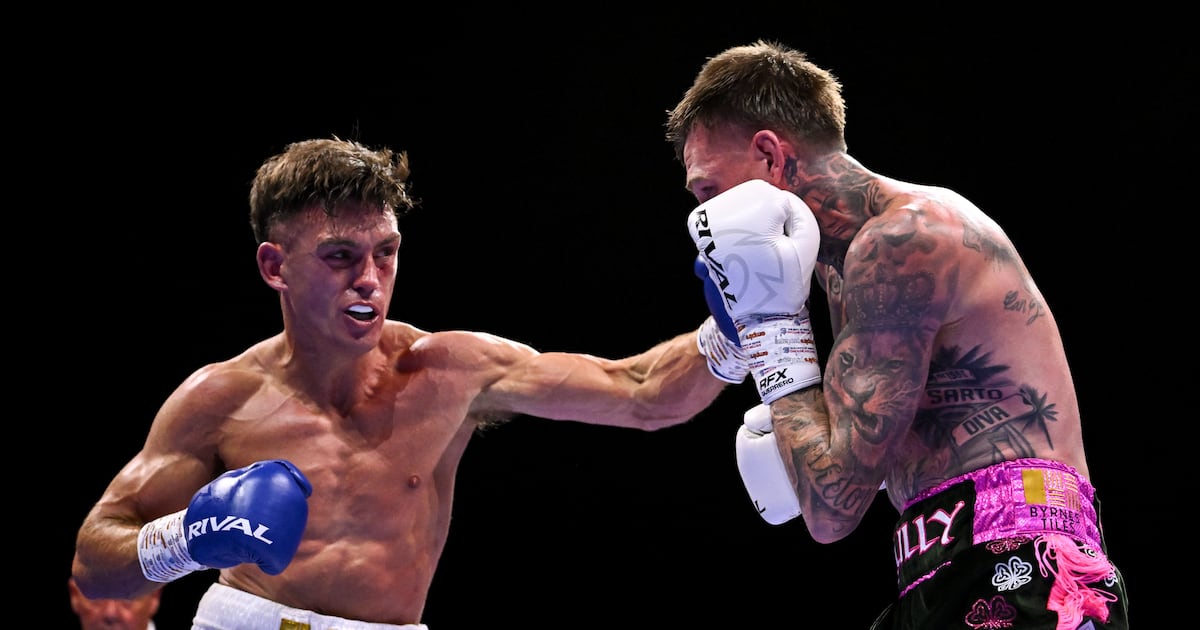
The news of Lee Reeves’ passing at just 31-years-old has reverberated around the world of boxing since it was confirmed last night.Sixteen weeks ago, on August 1st, Reeves was taken to hospital following a knockout loss to Gary Cully in an undercard fight at the 3Arena.Initial reports said that the Limerick man was in a “critical but stable” condition, but Reeves remained in a medically induced coma until he died on Monday.With a final record of 16 wins and two losses, Reeves was talented but never reached the heights of professional boxing. His greatest achievement in the professional ring was claiming a North American regional title in 2022.READ MORE[ Tributes paid following death of boxer Lee ReevesOpens in new window ]After that, Reeves fought below his level a few times ahead of the bout with Cully, which was the biggest fight of his life by some distance.It also turned out to be one of the best performances of his career, going toe-to-toe with the rangy southpaw who had previously been world-ranked, and forcing Cully to go for the stoppage late on.Reeves went down twice in the 10th round and never recovered from his injuries. Cully, who had known Reeves for years before the fight, described him as a “character and a gent” in a social media tribute after the news of his passing broke last night.Reeves was definitely a larger than life character at times, modelling and even appearing in a 2023 BBC version of Survivor, the reality TV show where contestants are marooned on an island together.Limerick boxer Lee Reeves died on Monday after being injured in a fight against Gary Cully four months ago. Photograph: Nick Elliott/Inpho He was perhaps best known outside the ring though for a far more worthy reason. In 2015, Cathy Reeves, Lee’s mother, died by suicide, and her son had been involved in raising awareness for mental health causes since then.It wasn’t just advocacy though. After joining Limerick Treaty Suicide Prevention patrol seven years earlier, Reeves jumped into the Shannon to save a woman from drowning in 2024.One video circulating on social media after Reeves’ death shows him in his car, encouraging anyone struggling with their mental health to get out of the house, get active and get around good people.In many ways, that’s exactly why people involved in boxing struggle so much with deaths in the sport. Boxing can obviously be an incredible outlet for young people and it clearly was something Reeves loved and it played a big role in his mental health and his life. At the same time, the risks involved in a sport based on doing damage to an opponent’s head mean that deaths like his are practically inevitable. Ireland's John Cooney died after suffering injuries in his first Celtic title defence in February of last year. Photograph: Stephen McCarthy/Sportsfile via Getty Images John Cooney’s death last year means that Ireland on its own has lost two boxers since the beginning of 2025. The Galway man died after suffering brain damage in his first Celtic title defence in February of last year.Internationally, Prichard Colón died in July after spending 11 years in a vegetative state, unable to speak, after absorbing illegal blows to the back of the head in a 2015 bout.Last August, two boxers died on a single card in Japan from brain injuries. Reeves’ death, like these other incidents, will spark a discussion in boxing circles about fighter safety, head trauma, and other related issues, most pertinently weight cutting (the practice of losing water weight intensely in a short period before a fight to make the weight - something particularly dangerous precisely because it’s so common).However, none of these other incidents caused any lasting change in the sport, in terms of rule changes or safety protocols, and Reeves’ death probably won’t either.Instead, Lee Reeves’ legacy will be the lives he touched, whether through boxing or his volunteering, and advocacy work in mental health.Pieta: Call 1800 247 247, or text HELP to 51444Samaritans: Call 116 123, email jo@samaritans.ie
Lee Reeves’ death exposes boxing’s constant struggle with real dangers of the sport
Full Article
Original Source
Read the full article at Irishtimes →KhanList aggregates and links to publicly available news content. We do not host full articles from third-party sources. Always verify important information with original sources.