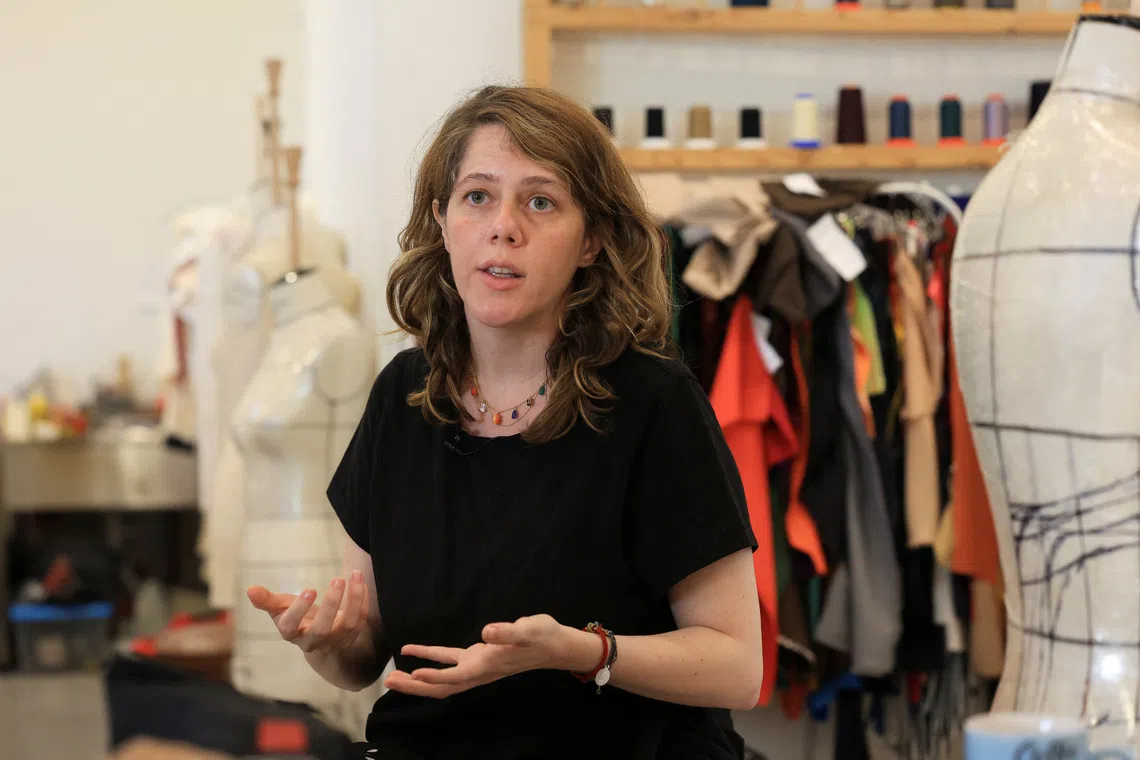
BEIRUT – For decades, the Gulf served as the centre of gravity for much of Lebanon’s creative talent, with swathes of designers and marketing executives flocking to its cities to find clients or relying on its foundations and cultural centres for funding.But with Gulf economies now under pressure from a nearly six-month-old regional war, Lebanese creatives say financing and work opportunities are drying up.Uncertainty linked to the conflict has prompted Gulf-based clients to postpone projects, reduce budgets and slow payments, leading to layoffs and income declines, Lebanese professionals in advertising, branding and communications told Reuters.Fashion school Creative Space Beirut (CSB) relied on donations and partnerships with individuals and institutions in the Gulf to keep its courses free for underprivileged students.CSB hoped those avenues could yield US$500,000 (S$639,000) in 2026, but its co-founder and chief executive Sarah Hermez, told Reuters the regional war meant Gulf-based donors went into “survival mode” and that many “promises weren’t able to be met”.Donors were unable to renew contributions or had to downsize them significantly, Hermez said, putting student scholarships at risk.Lebanese had flocked to Gulf’s safe harboursLate in July, within CSB’s tranquil walls near downtown Beirut, students toiled on their projects. One sewed at a table while another stitched a dress on a mannequin.Since it opened its doors in 2011, the school has weathered the impacts of Lebanon’s economic contractions following the war in neighbouring Syria, 2019’s full-blown financial crisis and the Beirut port blast of 2020.All along, CSB relied on the Gulf for funding.But now, with enough money to operate only four more months and little visibility into what Gulf contributions could come in 2027, it has turned to crowdfunding campaigns and a hunt for new partners to maintain free courses.Most Gulf economies will contract more sharply in 2026 than previously expected before rebounding in 2027, a Reuters poll found in July.Marwan Barakat, group chief economist and head of research at Lebanon’s Bank Audi, said the Gulf’s key indicators all show downgrades, including gross domestic product growth, aviation traffic, stock market performances and fiscal balances.Cuts to jobs and revenueWhile Lebanese had long relied on salaries in the Gulf to send remittances back to their families at home, some fear they will have less to send in the coming months.Lebanon itself was pulled back into war when armed group Hezbollah fired at Israel in early March in support of its ally Iran, triggering a conflict that has left more than 4,300 dead in Lebanon.Wassim Haddad runs an advertising and strategy consultancy based in Lebanon with clients who operate in the Gulf.He estimates a 70 per cent hit to his firm’s revenues, mostly due to economic pressures in the Gulf, that have forced him to cut his staff by half.“It feels like most of the clients who are not from the region don’t understand how to move forward while war is happening,” the 33-year-old said, referring to Western firms seeking to set up shop in the Gulf.Some in Lebanon still owed fees by Gulf clientsSeveral people spoke to Reuters on condition of anonymity, fearing more of their professional work would be at risk if they commented publicly.One branding professional based in Beirut said he once earned up to US$12,000 a project for Gulf clients, but opportunities are now rare and firms are seeking discounts.A client of the branding professional based in Saudi Arabia cut his pay and said they would increase it if more projects came along. A regular Qatari client told the professional their firm could no longer commit to new projects.A Lebanese communications professional reported a 30 per cent hit to her projected income. “If things keep going this way, I’ll have to go back to my parents’ house,” she said.At CSB, Kim Heshme sat below rows of jackets, gowns and dresses. She wears many hats: a single mother, a freelancer branding expert and CSB’s head of operations.Her income has dropped by around 60 per cent as freelance work dried up due to the regional war.She has had trouble collecting fees owed for completed projects, with some clients only paying her a third of her dues and others ignoring her invoices.Heshme said Gulf clients appeared less accustomed than their Lebanese counterparts to operating through periods of war and prolonged uncertainty.“Ideas are not cheap,” Heshme said. “They don’t want to pay for the value of it.” REUTERS
Lebanon’s creative talent suffers as Iran war squeezes Gulf economies
Full Article
Original Source
Read the full article at Straitstimes →KhanList aggregates and links to publicly available news content. We do not host full articles from third-party sources. Always verify important information with original sources.