
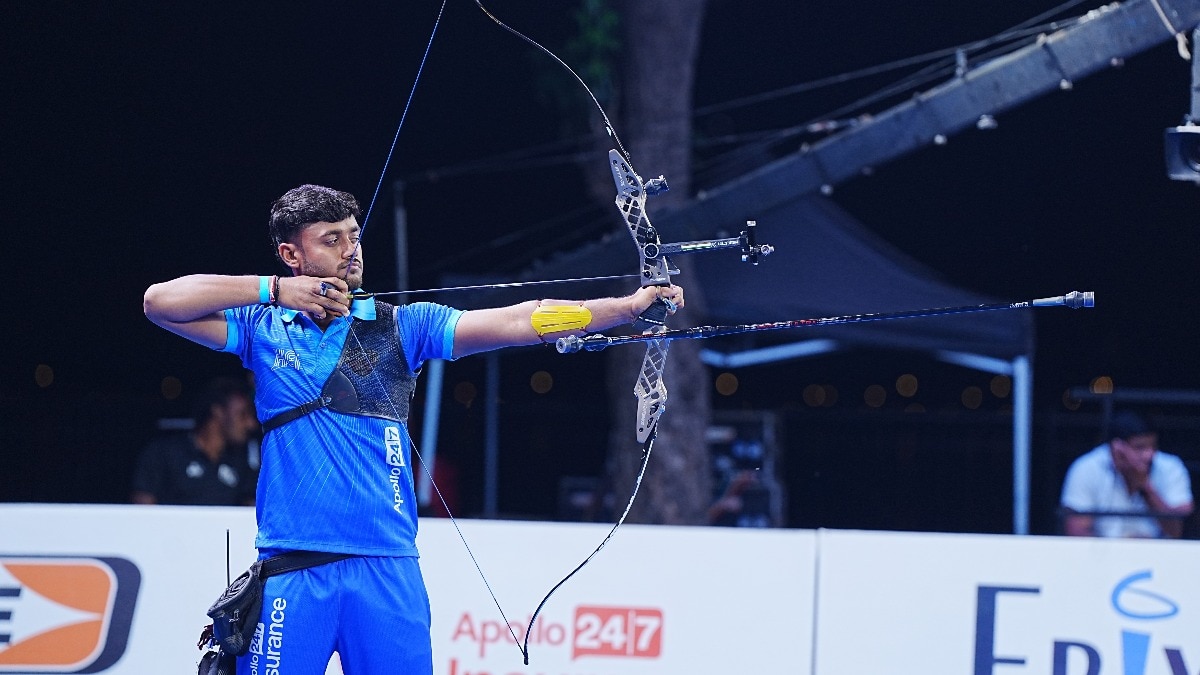
For years, Neeraj Chauhan returned from World Cups with nothing to show for his efforts. He kept competing, kept practising and kept watching other archers stand on the podium. Somewhere along the way, a question began to weigh on him: when would it finally be his turn?At 23, Neeraj was hardly a newcomer to international archery. He had competed in nine or 10 World Cups, going up against some of the best in the sport. Yet the medals remained elusive. For an athlete who knew he could compete at that level, the repeated disappointment was difficult to ignore."I had already competed in nine or 10 World Cups before this, but I had returned empty-handed. I used to watch other athletes win medals and see how much was being done for them and how much support they were getting. I used to wonder when I would win a medal," Neeraj told IndiaToday.in in an exclusive interview.There was no shortage of motivation. What he needed was a way to turn his ability into results. The frustration came to the surface after India's campaign at the World Cup in Spain ended in a quarter-final defeat. Neeraj turned to Dhiraj Bommadevara, one of India's established archers, and asked a question that had been on his mind for some time."Bhaiya, when will I get to stand on the podium?" Dhiraj's answer was simple. The right time and opportunity would come, he told Neeraj. Until then, he had to keep practising and stop worrying about the results.It was easier said than done. Neeraj was competing at a similar level to archers who were winning medals, and he couldn't help wondering why the results weren't coming his way. He insists it wasn't jealousy. It was the nagging feeling that something was missing from his own game. Dhiraj Bommadevara and Neeraj Chauhan competed in the archery Men's team event at the Asian Games 2026. (Image: PTI) "You do feel something inside when you see everyone else competing well. I was competing at the same level, so I used to wonder why I wasn't getting the same results. It wasn't exactly jealousy, but I felt that somewhere, something must be lacking in my game."He could have continued dwelling on the missed opportunities. Instead, he began looking at his own performance differently. The emphasis shifted from wondering when he would win to understanding what he needed to do better."So I thought I would work even harder, focus on what I was doing and leave the results aside. After that, things started falling into place."It was a gradual change, one that would eventually shape how he approached the sport.TRUSTING THE SHOTFor Neeraj, improving as an archer wasn't simply about identifying mistakes and correcting them. In fact, his approach was almost the opposite. He wanted to understand what he was doing when the arrows landed where he wanted them to, and then learn to repeat those actions.Earlier, a poor shot could occupy his thoughts for too long. If an arrow landed in the six, he would think about it and worry about what had gone wrong. That left him carrying the previous shot into the next one, when his attention needed to be on what lay ahead.His thinking has changed."In archery, there are situations where you might score a six, and there are situations where you might score a 10. You never know what the conditions will be like or what might happen during a competition. So I focus more on the things that help me shoot a 10. I concentrate on what is going right and what I need to do to keep hitting 10s," he said. Neeraj Chauhan was no longer worried about the results. (Image: APL) Rather than allowing a mistake to dictate his next move, Neeraj tries to identify what worked and reproduce it. He has learnt to pay attention to the process instead of becoming consumed by the outcome.The change didn't happen overnight. Repetition in practice helped, as did conversations with Dhiraj and his coach."They always tell me that whatever I do, I should do it happily and stop thinking too much about the result," Neeraj said.The advice became particularly important when he experienced the pressure of a major tournament.During the Asian Games semi-final, Neeraj found himself in unfamiliar territory. It was the first time he had reached that stage, and his heart rate rose sharply. He managed to win the match, but the experience left him searching for answers.As soon as the match ended, he called his coach who pointed out that he had been thinking too much about the result and not enough about what he needed to do.That distinction mattered. Neeraj had to bring his attention back to the actions that would help him shoot well, rather than getting caught up in the significance of the occasion.He carried those instructions into his next match. Although he lost, he felt more confident. When it was time to compete alongside Dhiraj in the bronze-medal match, he returned to the same approach.The opponent was a South Korean archer who had won Olympic gold. It was the sort of contest in which reputation alone could make the challenge feel daunting. Neeraj, however, began finding confidence in his own arrows."When I shot my first arrow and it landed in the 10, and then my second arrow also landed in the 10, I thought, if I can shoot two 10s, I can do it again. Then I shot a third 10. I started thinking that I could shoot a perfect round of 30."The conditions were far from ideal. It was windy, with a little rain, but Neeraj reminded himself that both archers were dealing with the same weather."He isn't a machine, and neither am I," he said, explaining how he approached the contest.Instead of worrying about who stood opposite him or how the other archer might perform, he focused on what he needed to do with his own shot. One arrow at a time, he tried to give his best.It was a practical application of the lesson he had been learning for months. He couldn't control the opponent, the weather or the final score. He could, however, control where he placed his attention.STRENGTH IN NUMBERSThe improvement in Neeraj's approach wasn't the result of individual effort alone. Training camps helped the Indian archers grow closer, and the team's improved bonding gave him a stronger support system.Dhiraj's involvement was important, too. Neeraj had approached him with doubts. By the time the Asian Games medal matches arrived, they were working together and backing one another through difficult situations."We started enjoying every moment. Whatever the situation, we stood together as a team. We supported one another and discussed what was happening and what needed to be done. That helped us perform well," Neeraj said. Neeraj Chauhan was part of India's men's team event in archery that won silver at Asian Games 2026. (Image: PTI) After the semi-final, he also had to make sure that the result did not distract him from the team event still to come. Winning a match brought happiness, naturally, but the tournament wasn't over."I was happy after winning the match, of course, but I reset myself because the tournament was still going on. We had the team semi-final to focus on, so we practised for that."He put the individual event behind him and concentrated on the next task. There was no point spending too much time celebrating one result when another challenge was waiting.For an archer who had previously found himself dwelling on missed opportunities, that ability to move on was as important as the technical work. A good shot had to be followed by another. A win had to be put aside when it was time to prepare for the next match.And when the medal finally came, Neeraj knew exactly who he wanted to thank."When I won my first medal, the first thing I did was thank my teammates because they had supported me so much. I also thanked the entire archery community."The happiness was unlike anything he had experienced before. After so many World Cups without a medal, the achievement meant more than he could explain."I had worked so hard for it. When you finally get what you have been working towards, you are bound to be happy. I cannot explain how happy I was."He called his coach and his family back home. Everyone was delighted. Their response was immediate: they wanted him to return home."Everyone was very happy. They were saying, 'Just come home now,'" he recalled.For Neeraj, the medal was the result of years of work, but it also belonged to the people who had stayed beside him when the results weren't coming.A FAMILY'S SACRIFICENeeraj's journey in archery began with promise. In 2018, he won a medal at the Senior National Championships, competing in the Indian round with a wooden bow. His family was delighted. Then the pandemic arrived, his father lost his job and the family faced financial difficulties.They began selling vegetables to make ends meet. His father would head to the mandi early in the morning to bring back produce, while Neeraj and his brothers helped with the work. Through all of it, his father made sure that training continued."We didn't really have another option. My father knew that we also had to continue practising, so he started going to the mandi early in the morning to bring vegetables. We helped him with the work," Neeraj said.There were days when the family had to make sacrifices. Neeraj remembers trying to persuade his father to rest, but his father never allowed the children to feel that they were going without what they needed."He always encouraged us to train. Sometimes he would eat less himself, but he made sure we got our full diet."That stayed with Neeraj. If his family was giving everything it could to support him, he felt he had to give even more in return."When we thought about how much our family was doing for us, we felt that if they were giving 100 per cent for us, why couldn't we give 110 per cent?"Archery wasn't even the sport he started with. Before taking up the bow, Neeraj had followed his elder brother into boxing. Their boxing coach noticed his focus and suggested that he try archery. His father spoke to the coaches, and they managed to arrange the money for the equipment.Neeraj doesn't know exactly what the coach saw in him. He remembers, though, that when he first tried archery, he felt he could do well at it. His interest grew, he earned a state-level selection and then won a medal at the Nationals.The family began to see that the sport offered him a future. Neeraj moved to the Sports Authority of India centre in Sonipat and continued working towards the next step. He was selected for the 2022 Asian Games but couldn't compete, before returning to the international circuit through the World Cups.The medals took longer to arrive than he had hoped. Yet his family never pressured him to produce results. Even after his Asian Games breakthrough, their message remained much the same."They always told me that there would be ups and downs," he said. "Even now, when we speak, they tell me not to become too happy with what I have achieved. They say, 'Whatever has happened has happened. Now, what is the next target?'"His parents have followed his progress closely. His father learnt about sport while working as a cook at a sports hostel, where he was around wrestlers, boxers and cricketers. His mother now watches Neeraj's competitions on television and keeps track of his results.Sometimes, he asks her who he competed against that day, only to discover that she already knows how the match went and by how many points he won or lost. He laughs about how much she follows the sport.His father, meanwhile, advises him to take a couple of days off before a tournament so his body can recover. Their involvement has grown with his career, but their support has never depended on whether he brings home a medal.For Neeraj, that has made a difference. The pressure to win has never come from his family. Instead, they have reminded him that setbacks are part of sport and that there is always another target to work towards.At 23, he has already experienced the long wait for a breakthrough, the doubts that follow repeated defeats and the happiness of finally getting the result he wanted. He is still learning. He still has work to do.But the question that once troubled him after every unsuccessful World Cup has begun to give way to a different one. Rather than wondering when his turn will come, Neeraj is learning to focus on the shot in front of him.For an archer, that might be the most important change of all.- Ends
Learning to let go: How Neeraj Chauhan found his way to the Asian Games podium
Full Article
Original Source
Read the full article at Indiatoday →KhanList aggregates and links to publicly available news content. We do not host full articles from third-party sources. Always verify important information with original sources.