
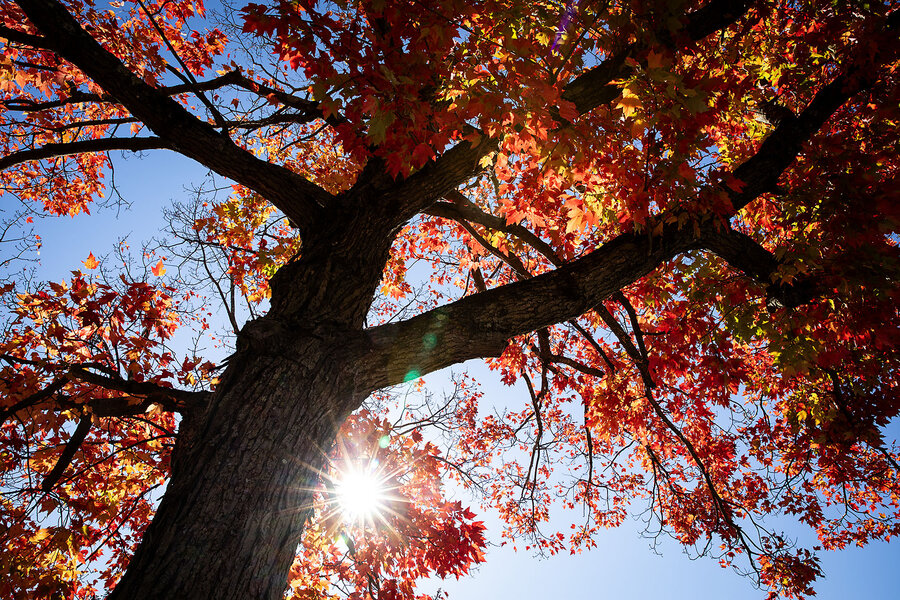
Shelburne Falls, Mass. | Nov. 03, 2026, 2:58 p.m. ET | 4 min read In the downtown of this historic village nestled in the Pioneer Valley of central Massachusetts, one red-brick building wears a blanket of ivy.It’s a local tradition for couples in Shelburne Falls to take a wedding photo in front of the leafy vines. But when temperatures drop, the ivy turns brilliant shades of cherry red and jack-o’-lantern orange, transforming it into an Instagram backdrop for leaf peepers.New Englanders, from Maine to Massachusetts, brace themselves for these foliage-adoring tourists every autumn. They arrive by the thousands, bringing their cars, cameras, and wallets with them. The annual tourism wave has been essential to New England’s economy for decades. In Vermont alone, tourism from September through November results in more than 4 million visitors who spend about $1 billion, according to the interim commissioner of the Vermont Department of Tourism and Marketing, Sara De Filippi.In recent years, however, New England has been flooded with a new type of tourists: social media influencers. Instagram and TikTok personalities highlight beautiful spots, inspiring some of their plentiful online followers to track down their own photo opportunities, dramatically increasing the strain that tourists put on these sought-after places. Melanie Stetson Freeman/StaffA hillside of fall color rises behind downtown Shelburne Falls, Massachusetts, Oct. 20, 2026. The Shelburne Falls Alliance includes business owners, nonprofit leaders, and residents seeking to encourage tourism in a manageable fashion. Locals in Pomfret, a tiny village outside Woodstock, Vermont, formed a crowdfunding campaign last year to pay for deputy sheriffs and signage to manage crowds that clogged roads and damaged properties. Officials in Pomfret and other towns across Vermont have moved to close some roads this year during peak foliage, to discourage trespassing and unsafe traffic.“We have a few properties within our region that have definitely been abused,” says Jim Kelly, executive director of the Woodstock Area Chamber of Commerce. Pomfret is “such a small town; it’s not fully designed to take a huge influx of people.” Places like Shelburne Falls, however, tell a different story. Perhaps overshadowed by the dramatic mountain ranges of its northern neighbors, some towns in central Massachusetts are looking for ways to draw more tourists, while managing residents’ concerns.The Shelburne Falls Alliance, a volunteer organization, formed in late 2020 after the previous business association dissolved during the COVID-19 pandemic. It includes business owners, nonprofit leaders, and residents. Together, they hope to bolster the local economy while improving communication with residents.“We’re trying to be everything. For the residents, but for the visitors, too,” says Cate Chadwick, Shelburne Falls Cultural District manager. “Because the way we see it, it’s all just kind of together.”The alliance model includes working with tourism groups directly. When Ms. Chadwick spotted the first tour bus rumbling into Shelburne Falls this season, she ran to meet it, handing the tour manager a business card.“I said, ‘We used to have a relationship here in the village. Can we rebuild that?’” Melanie Stetson Freeman/StaffTrees covered in colorful fall leaves line the road in western Massachusetts, Oct. 20, 2026. “Get off the beaten path”The problem that Shelburne Falls is looking to avoid involves people coming to leaf-peeping hot spots with specific photo spots in mind. The ivy wall and “Bridge of Flowers” might be a draw, for instance, but they’re not the only scenic spots in town. During peak foliage in the White Mountains, traffic can stretch for miles while vehicles wait their turn for a single road or scenic outlook, says Charyl Reardon, president of the White Mountains Attractions Association. Breaking the allure of trendy spots is now the organization’s top priority.“We really try to encourage folks to get off the beaten path,” she says. “You don’t have to visit the most popular location, during the busiest time of the year, to have an incredible fall experience.”At the same time, the popularity of New England’s autumn tourist destinations steadies local economies that change dramatically with the seasons. That’s largely due to leaf-peeping influencers, Mr. Kelly says.“They spend good money to come here. They want to be comfortable. They want to eat well. They want to stay well,” he says. “It’s driven up occupancy levels at a lot of the lodging areas ... even in some of their offseasons.”A balancing actThanks to the lighter tourism load in Shelburne Falls, most locals here have a positive, albeit sometimes grudging, relationship with autumn visitors. Laina Gustafson/The Christian Science MonitorChris King (left), owner of Mocha Maya’s coffee shop, serves longtime resident Shyla Maung. Mr. King says long lines are a worthy trade-off for economic security, in Shelburne Falls, Massachusetts, Oct. 20, 2026. Chris King, owner of Mocha Maya’s coffee shop and the nearby Red Dahlia Cafe, says long lines (and the occasional impatient, jaywalking tourist) are an easy trade-off for economic security. Tourism revenue keeps his businesses afloat during the slow winter months.“The locals are solid and consistent; there’s just not that many of them,” he explains. Multidisciplinary approaches like the Shelburne Falls Alliance are gaining traction across the United States, says Maree Forbes Gaughan, CEO of Community Economic Partners, a consulting organization that guides revitalization efforts in rural communities. Deepen your worldviewwith Monitor Highlights.Politics with respectGet political stories with respectful analysis.There‘s a world of new ideas in everyBooks newsletter.There‘s more to life, enrich yours withCulture & Learning weekly.Follow humanity‘s discoveries withScience & Nature stories in your inbox.Gain a spiritual perspectivefrom the stories in your inbox.Want to understand the deeper impact of critical events? Learn the Monitor‘s insight.Already a subscriber? Log in to hide ads. Will Fricke, assistant town manager of Stowe, Vermont, says that setting policies to manage tourism is a balancing act.To an extent, overtourism is just “part of living here,” Mr. Fricke says. “If you’re living in Stowe, you’re living the dream. It can be frustrating, for sure, but nothing’s perfect. ... You just do the best you can.” ALREADY A SUBSCRIBER? LoginReal news can be honest, hopeful, credible, constructive.The Christian Science Monitor was founded in 1908 to lift the standard of journalism and uplift humanity. We aim to “speak the truth in love.” Our goal is not to tell you what to think, but to give you the essential knowledge and understanding to come to your own intelligent conclusions. Join us in this mission by subscribing.
Leaf peepers rattle some New England villages. This town wants them.
Full Article
Original Source
Read the full article at Csmonitor →KhanList aggregates and links to publicly available news content. We do not host full articles from third-party sources. Always verify important information with original sources.